

You’re probably in a familiar spot. You want a career in finance, but the standard script feels off. You’re not excited by pitch books, sell-side grind, or chasing transactions that disappear from your memory the minute they close.
You want finance with a public purpose. You want to work on power, transport, financial sector reform, sovereign lending, private sector development, climate programs, and the machinery that moves development money across borders.
That path exists. It runs through Multilateral Development Banks, or MDBs. And the rules are different.
If you’re searching for international finance jobs entry level, most advice online will push you toward broad analyst roles and generic finance recruiting tactics. That’s incomplete. MDB hiring sits inside the wider finance labor market, but it’s a narrow, competitive channel with its own filters, language, and expectations. The U.S. Bureau of Labor Statistics projects about 942,500 openings per year across business and financial occupations from 2024 to 2034, with a median annual wage of $80,920 in May 2024, compared with an all-occupation median of $49,500 according to Indeed’s summary of BLS business and financial occupation data.
MDB roles are a small slice of that market. You don’t get into them by acting like a generic finance applicant.
Beyond Wall Street A Different Path in Finance
The first adjustment is mental. MDBs don’t hire for the same reason commercial banks hire. A corporate finance team might need someone to support revenue, transactions, or internal planning. An MDB hires to help structure, analyze, monitor, and support financing tied to a development mandate.
That changes everything. It changes the profile they prefer, the stories that resonate, the internships that matter, and the way interviews are run.
Most entry-level candidates make the same mistake. They treat international finance jobs entry level as one category. It isn’t. There’s a sharp difference between joining a private bank’s analyst class and joining a mission-driven institution where finance is tied to policy, country context, procurement, safeguards, and implementation realities.
For MDB-targeted roles, your value has to read as more than technical competence. You need to look useful in a development institution. That means your finance skills have to sit next to evidence of judgment, international awareness, and mission alignment.
If you’re still figuring out what kinds of roles exist, this overview of international finance career opportunities is a useful starting point.
MDB recruiters can teach internal systems. They can’t manufacture commitment to development after you arrive.
A second adjustment is strategic. The broader labor market is large. MDB hiring is selective. So volume-applying the way candidates do for mainstream analyst jobs usually fails here. A better approach is narrower and deeper. Fewer applications. Better targeted. Better researched. Better positioned.
That’s the primary path.
Decoding the Ideal MDB Candidate Profile
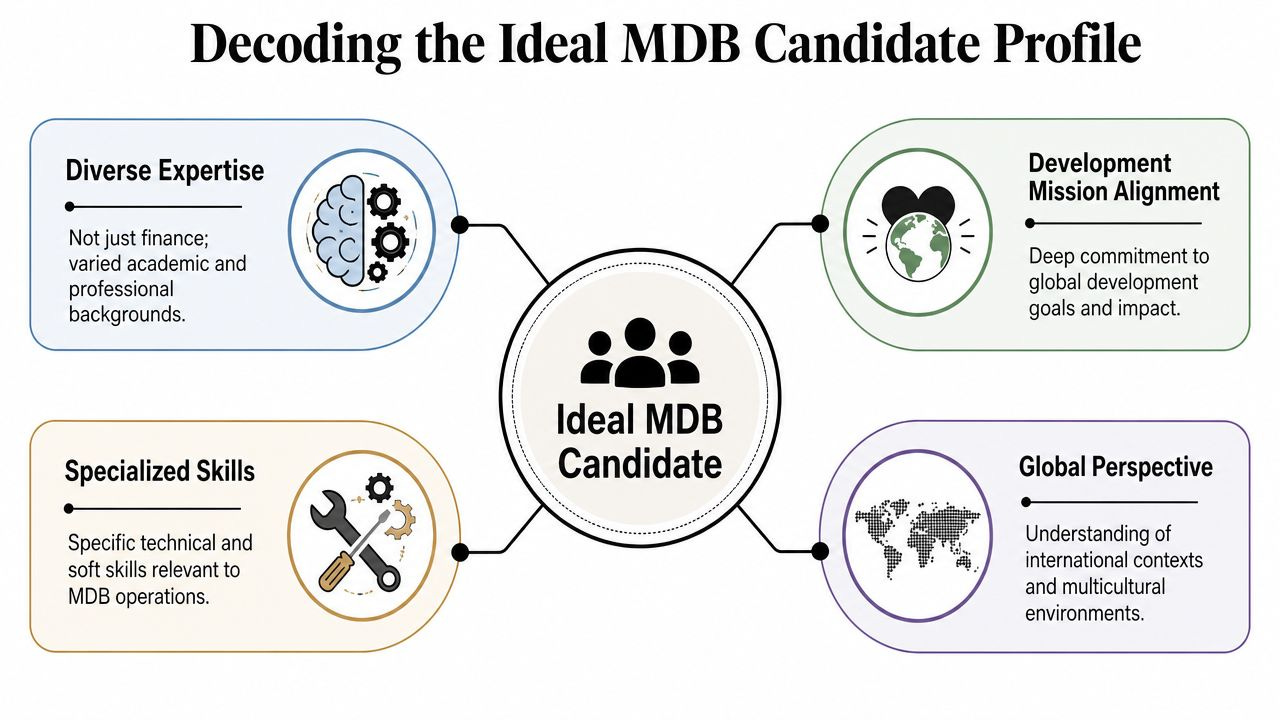
MDBs don’t hire “finance people” in the abstract. They hire candidates who can operate inside a development institution without needing a full rewrite.
The degree gets you through the first filter
In practice, many strong applicants come from economics, finance, public policy, international development, statistics, engineering, or related quantitative fields. For some tracks, a master’s degree is common enough that you should treat it as part of the competitive baseline rather than a differentiator.
That said, degrees don’t carry applications very far on their own. MDB recruiters read for coherence. They want to see whether your academic choices, research topics, languages, field exposure, and prior work point in one direction.
A candidate who studied finance but wrote a dissertation on infrastructure financing in emerging markets reads differently from a candidate who studied finance and lists generic corporate valuation coursework. One looks committed. The other looks undecided.
Mission fit has to show up in your track record
Mission fit is where many applicants lose ground. They say they care about development, but nothing on the page proves it.
Here’s what usually helps:
Focused academic work that connects to development finance, public investment, sovereign risk, infrastructure, climate finance, or inclusive growth
International exposure through study, research, volunteering, or work in cross-border settings
Language capability that signals you can operate beyond a single home market
Evidence of staying power such as repeated choices that point toward development, not a last-minute pivot
A clean way to test your own profile is to ask one question: if someone removed the word “development” from your cover letter, would the rest of your resume still prove it?
If the answer is no, you’ve got work to do.
MDBs screen for a mixed skill profile
This is the part generic finance advice misses. MDBs often want people who can handle analysis and work effectively within institutions.
A strong junior profile usually combines:
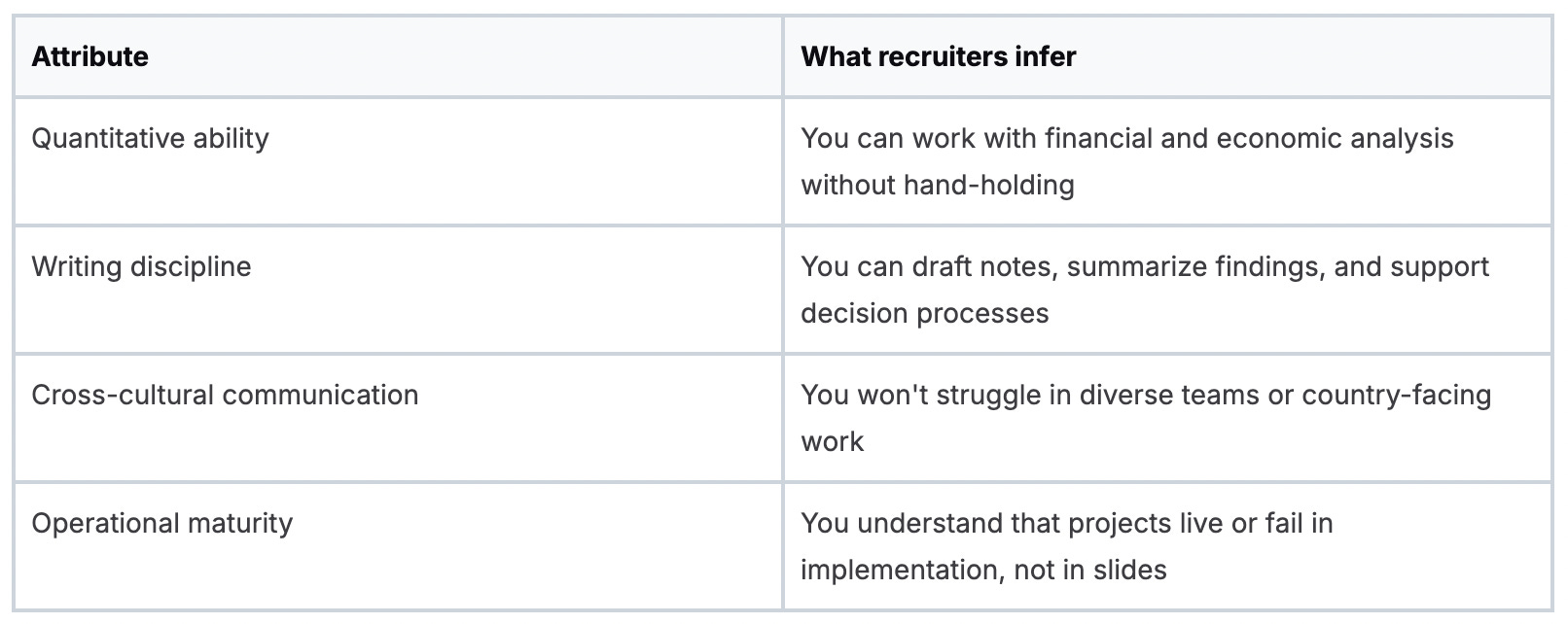
Field note: The strongest junior candidates usually sound like future task team support, not exam toppers looking for a brand name.
That’s why the “ideal” MDB candidate often looks a bit unusual compared with classic private-sector finance recruiting. They’re rarely one-dimensional. They can analyze numbers, but they can also explain trade-offs, write clearly, and show they understand why public-purpose finance is messy.
Building the Right Experience and Skills
The shortest route into an MDB usually runs through an internship, trainee program, or analyst pipeline that already feeds the institution.
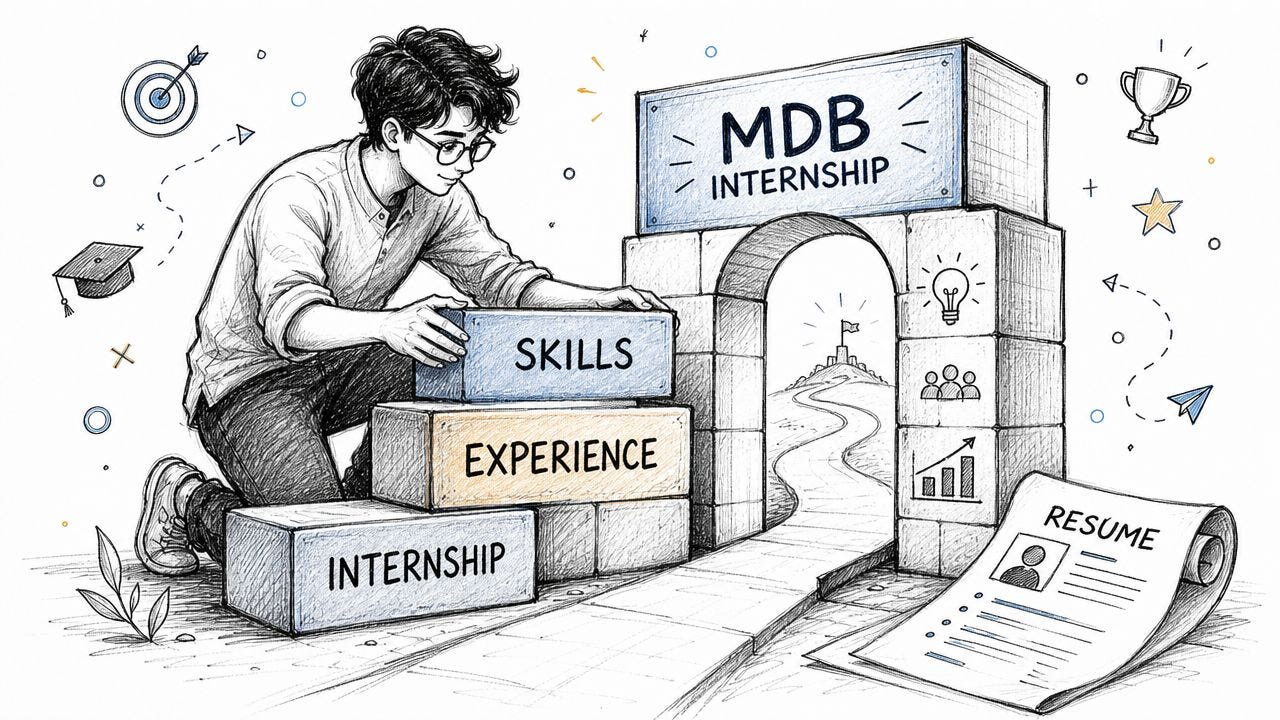
Many firms recruit full-time analysts directly from their summer intern pools, making internships the main conversion funnel. At the same time, applicants are now expected to know how to work with AI tools to automate data extraction and financial modeling, shifting the focus from manual work to interpretation and risk assessment, as noted by Corporate Finance Institute’s guidance on becoming a financial analyst without experience.
That pattern matters even more in the MDB world, where formal programs and internship channels often tell recruiters who’s already been vetted.
Prioritize conversion paths over prestige
A lot of applicants chase logos. Smart candidates chase pipelines.
If an internship, fellowship, or junior consultant role gives you exposure to development finance workflows, country programs, project documentation, sovereign operations, treasury support, results frameworks, or private sector transactions in emerging markets, that usually matters more than a brand-name experience with no clear connection to MDB work.
Good early signals include work involving:
Project finance support in infrastructure, energy, transport, water, or social sectors
Economic or financial analysis tied to governments, development agencies, DFIs, or regulated sectors
Research roles with think tanks, public institutions, central banks, ministries, or international organizations
Operational exposure where financing meets implementation, compliance, or monitoring
If you need a structured way to sharpen the toolkit behind those roles, this guide on how to improve analytical skills is relevant.
Build evidence, not claims
Candidates often write “strong analytical skills” and “interest in emerging markets.” That language does nothing unless you back it with work.
A better resume line is built around a deliverable:
built a country risk note
supported financial model updates for an energy project
cleaned and analyzed lending or macroeconomic data
reviewed project documents and summarized investment risks
compared policy scenarios or fiscal impacts across markets
Each of those tells a recruiter how you think and what kind of entry-level work you can already handle.
Your resume should let a hiring manager imagine assigning you real work on day one.
AI fluency is now part of the baseline
This doesn’t mean recruiters want prompt engineers. They want juniors who know how to use modern tools without outsourcing judgment.
In practical terms, that means being able to use AI for first-pass research support, data organization, repetitive modeling tasks, and drafting rough summaries, then improving the output with actual finance and policy reasoning. The candidate who understands this shift looks more current than the candidate whose entire pitch is “advanced Excel.”
A simple comparison helps:
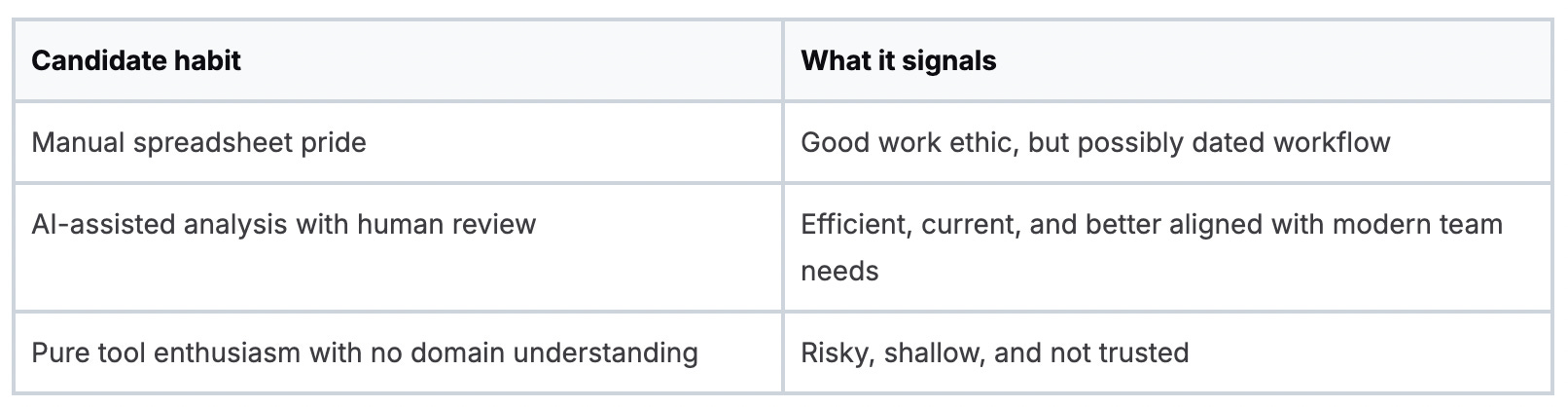
MDB teams still need rigor. They also need people who can produce useful work efficiently. That combination stands out.
Your Strategic Application Checklist
Generic applications die quickly in MDB hiring. That’s not cynicism. That’s how the system is built.
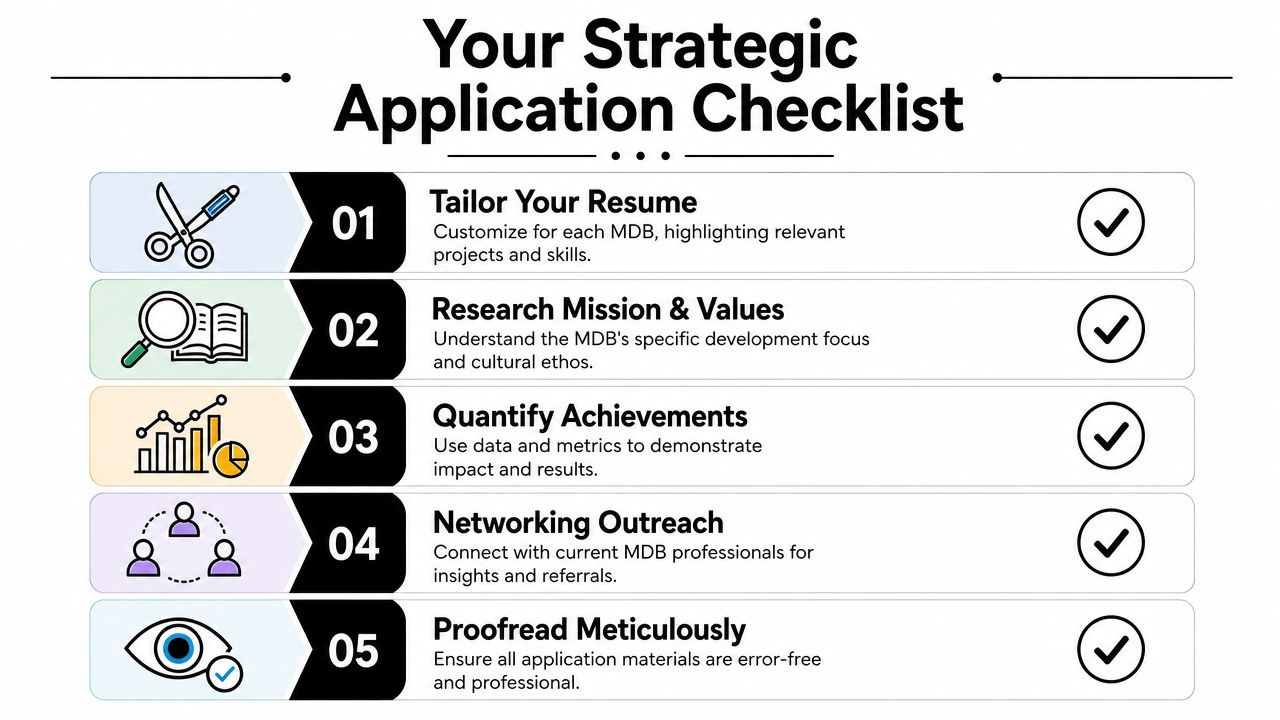
A practical workflow is straightforward: tailor each resume and cover letter, build skill evidence through projects or internships, network strategically, and rehearse for both behavioral and technical interviews. Skipping any of those steps makes an application uncompetitive in finance, based on Pathwise’s finance career guide.
Read the vacancy like a hiring manager
Most candidates skim. You need to dissect.
Look for three things in every posting:
The institution’s mandate language
The actual work tasks
The competencies hidden in bland HR phrasing
If a role mentions sovereign operations, portfolio monitoring, climate finance, private sector development, fragile states, financial intermediaries, results reporting, or country dialogue, those are not decorative phrases. They tell you how the team sees its work.
Your CV and cover letter should mirror that language when it truthfully fits your background.
The CV has one job
The CV’s job is not to tell your life story. It needs to make the reviewer think, “This person can support our workflow.”
That usually means highlighting:
project-based analytical work
writing and synthesis ability
international or multilingual exposure
policy-adjacent finance experience
any proof that you’ve worked in ambiguous environments
What doesn’t help much:
generic club leadership
broad statements about passion
unconnected coursework with no application
long descriptions of tasks with no outcome or deliverable
Application rule: Every bullet should answer one of two questions. What did you produce, or what problem did you help solve?
The cover letter is where your story either works or collapses
MDB cover letters fail when they sound imported from private banking, consulting, or graduate school applications.
A strong version does three things well:
It shows you understand the institution’s mission in concrete terms
It connects your past choices to development finance with a clear line of logic
It explains why this specific role makes sense now
That last part matters. Recruiters can tell when someone is applying broadly across unrelated sectors.
A practical pre-submission check
Before you hit apply, run this short audit:
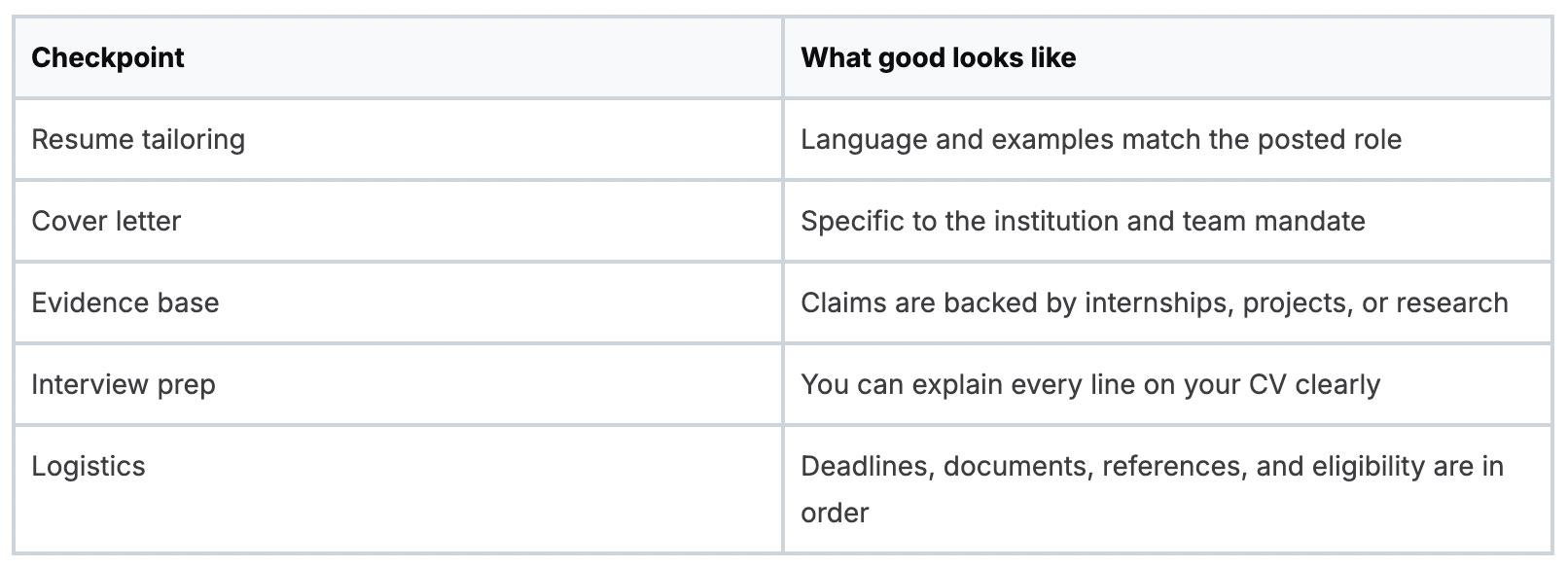
This is also the stage where job tracking matters. A publication like Multilateral Development Bank Jobs can help candidates monitor openings across major MDBs and related institutions, especially if they want one place to follow staff roles, consultant listings, and program-related guidance.
Mastering the Interview and Networking Game
Once you get an interview, the tone changes. The institution has already decided you might be viable. Now they’re testing whether you can think clearly, communicate under pressure, and fit the mission without sounding rehearsed.

Expect two interviews happening at once
MDB interviews often evaluate two tracks in parallel.
The first is behavioral. Can you work across teams, handle disagreement, adapt, write clearly, and stay organized in bureaucratic settings?
The second is analytical. Can you reason through a financing or development problem without freezing?
That’s why canned answers rarely land well. You need examples with substance.
A useful preparation method is to build a story bank around:
a difficult team situation
a research or analytical task with ambiguity
a time you worked across cultures or disciplines
a case where you had to synthesize complex information quickly
a moment where your judgment mattered more than your technical process
For competency-style preparation, this resource on how to pass a competency-based interview fits the MDB process well.
Handle technical questions like a junior professional
For entry-level international finance jobs in MDBs, technical questions usually reward structure more than theatrical brilliance.
If you’re asked to assess a project, country issue, or investment concept, work through it in an ordered way:
define the objective
identify the stakeholders
note the financial logic
surface the main risks
explain what additional information you’d need
That approach signals maturity. It shows you know that development finance decisions sit inside institutional and country constraints.
A strong interview answer sounds organized and calm. It doesn’t sound like a textbook recital.
If you don’t know something, say so plainly, then explain how you’d approach it. That response usually beats bluffing.
Networking works when it’s done like research
Most bad networking is thinly disguised asking. Good networking is informed curiosity.
Reach out to alumni, former interns, junior professionals, consultants, and staff members with a narrow purpose. Ask about team structure, common entry routes, useful preparation, and what junior staff do. Don’t ask strangers to “help you get a job.” Ask for insight you can use.
A strong informational outreach note is short and specific:
why you chose them
what role or background connects you
one or two focused questions
a respectful ask for a brief conversation
Then do the obvious thing many candidates skip. Read the institution’s current priorities before the call. Read the unit page. Read recent project summaries. Know what they work on.
What to avoid
A few habits reliably hurt candidates:
Mission clichés without evidence
Overly polished answers that hide your actual thinking
Networking messages that are generic and obviously mass-sent
Private-sector framing that treats development impact as branding language
Talking only about credentials instead of work, judgment, and contribution
Recruiters remember candidates who sound grounded. That’s the target.
Playing the Long Game for a Career with Impact
This search takes time. That’s normal.
MDB hiring can be slow, formal, and opaque. Rejection is common, even for good candidates. You may be right for the field and still miss the role because another applicant already interned with the team, had a stronger language match, or fit a narrower operational need.
Treat this as a campaign. Build the profile, then keep strengthening it. Better coursework. Better writing samples. Better project experience. Better informational conversations. Better applications.
There’s also a mindset shift that helps. Stop treating every rejection as a verdict on your future in international finance. Most of the time it’s just a signal that your profile, timing, or positioning wasn’t right for that specific opening.
What tends to work over time is straightforward:
Consistency in the kind of work you pursue
Clarity in how you explain your development-finance story
Patience with institutions that move slowly
Discipline in building evidence instead of just aspiration
The candidates who last in this process usually want the work for the right reasons. That keeps them in the game long enough to become credible.
If you stay with it, the payoff is substantial. You get a front-row seat to how large-scale development finance operates. You learn how institutions make decisions under political, fiscal, and operational constraints. And you build a career that can move across regions, sectors, and financing instruments while staying tied to public impact.
That’s a serious career. It’s worth the effort.
If you want a practical way to track Multilateral Development Bank Jobs, Multilateral Development Bank Jobs publishes MDB staff vacancies, consultant opportunities, and role-specific guidance for candidates targeting institutions such as the World Bank, ADB, AfDB, IMF, and AIIB.