

Landing a consulting contract with the African Development Bank is a strategic move that plugs you into a massive development engine shaping economies. To get in, you need to understand the scale of the opportunity and why the AfDB relies so heavily on experts like you.
The True Scale of AfDB Consulting
Let’s be clear: the AfDB doesn’t hire consultants for minor tasks. It brings in specialists to deliver critical expertise its internal staff lacks for high-stakes projects. Think climate-resilient infrastructure, digital finance ecosystems, or energy sector reforms.
This reliance on external talent comes down to the size and complexity of the Bank’s work. They need deep, niche knowledge on demand. Consultants provide that agility and specialized skill set, filling gaps to execute ambitious development goals across the continent.
Where the Demand Is Highest
You can find opportunities in many fields, but the demand for consultants is red-hot in a few key areas that align with the Bank’s “High 5s” strategic priorities.
Infrastructure and Energy: This is the bedrock of the AfDB’s portfolio. A background in renewable energy, transport logistics, or urban development puts you in a prime position.
Climate Finance and Environmental Resilience: As climate change impacts the continent, experts in green finance, climate adaptation, and environmental impact assessments are critical.
Private Sector Development: The Bank is all-in on fostering economic growth. This creates a constant need for consultants skilled in financial modeling, investment promotion, and SME support.
Digital Transformation: Expertise in digital technology is a hot ticket as the AfDB helps countries build out their digital economies, from policy to infrastructure.
These sectors are the core of the Bank’s mission. Focusing your skills here gives you a serious advantage.
A quick word of warning: The AfDB has a zero-tolerance policy for corruption. This is not just talk. Every project and contract is scrutinized. Your integrity and ability to deliver transparently are as important as your technical skills.
To get a real sense of what’s at stake, let’s look at a snapshot of the key numbers for AfDB consulting.
African Development Bank Consultant Snapshot
Here’s a quick overview of the key figures and facts you need to know about AfDB consulting.
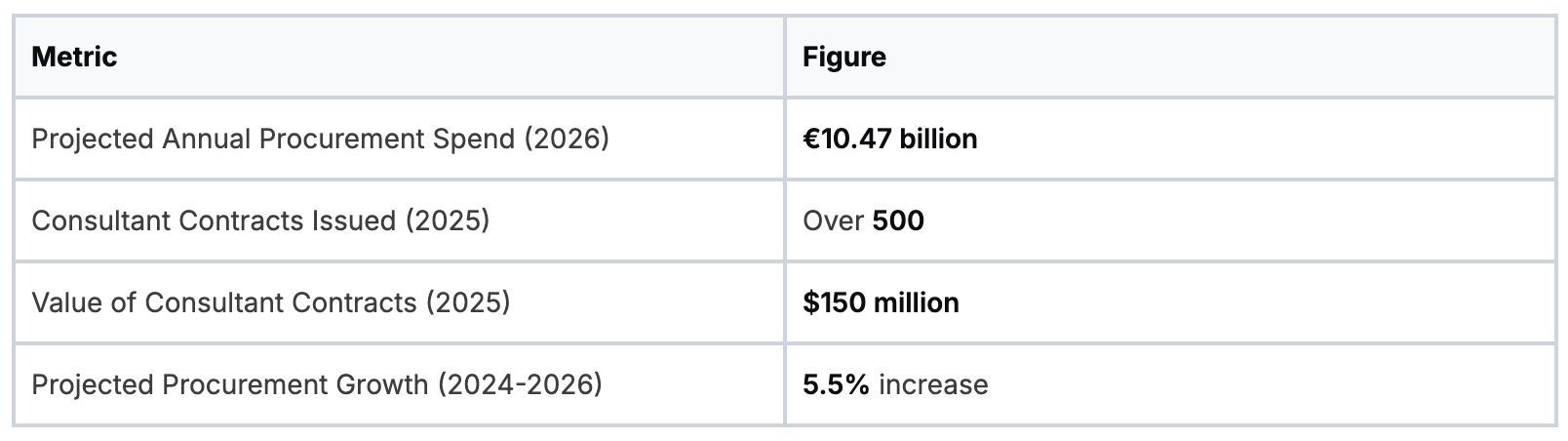
These are not abstract numbers. They represent tangible, high-value opportunities for independent experts.
The infographic below gives you another visual breakdown of the scale we’re talking about.
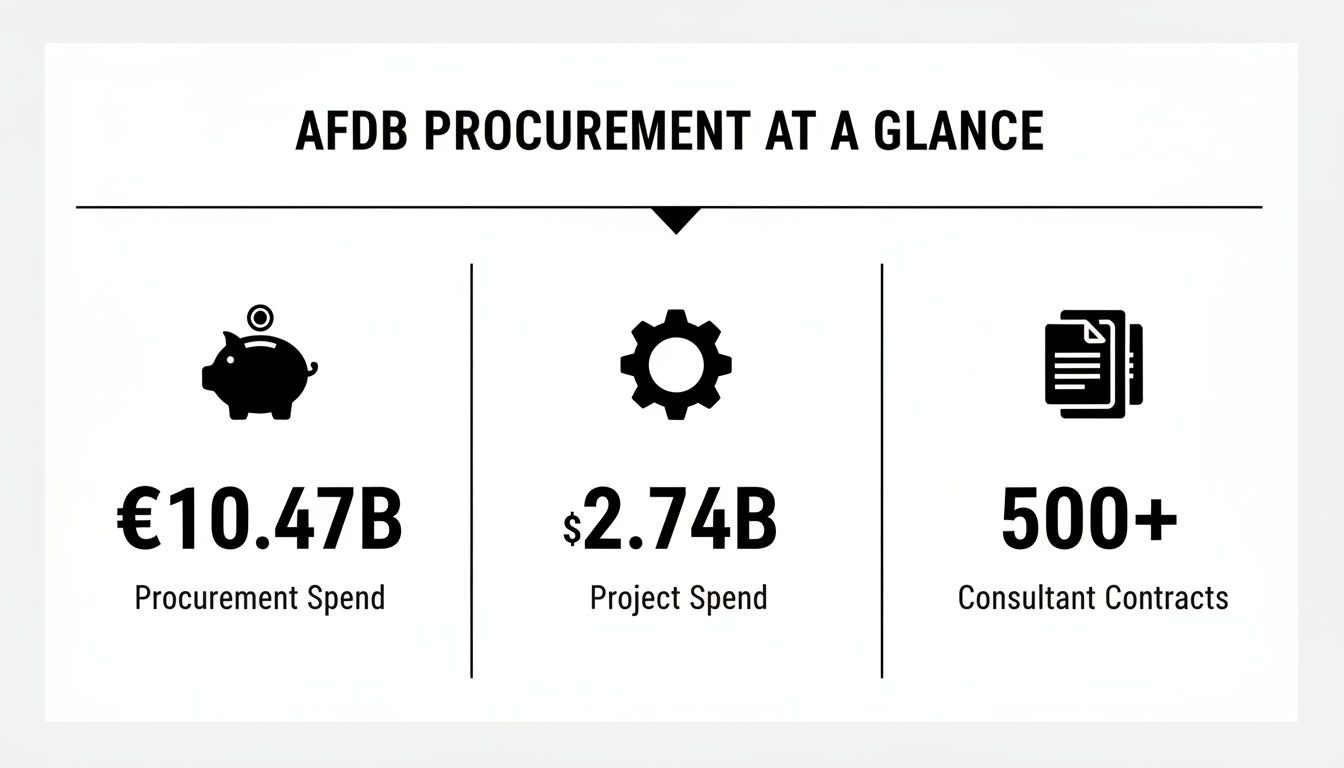
These figures confirm it: becoming an AfDB consultant puts you in a position to compete for a share of billions in annual project spending.
Understanding the Numbers
The bank’s reliance on consultants is growing. In 2025 alone, the Bank issued over 500 consultant contracts worth a combined $150 million, with a heavy focus on high-impact sectors like renewable energy.
With Africa’s economy on a strong growth trajectory, the demand for skilled consultants is set to rise, making this a stable and rewarding career path. The Bank’s procurement spending is projected to hit €10.47 billion in 2026, a solid 5.5% increase from 2024 levels.
The Bank is a results-obsessed organization, and as a consultant, you’re expected to contribute directly to clear project goals. You will be part of a system that lives and breathes evidence-based progress.
If that mindset is new to you, get familiar with it. You can learn more by checking out our guide on what Results-Based Management is and why it matters in development work.
Finding and Qualifying for AfDB Opportunities
You can’t win a contract you don’t know about. If you’re sifting through generic job boards, you’re already behind.
The key to becoming an African Development Bank consultant is knowing exactly where to look. The single most important place is the Bank’s own procurement portal. This is the source of truth for all consulting opportunities.
The main system you need to master is the AfDB Data Portal (ADC). The Bank officially lists all its procurement notices for goods, works, and consulting services here. Learning your way around this portal is a non-negotiable first step.
Mastering the Official Procurement Portal
First, you must register on the ADC. This action formally enters you into the Bank’s ecosystem of potential suppliers. Take the time to build a complete and professional profile for yourself or your firm. A half-baked profile signals you aren’t serious.
Once you’re in, use the portal strategically:
Set Up Saved Searches: Create and save search parameters that match your exact expertise. Think: “individual consultant,” “energy sector,” and “East Africa.” This gets relevant alerts sent straight to your inbox.
Hunt for Expressions of Interest (EOIs): This is often the first public signal of a consulting need. It’s your earliest chance to get on the project team’s radar and prepare for a proposal.
Analyze General Procurement Notices (GPNs): A GPN is a long-term forecast of upcoming projects the Bank has approved. It tells you where future opportunities will pop up, giving you a massive head start.
The procurement process is formal, rigid, and unforgiving. Pay religious attention to the deadlines and submission requirements in every notice. A late or incomplete submission is an automatic disqualification. It does not matter how perfect your CV is.
After you spot a promising opportunity, your next move is a simple but critical one that trips up countless aspiring consultants.
Understanding Eligibility and Nationality Rules
Before you spend a minute drafting a proposal, you must confirm you are eligible to bid.
The AfDB has strict rules of origin, and this extends to consultants. The core principle is straightforward: funds for a given project can generally only be used to hire consultants from AfDB member countries.
This is a hard rule. If you or your firm are not from an eligible country for that project’s specific funding source, you cannot be awarded the contract.
It can get nuanced. Some trust funds administered by the Bank have different nationality restrictions, sometimes limiting eligibility to the donor country. Always check the specific procurement notice. It will state the eligibility rules clearly. Ignoring this is the fastest way to waste days of effort.
Our detailed overview of career opportunities at the African Development Bank can give you more context on these foundational institutional rules.
Individual Consultant vs. Consulting Firm
Finally, you need to know which lane to swim in. The AfDB procures expertise through two main channels. Understanding the difference is key to positioning yourself correctly.
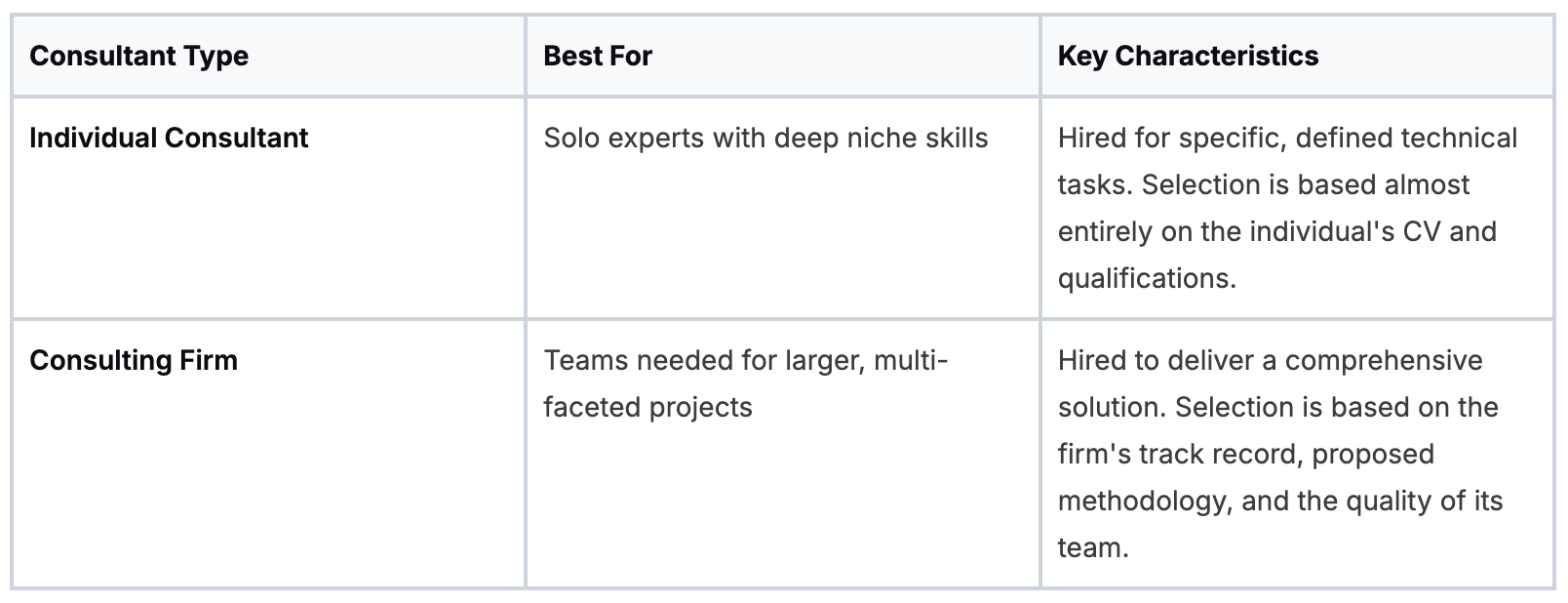
As a solo practitioner, your bread and butter will be the “Individual Consultant” listings. The evaluation is more straightforward and zeroes in on your personal experience. You are judged on one thing: your direct ability to perform the tasks laid out in the Terms of Reference (TOR).
If you run a small consultancy or team up with other experts, you can go after firm-level contracts. Be warned, this requires a much more complex technical and financial proposal. The contracts are often larger, but so is the bidding effort.
For most people starting out, the individual consultant route is the most direct path to landing your first contract as an African Development Bank consultant.
Crafting a Proposal That Wins
If you’re treating your African Development Bank proposal like any other job application, you’ve already lost. A generic CV and a templated cover letter are the fastest way to get your application deleted.
The evaluation committee is looking for the perfect solution to a very specific problem. Your job is to show them, unequivocally, that you are that solution. Success comes from dissecting their Terms of Reference (TOR) and proving you understand their needs better than anyone else.
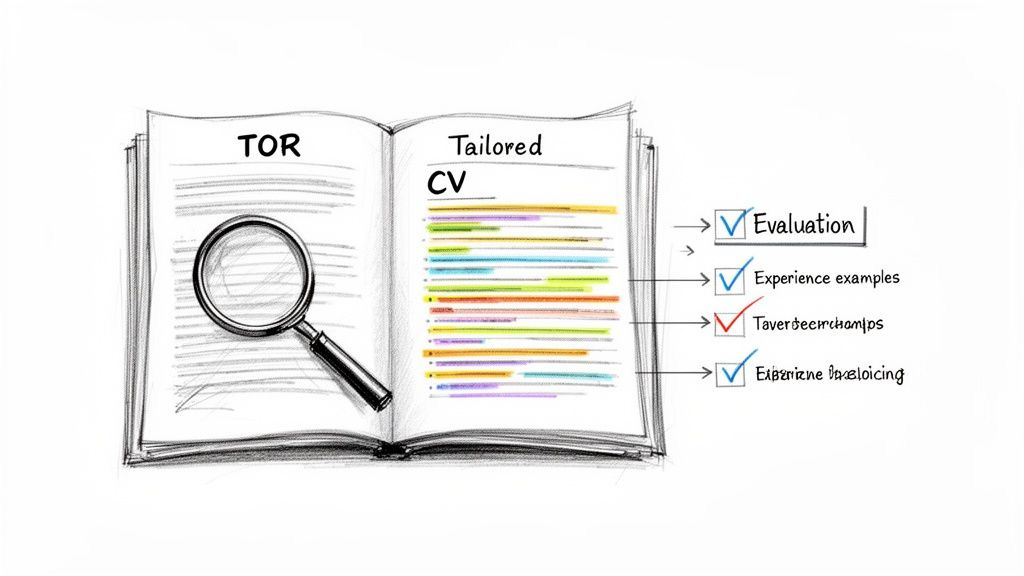
Dissecting the Terms of Reference
The TOR is your cheat sheet. It’s the blueprint for your proposal and a direct look at the scorecard they’ll use to judge you. The first thing I always do is print it out and get a highlighter. I’m hunting for both the obvious requirements and the hidden clues.
Duties and Responsibilities: These are the specific tasks you’ll be doing. Your proposal needs to explain exactly how you’ll tackle each one.
Deliverables: These are the concrete outputs the Bank is paying for. You need to map your past successes directly to these deliverables.
Evaluation Criteria: This is the most critical section. It is literally the marking guide. Your entire application should be built to score maximum points against these criteria.
Key Qualifications and Experience: Pay razor-sharp attention to required years of experience, degrees, language skills, and any specific technical know-how.
Look for words or phrases that keep popping up. If the TOR mentions “climate-resilient infrastructure” five times, that’s a massive signal. You need to make sure every shred of your experience in that specific area is front and center.
The Bank has a zero-tolerance policy for corruption. This is not just a talking point. Your proposal must scream professionalism and integrity. Clear, honest, and verifiable claims about your experience are non-negotiable.
The AfDB-Specific CV Format
Your standard two-page corporate resume? Throw it out. It is not what the AfDB wants or expects. They require a much more detailed format, often called the “AfDB CV,” which is longer and structured to make the evaluator’s life easy.
The best strategy is to create a “master CV” first. This is your career bible, a comprehensive document that might be 10-15 pages long. It should list every project you’ve ever worked on, every skill you have, and every deliverable you’ve produced. For each AfDB application, you will then carve out the most relevant sections from this master doc and tailor them meticulously.
Here’s a structure that works every time:
Personal Data: Name, nationality, contact info.
Summary of Qualifications: A short, powerful paragraph written specifically for this TOR, mirroring its key requirements.
Education: List your degrees.
Professional Experience: This is the heart of your CV. For each role, use a consistent format:
Project Name & Dates
Location & Client
Key Responsibilities (as bullet points)
Specific Achievements (quantify these whenever you can)
When describing your experience, use the exact language from the TOR. If they ask for “stakeholder engagement,” you use the phrase “stakeholder engagement.” Don’t make them guess.
Structuring Your Technical Proposal
Your technical proposal is where you close the deal. It must be a direct, point-by-point response to the evaluation criteria laid out in the TOR. Don’t force the evaluator to dig for information; serve it to them on a silver platter.
A winning structure looks like this:
Understanding of the Assignment: In your own words, briefly summarize the project’s goals and context. This proves you’ve done more than just skim the TOR.
Proposed Methodology and Approach: This is where you explain how you will do the work. Detail your process for completing the tasks and creating the deliverables. This is your chance to really show off your technical expertise.
Work Plan and Timeline: Break the project down into logical phases with clear timelines. A simple Gantt chart is a great way to visualize this and looks very professional.
Statement of Qualifications: Here, you explicitly match your experience to the TOR’s evaluation criteria. A table is the most effective way to do this.
For instance, if the TOR has this criterion: “Minimum 10 years experience in renewable energy policy in West Africa.”
Your proposal should feature a table that makes the connection impossible to miss.

This direct mapping technique does the work for the evaluation committee. You are literally connecting the dots between their problem and your experience, making it incredibly easy for them to give you a high score. For a more in-depth look at this process, you may find it useful to read our additional advice on how to write a consulting proposal that stands out.
Navigating Contract Rates and Negotiations
Alright, you made it through the proposal gauntlet. Congratulations. Now for the part where it all gets real: talking money. A stellar proposal gets your foot in the door, but knowing how to handle the contract and rate negotiation ensures you’re paid what you’re worth.
The AfDB is not going to create a bespoke contract just for you. For individual consultants, the work almost always falls into one of two buckets. Understanding which one you’re being offered is critical.
Understanding AfDB Contract Types
The two structures you’ll see time and again are time-based contracts and lump-sum (or fixed-price) contracts. Each one changes how you work, how you bill, and how you manage your cash flow.
Time-Based Contracts: These are the go-to for assignments where the scope is a bit fluid or requires ongoing support. Think project supervision, advisory roles, or being embedded in a team. You get paid a set daily or monthly rate and track your work with timesheets. It’s straightforward, but requires diligent time tracking.
Lump-Sum Contracts: When the deliverables are crystal clear, like a final research report or a feasibility study, the Bank uses this model. They agree to a single, fixed price for the entire job. Payment is tied to hitting specific milestones, not how many days you spend working.
A word of caution on lump-sum deals: you have to be rock-solid in your effort estimation. Underestimate the time it’ll take, and you’ll find yourself working for a much lower effective day rate. But if you’re efficient, you can come out ahead.
Your contract is a legal document. It dictates payment, deliverables, reporting lines, and even who owns the intellectual property. Read every single line. Assume nothing.
Knowing the contract type from the outset helps you plan your life. It’s a fundamental part of being a successful independent professional.
Decoding Consultant Day Rates
Let’s talk numbers. It’s the question every aspiring consultant asks: “What can I actually earn?” The AfDB does not advertise its rates, but they are not a complete mystery. They fall into established bands based on experience, the role’s complexity, and where the project funding comes from.
Here’s a realistic breakdown based on what I’ve seen in the market. Remember, these are all-inclusive rates, meaning they have to cover your salary, overhead, insurance, and everything else.

These are just guidelines. A world-class expert in a niche field like green bond structuring could easily command a rate above the senior band. On the other hand, a more generalist role will likely land at the lower end of its respective pay scale.
The Art of Negotiation
There’s a common myth that AfDB rates are set in stone. That’s only partially true. The Bank has pre-approved budget ceilings and salary scales for every single position. You are not going to talk your way into a $1,000 per day rate for a role that’s been budgeted at a maximum of $600. It is just not happening.
However, that does not mean you have zero leverage. Your room to negotiate exists within the pre-approved band for the role. If the hiring manager has a range of $700-$900 and their initial offer is $750, you absolutely have grounds to make a case for more.
To do this, you need to bring evidence, not just demands.
Exceptional Experience: Did the TOR ask for 10 years of experience and you have 18? Point it out. Highlight specific projects that make you an overqualified, perfect fit.
Unique Skills: Do you bring a rare language skill, a specific technical certification, or experience in a frontier market that other candidates will not have? This is your leverage.
Market Rates: If you can professionally demonstrate that your standard rate for similar work with other clients is higher, this can support your case.
Be realistic and frame your request around the extra value you bring to their project. At this stage, they’ve already invested weeks or months in selecting you. They want to close the deal. A well-argued case for why you deserve to be at the top of their existing pay band has a pretty good chance of success.
Mastering the Interview and Building Your Network
If you’ve made it to the interview, congratulations. You’re on a very short list, and the evaluation committee already believes you have the skills to do the job. Your only task now is to close the deal.
An African Development Bank interview is a verification exercise. They need to confirm the expertise you claimed in your proposal is real and see if you’re a professional they can actually work with.
Acing the AfDB Interview
Interviews are almost always done by panel, usually over a video call. You can expect to face the project’s task manager, another technical expert from the department, and maybe someone from procurement or HR. Your goal is simple: project competence and absolute reliability.
The good news is that the questions fall into a few predictable buckets. Knowing them ahead of time gives you a serious edge.
AfDB Interview Question Types and How to Prepare
The panel is not trying to trick you; they’re trying to validate their choice. They want to hear specific, real-world examples that prove you can handle the work. Here’s what to expect and how to prepare for each type of question.
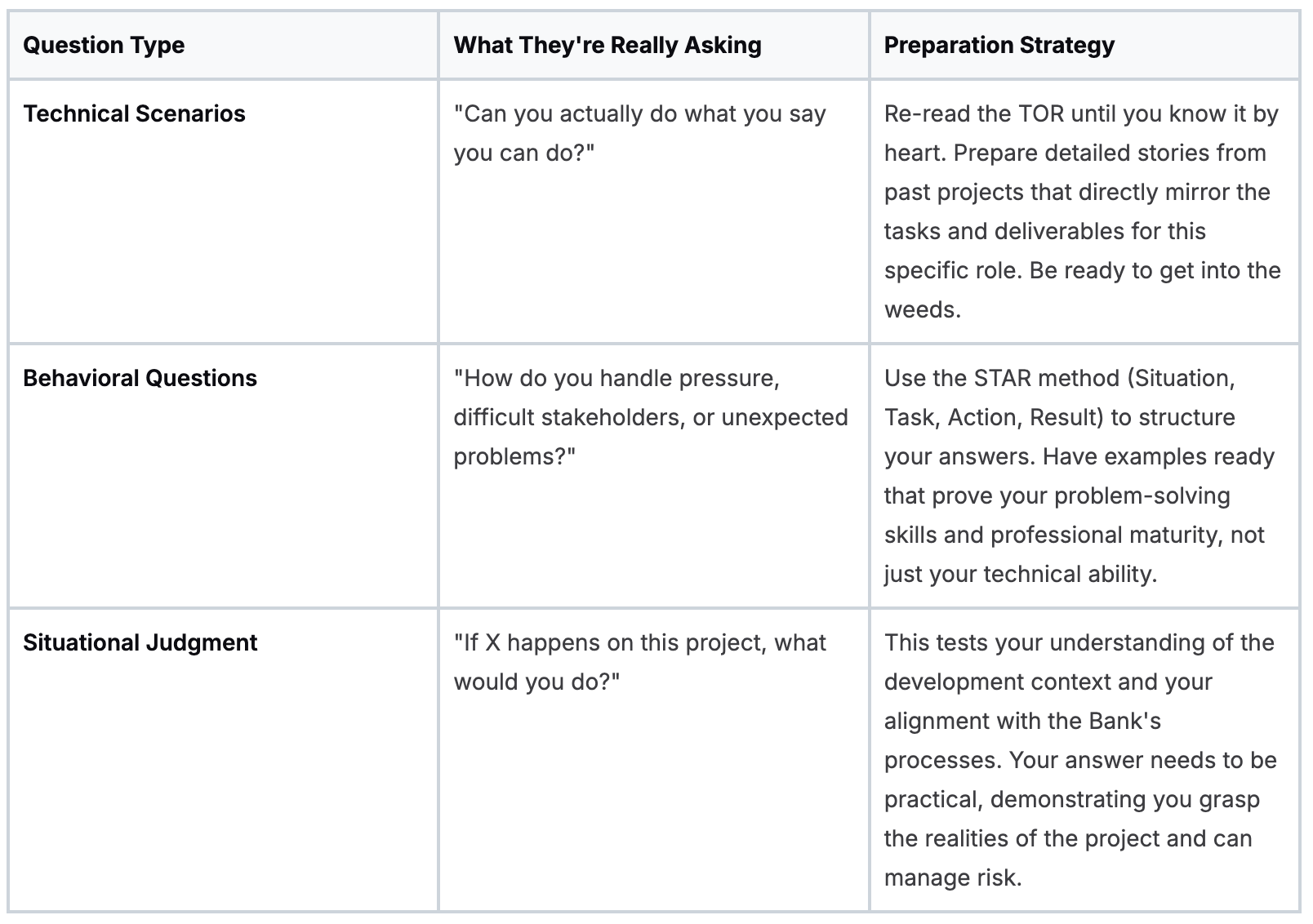
When they ask, “Tell us about a time you managed a difficult stakeholder,” they are not looking for drama. They want a calm, structured story that proves you can navigate the complex political environments that are standard in development projects.
Presenting Yourself as the Low-Risk Choice
The Bank, like all multilateral development banks, is a fundamentally risk-averse institution. From their point of view, the best consultant is someone who will deliver high-quality work on time, on budget, and with zero drama.
Here’s how you become that person in their eyes:
Prepare Your Own Questions: Come with smart, targeted questions about the project’s specific challenges, the team dynamics, or the expected first steps. This shows you’re already thinking like a team member, not just a candidate.
Know Your Proposal Cold: Be ready to expand on anything you wrote in your proposal or CV. If you claimed experience in a niche area, have a project example ready to discuss in granular detail. They will probe.
Communicate Clearly and Concisely: Answer the question that was asked. Don’t ramble. Clear communication signals a clear, organized mind.
Your interview performance solidifies their decision. You need to show them you are not just an expert on paper, but a professional they can trust to get the job done.
The ultimate goal of the interview is to de-risk your candidacy. Every answer should reinforce the idea that hiring you is the safest and smartest decision the panel can make. They want to feel confident that you will solve problems, not create them.
The Long Game: Building Your Network
Landing your first contract is a huge win, but the real goal is to turn that one project into a steady stream of work. Your single best marketing tool is a job well done. Task managers talk to each other. A reputation for excellence is gold within the Bank.
Once your contract ends, the real networking begins. This is not about schmoozing; it’s about smart, professional follow-up. A simple thank-you email to the task manager expressing your interest in future collaborations is a great start.
From there, the key is to stay on their radar without becoming a pest.
Check in periodically: Every few months, send a short, relevant email. Maybe you saw an article about a new Bank initiative in their sector, or you finished a similar project for another organization. Keep it brief, professional, and add value.
Deliver exceptional work: Nothing makes a task manager’s life easier than a consultant who delivers excellent work ahead of schedule and under budget. That’s the experience they’ll remember when a new project pops up.
Connect on professional networks: A quick LinkedIn connection is an easy, unobtrusive way to maintain a professional link long-term.
A successful career as an African Development Bank consultant is built on reputation. The relationships you forge by delivering outstanding work will sustain your consulting practice for years to come.
Your Questions, Answered
When you’re trying to land your first AfDB consultancy, you’re bound to have practical questions. I get asked these all the time by aspiring consultants. Let’s get straight to the answers you actually need.
Do I Need a PhD to Be an AfDB Consultant?
No, you don’t. While you’ll see plenty of PhDs around the Bank, especially among economists, it is absolutely not a requirement for most consulting gigs. The AfDB is a practical institution. It values real-world, demonstrable experience far more than purely academic credentials.
Honestly, a Master’s degree paired with 10+ years of hands-on experience in a sector like energy or agriculture is often seen as more valuable. The real key is whether your project history directly answers the needs laid out in the Terms of Reference. Your track record of getting things done on the ground is your most powerful asset here.
How Long Does the AfDB Procurement Process Really Take?
Get comfortable. From the day an Expression of Interest (EOI) closes to the day you finally sign a contract, the process can easily take three to six months. Sometimes it takes even longer.
This timeline is not random; it’s the result of the Bank’s formal, multi-step procurement procedures. Here’s a rough breakdown of what to expect:
Short-listing: Don’t expect to hear anything for at least 4-6 weeks after the EOI deadline.
Proposal Evaluation: Once proposals are in, this stage can take another 4-8 weeks.
Contract Negotiation & Approval: After you’ve been selected, the internal approvals and contract finalization can add another month or more to the clock.
The lesson here is simple: plan your finances and other work commitments accordingly. This is not a fast hiring process, and you need to have the runway to wait it out.
Can I Work Remotely as an AfDB Consultant?
This completely depends on the assignment. The Bank has become more open to remote work, and you’ll find plenty of roles focused on analysis, research, or policy writing advertised as “home-based.”
However, a huge number of projects, especially those involving project supervision, stakeholder workshops, or direct technical assistance to a government, require a significant in-country presence. The Terms of Reference will always be crystal clear about the expected work location and any travel requirements. Be brutally honest with yourself about your ability and willingness to travel if the role demands it.
One of the most common mistakes I see is people applying for roles with heavy travel demands when they know they can’t meet them. It’s a waste of everyone’s time. Read the location requirements in the TOR before you even think about starting your application.
What Are the Most Common Proposal Mistakes?
By far, the biggest and most frequent mistake is submitting a generic proposal. Evaluators can spot a copy-paste job from a mile away. It’s an immediate red flag that tells them you are not serious about this specific opportunity.
Beyond that, here are the other fatal errors I see all the time:
Ignoring the TOR Structure: Your proposal must directly mirror the structure and evaluation criteria in the TOR. Don’t force the committee to go on a scavenger hunt for key information.
Vague, Empty Claims: Instead of saying you have “strong project management skills,” describe a specific project you managed, its budget, and the concrete result you delivered. Prove it.
Using the Wrong CV Format: Submitting your standard two-page corporate resume instead of the detailed, project-based CV format the Bank expects will get you screened out before anyone even reads your proposal.
Sloppy Editing: A proposal full of typos and grammatical errors screams “lack of attention to detail.” For a detail-obsessed institution like the AfDB, this is a deal-breaker.
These are all unforced errors. Avoiding them just takes diligence and a respect for the Bank’s process, which will immediately put you ahead of a surprising number of applicants. Your proposal is your first deliverable. Make it flawless.
At Multilateral Development Bank Jobs, we don’t just point you to listings. We give you the insider strategies you need to actually win the work. Subscribe to get opportunities and career guides delivered straight to your inbox: https://mdbjobs.com