

The right program can determine whether you reach an MDB interview shortlist or spend years trying to break in from the outside.
Development economics is one of the few fields where program choice has direct labor-market consequences. Multilateral development banks hire for a specific mix: strong econometrics, comfort with causal inference, policy judgment, and credible exposure to institutions that work with governments at scale. Brand name helps, but only if it comes with the training and networks recruiters screen for.
That is the lens for this guide. It is not a generic ranking of famous universities. It is a strategic review of programs that can give you an MDB-ready skillset, including quantitative depth, faculty access, and institutional pipelines that matter for roles at the World Bank, IMF, Asian Development Bank, African Development Bank, and AIIB.
Candidates who want a broader policy-school route should also compare these options with other graduate programs for international development careers. The trade-off is straightforward. Some programs are better for academic research. Others are better for producing economists and policy staff who can move from data work to lending operations, country diagnostics, and impact-focused project design.
The universities that follow stand out because they repeatedly place graduates into the parts of the market that MDB candidates care about most.
1. Massachusetts Institute of Technology MIT
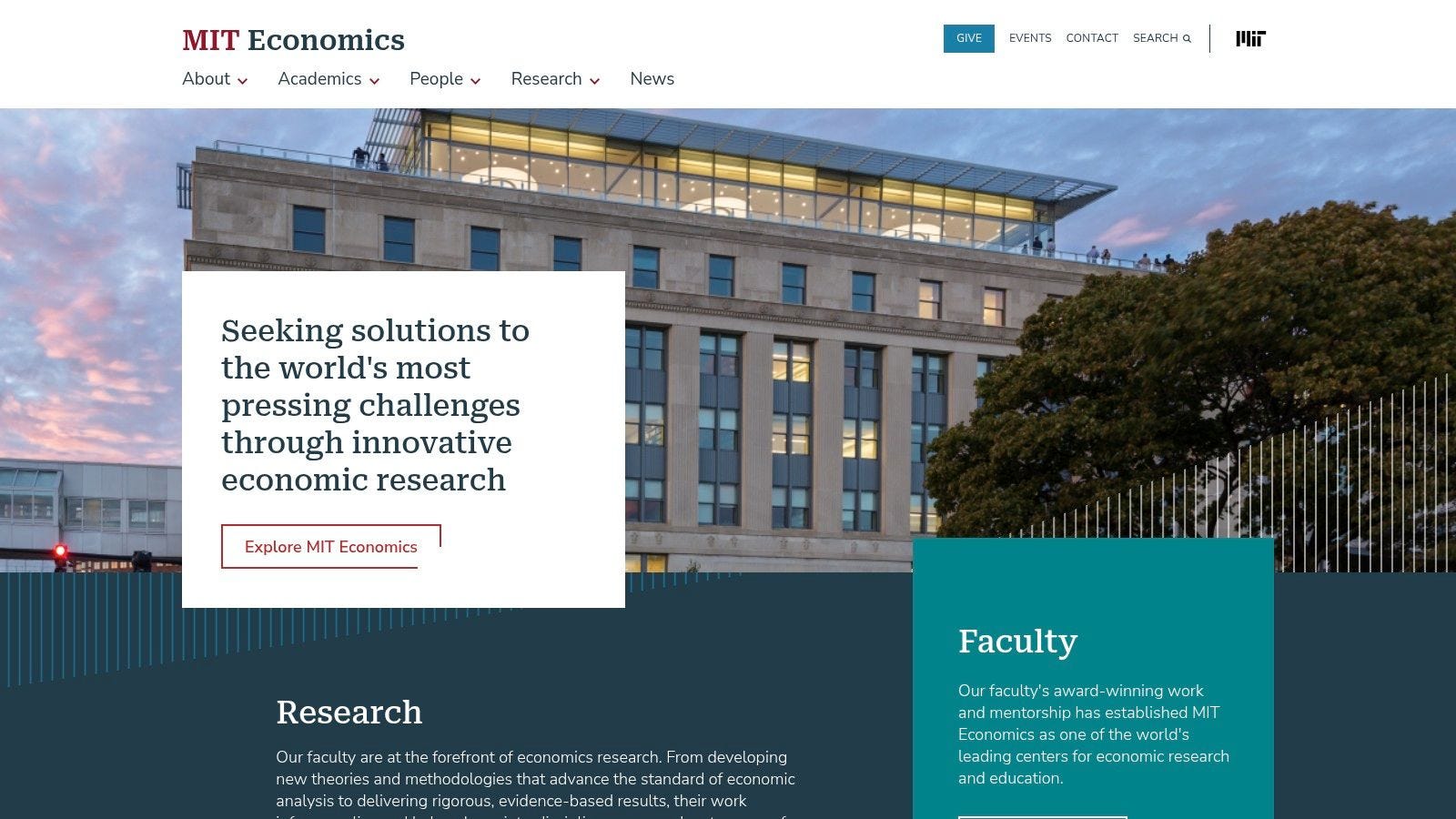
MIT is one of the clearest routes into the quantitative side of development work. For candidates targeting MDB economist, research, or results-measurement roles, few places train this combination better: causal inference, applied micro, policy evaluation, and disciplined empirical reasoning under real-world constraints.
What sets MIT apart is not prestige alone. It is the operating system around development economics. The Department of Economics, J-PAL, and the Data, Economics, and Design of Policy pathway give students repeated exposure to the kind of work MDB teams screen for: evaluating interventions, pressure-testing assumptions, and turning broad policy goals into measurable frameworks. Recruiters value that profile because they need hires who can move from a concept note to an evaluation plan without months of catch-up.
Where MIT fits best
MIT is a strong fit for applicants who already know they want hard quantitative training and are comfortable being pushed. The DEDP route creates more than one entry point, including MITx and the on-campus master’s, which can help candidates who need a staged path into a demanding program. J-PAL adds another advantage. Its network keeps the training close to implementation questions, not just journal-style research.
There is also a real career trade-off here. MIT is especially strong if you want to sit near the evidence side of the house: impact evaluation, policy design, research support, and analytically heavy operational work. If you are still comparing where that profile fits across institutions, this guide to World Bank vs IMF vs ADB career paths helps clarify which MDBs reward that toolkit most.
Practical rule: MIT works best for applicants with a solid foundation in calculus, statistics, and econometrics. Without that base, the program can feel less like a launchpad and more like damage control.
Pros and trade-offs
Outstanding training in experimental and quasi-experimental methods: J-PAL and the broader MIT ecosystem give students direct exposure to policy-relevant evaluation work.
Flexible pathway structure: The MicroMasters-to-master’s route can help candidates build toward graduate study in stages.
Strong fit for evidence-focused MDB work: The program prepares students to assess what worked, what failed, and how to defend those conclusions in policy settings.
Very steep quantitative curve: Students without serious technical preparation can struggle quickly.
Less suited to candidates seeking a broad policy-school experience: MIT is better for analytically focused applicants than for those who want a primarily diplomatic or generalist public policy route.
Funding can be a constraint: The on-campus DEDP master’s is expensive, and financial support is competitive.
Use MIT if you want to be the person in the room who can defend identification strategy, spot weak evidence early, and connect empirical findings to lending and program decisions. That profile travels well inside an MDB.
Visit the MIT Department of Economics.
2. Harvard University

Harvard remains one of the safest bets for candidates targeting top MDB roles. The draw is not just prestige. It is the combination of serious quantitative training, policy-school access, and unusually strong proximity to governments, practitioners, and development institutions. For MDB hiring, that mix signals both credibility and practical range.
The center of gravity here is the Harvard Kennedy School, especially the MPA/ID, with CID and EPoD reinforcing a development focus tied to real policy problems. That setup suits candidates who want to move between economic analysis and implementation rather than stay confined to a narrow academic lane.
Why Harvard has real MDB pull
Harvard works well for applicants aiming at operational economist and policy-facing roles inside multilateral institutions. The strongest graduates can handle econometrics and macroeconomic reasoning, then shift comfortably into public finance, state capability, and reform design. That is useful inside MDBs, where many teams need someone who can move from a technical note to a ministry meeting without losing the thread.
The network also carries weight. HKS, CID, and the broader Harvard development ecosystem put students close to faculty, visiting officials, and practitioners who shape lending, advisory work, and government reform agendas. If you are comparing entry routes, the World Bank Junior Professional Associate pathway is a good benchmark for the kind of operational exposure many early-career candidates are trying to build toward.
I would put Harvard in the top tier for candidates who want strong economics training without giving up access to policy design, public management, and institution-building conversations. That combination is harder to find than applicants often assume.
Pros and trade-offs
Strong policy-economics blend: Harvard is especially good for candidates who want to connect quantitative analysis to government decisions, reform sequencing, and delivery constraints.
CID and EPoD add practical relevance: These centers keep development work tied to implementation, not just classroom models.
Powerful institutional signaling: MDB recruiters know the HKS and Harvard development brand, and that can help at the screening stage.
High cost: Harvard is expensive, and funding remains competitive.
Admissions bar is steep: Strong academics help, but they are not enough without clear quantitative preparation and a convincing development story.
Less ideal for pure theory-first economists: Applicants who want a classic economics department culture may prefer a different environment.
Harvard is best for candidates who want to build careers as operational economists, policy advisers, country-office staff, or future managers inside multilateral institutions.
Visit the Harvard Kennedy School.
3. University of California Berkeley
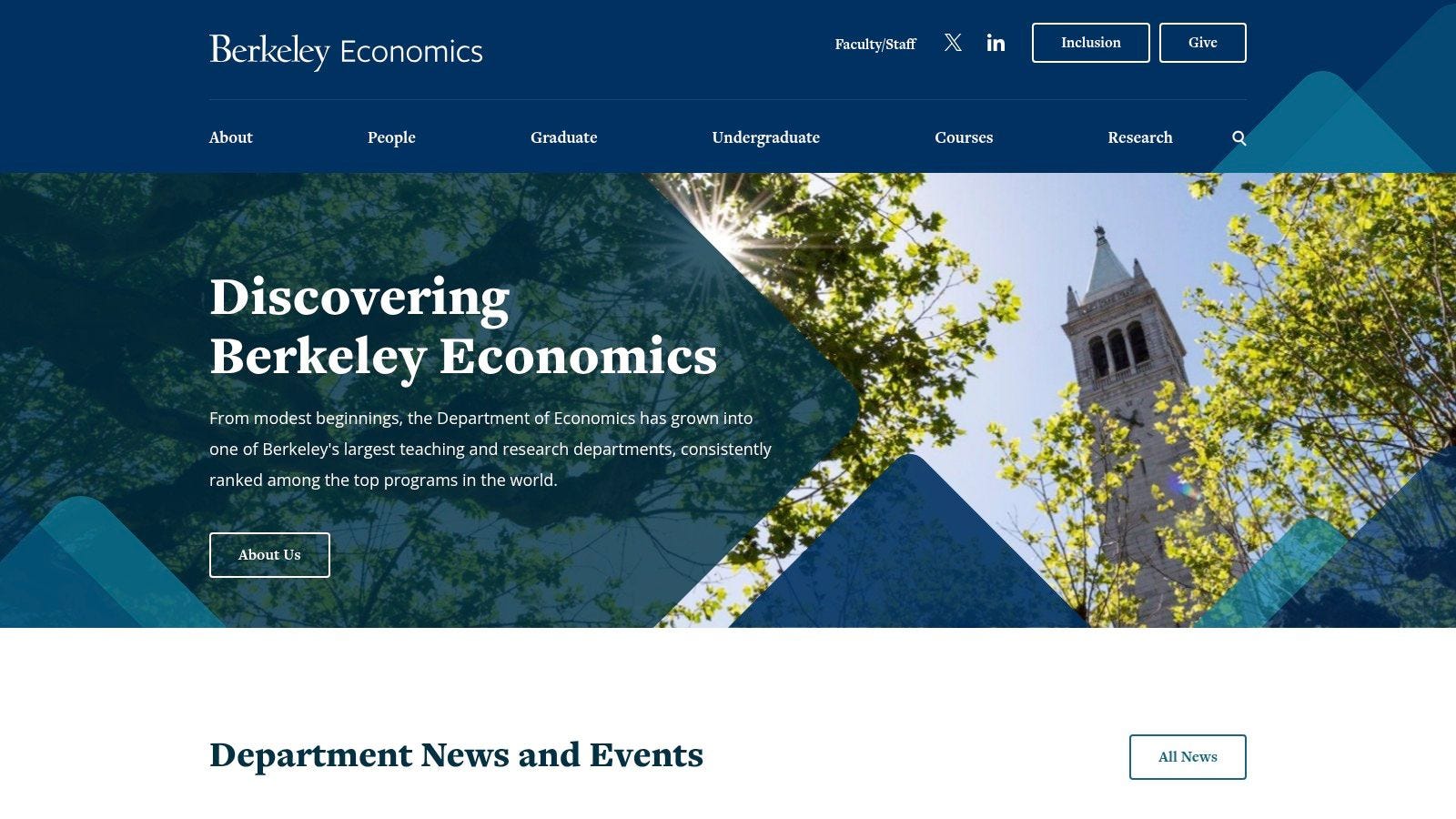
Berkeley is where a lot of strong applied development economists sharpen their edge. It doesn’t always dominate generic rankings in the way Harvard or MIT do, but practitioners know how much serious development work happens there. The combination of Economics, ARE, and CEGA gives Berkeley unusual range.
That range is the key selling point. You can pursue classic economics research, development work with agriculture and environment angles, or a more applied professional route through development engineering.
Berkeley’s advantage in practice
CEGA has built a reputation around field-facing research and partnerships with governments and implementers. That setup is valuable if you want to understand how evidence gets used after the paper is written. MDBs care about that because a project team needs more than technical rigor. It needs people who know what survives contact with ministries, procurement constraints, and political realities.
Berkeley also works well for people who don’t fit neatly into one lane. If you’re early in your career and looking at operational entry points, the World Bank Junior Professional Associate route is a useful example of how applied skills can matter before a full economist track.
Best fit and main trade-offs
Best for applied micro breadth: Economics and ARE give students more than one serious route into development.
Field research culture: CEGA supports work tied to implementation and scale.
Bay Area advantage: Berkeley is well placed for candidates interested in tech-for-development or data-heavy applied work.
Cost of living is brutal: Berkeley and the wider Bay Area can strain even a decent funding package.
Program identity can feel split: MDevEng is valuable, but it isn’t a pure economics degree.
You need to choose your lane carefully: Berkeley rewards students who can manage a large ecosystem without drifting.
Insider advice: Berkeley is excellent for self-directed people. If you need a tightly managed pathway, a smaller program may serve you better.
Visit the UC Berkeley Department of Economics.
4. Yale University
Yale is a smart choice for candidates who care about how policy performs at scale. That sounds abstract until you work on real development programs. Then it becomes one of the hardest questions in the field. A pilot can look clean on paper and unravel once a government tries to run it nationwide.
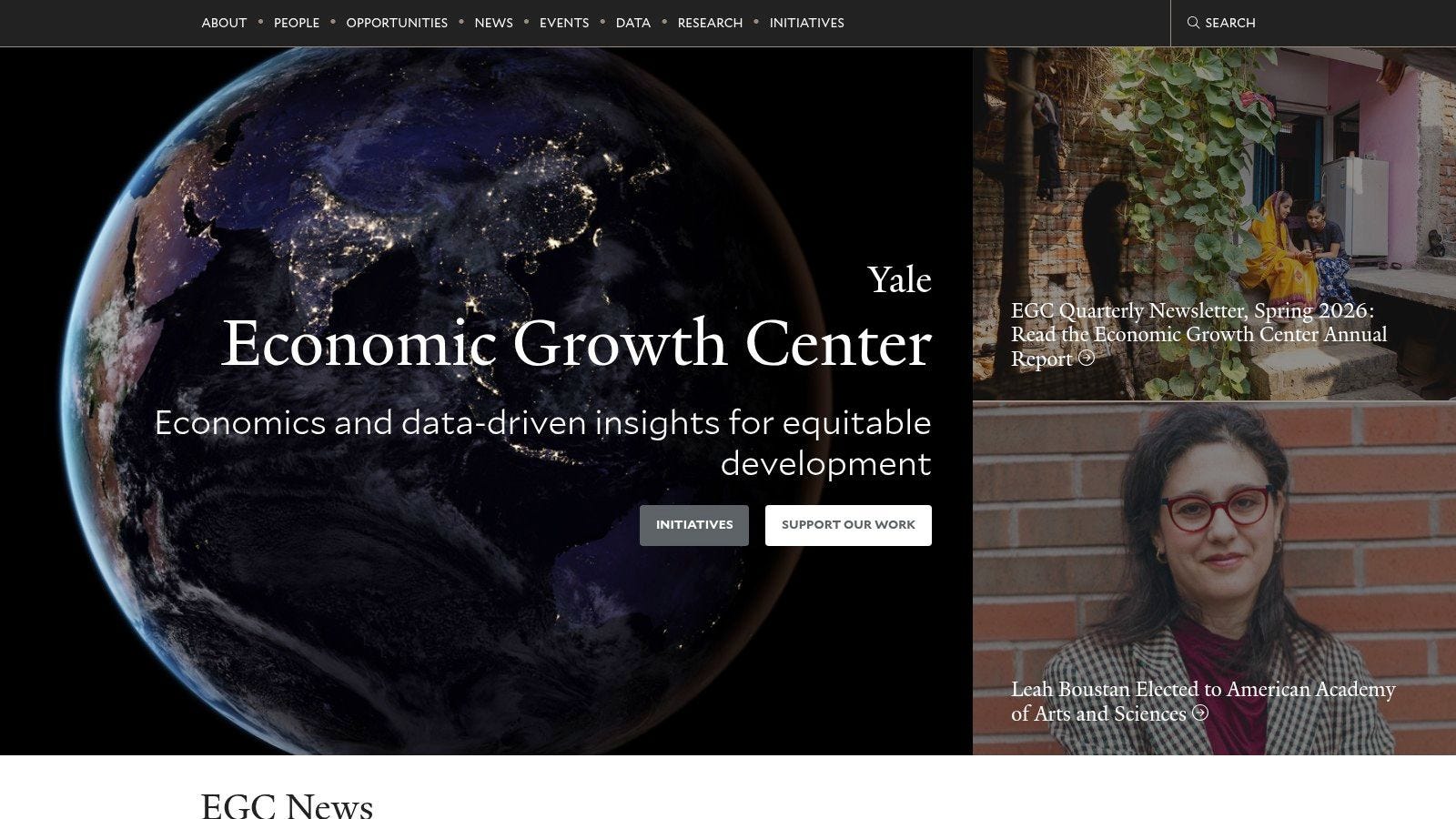
Yale’s Economic Growth Center and Y-RISE make that problem central. That’s a real strength for future MDB staff, because multilateral institutions spend a lot of time dealing with implementation beyond the pilot phase.
Why Yale stands out
EGC gives Yale a durable development economics base, and Y-RISE pushes students toward questions of scale, external validity, and system effects. Those themes are directly relevant to project design, country strategy, and impact assessment in MDB settings.
The other appeal is the cross-school environment. Yale tends to suit students who want economics training but also expect to engage with governance, political economy, or public policy debates outside a single department silo.
A lot of graduate applicants underestimate the value of scale-focused research. MDB work is full of scale problems.
Strengths and limits
Strong on policy relevance: Yale pays attention to what happens when programs expand beyond controlled settings.
Good mentorship environment: Students often benefit from close ties across research centers and departments.
Useful for applied development and political economy: That combination plays well in country operations and advisory roles.
Preparation still matters: The coursework remains rigorous, especially for entrants coming from less technical backgrounds.
Master’s candidates need to check structure carefully: Yale can be a better fit for some tracks than others.
Less obvious as a pre-packaged professional pipeline: You need to build your path actively.
For candidates who want to think seriously about whether evidence travels well across contexts, Yale offers a better platform than many people realize.
Visit the Yale Economic Growth Center.
5. Princeton University
Princeton is one of the clearest bets in this list for candidates targeting economist-track roles at the World Bank, IFC, regional development banks, or top research units that feed into them. It is selective, technical, and built for people who want serious faculty attention rather than a broad menu of loosely connected options.
That trade-off matters.
Princeton’s advantage is not scale. It is concentration. The Research Program in Development Economics gives students a defined home in the field, with work tied to poverty, labor, political economy, conflict, gender, and institutional questions in low- and middle-income countries. For MDB-bound candidates, that kind of concentration can be more useful than a larger program with weaker advising and less coherent research placement.
Where Princeton stands out
Princeton tends to work best for applicants who already know what kind of economist they want to become. If your goal is to build the quantitative depth, research discipline, and faculty relationships that matter for junior economist recruitment, Princeton has a strong case. MDB hiring teams consistently value candidates who can handle identification, write clearly, and move from academic evidence to policy design. Princeton trains that profile well.
The advising model is part of the appeal. In a smaller, research-first environment, faculty attention can shape your field strategy early, sharpen your methods, and improve the quality of your dissertation pipeline. That matters if you are aiming for the more competitive side of MDB hiring, where technical credibility often determines who gets screened in.
Strengths and limits
Strong fit for economist-track MDB careers: Princeton suits candidates aiming at research, evaluation, or analytical roles where technical rigor carries real weight.
Focused development ecosystem: RPDE gives development students a clear institutional base instead of leaving them to assemble one on their own.
High-value mentorship: Close faculty engagement can translate into better research design, stronger references, and better access to policy-facing networks.
Limited master’s flexibility: Princeton is much more attractive for PhD applicants than for candidates looking for a stand-alone professional master’s route.
Very high admissions bar: Strong grades are not enough. Applicants need evidence of mathematical preparation and real research potential.
Narrower professional format: Candidates who want a large policy school environment, broad practitioner electives, or a built-in professional cohort may find Princeton too tight.
Who should choose Princeton: A candidate aiming at economist roles in MDBs who wants rigorous training, close supervision, and a program that prioritizes research quality over program variety.
Visit the Princeton Research Program in Development Economics.
6. London School of Economics and Political Science
LSE has long been oneAsUp one of the strongest names in global development economics, especially for students who want a Europe-based platform with heavy exposure to policy debate. It also appears in the broader range of development-related rankings discussed earlier, and it shows up in field conversations whenever serious applicants compare global options.
What makes LSE distinctive is the combination of academic depth and policy visibility. STICERD and the International Growth Centre keep development research tied to governments, ministries, and policy teams in ways that map well onto MDB careers.
Where LSE has an edge
LSE is especially strong for candidates who want taught master’s options without giving up access to a heavyweight research environment. That’s an important distinction. Some master’s programs train you for policy work but leave you distant from active development economists. LSE doesn’t have that problem.
Its London location also matters. Students get proximity to international organizations, policy events, donors, and a broad professional network spanning Africa, South Asia, Europe, and the Gulf.
What to watch before you commit
Deep bench in development economics: The seminar culture and research environment are major assets.
Policy-facing institutions: IGC in particular helps bridge academic ideas and real government engagement.
Multiple pathways: LSE works for students targeting policy roles, further doctoral study, or internationally oriented research careers.
Expense is a serious drawback: Fees can be high, and London is not cheap.
Program variation is wide: You need to read the fine print on each degree rather than relying on the LSE brand alone.
The environment moves fast: Some students thrive on that pace. Others get lost in it.
LSE is one of the best universities for development economics if you want global reputation, practical policy exposure, and a network that reaches well beyond one country.
Visit the LSE Department of Economics.
7. University of Oxford
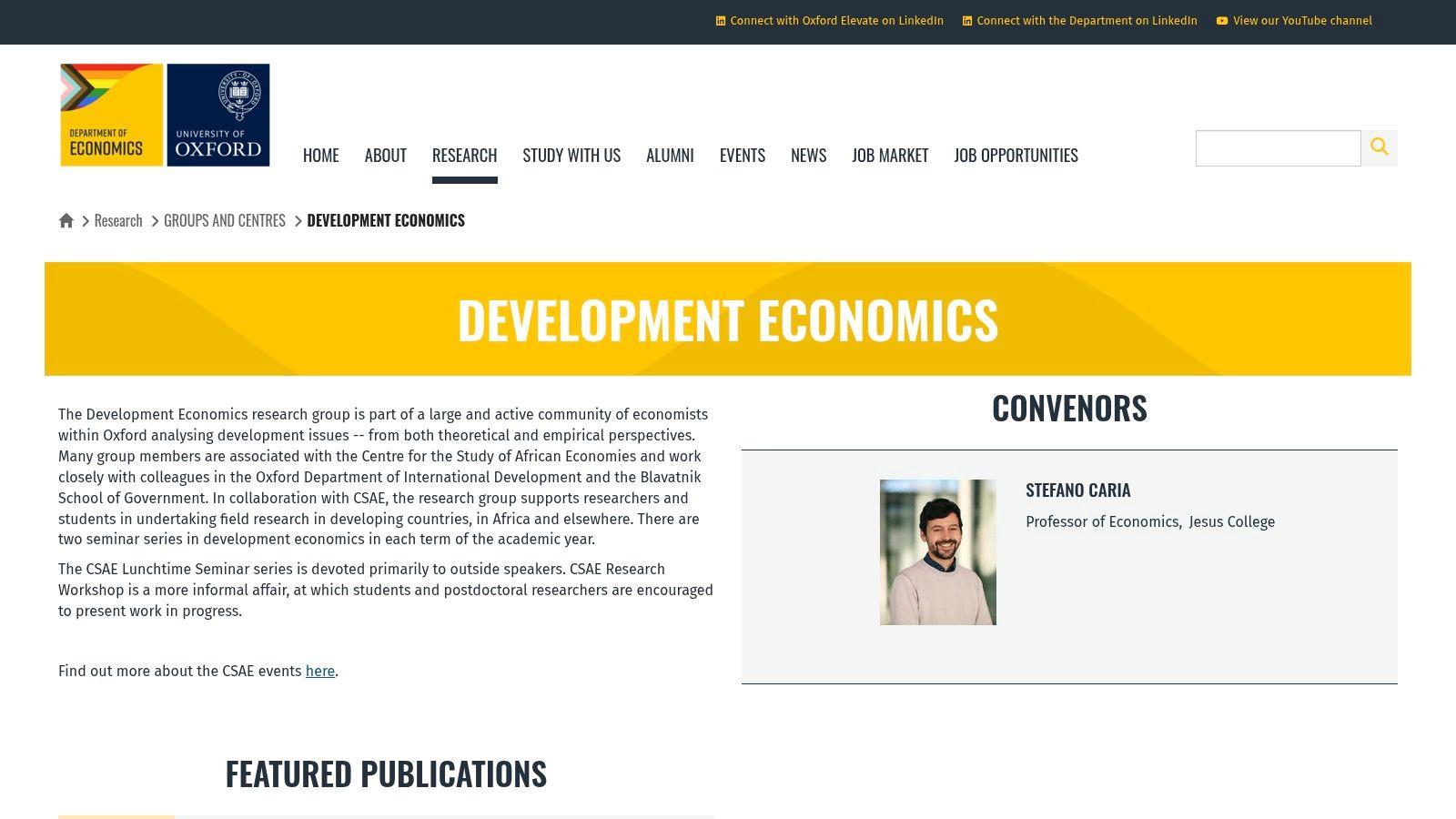
Oxford deserves a place on this list because it offers one of the clearest purpose-built master’s routes into development economics. The MSc in Economics for Development, combined with CSAE and the broader Oxford development community, gives students a focused path with real intellectual coherence.
For applicants who care about African development, Oxford has particular strength. CSAE has been an important center for research, conferences, and scholarly exchange in that area for a long time, and that focus gives the program a distinctive identity.
Why Oxford is attractive
Oxford works well for candidates who want an intensive, academically serious master’s that can lead either into policy work or further doctoral study. The one-year format keeps momentum high. For some people, that’s ideal. You get in, build technical skills quickly, and move into the next step without losing time.
The cross-institutional environment also helps. Students can draw from economics, international development, and public policy communities rather than staying locked in one narrow track.
Oxford is best for disciplined students who already know why they’re there. The pace doesn’t leave much room for wandering.
The main trade-offs
Purpose-built development training: The MSc is tightly aligned with the field.
Strong seminar and faculty network: CSAE adds real value for students interested in developing-country research.
Good progression options: Oxford can support a move from master’s to more advanced study.
One year is short: You have less time for internships, experimentation, and course shopping.
Costs can be substantial: Applicants need to check current tuition carefully.
The pace is intense: That’s a feature for some students and a drawback for others.
Oxford is a strong option for candidates who want a concentrated launchpad into development policy, research, or a later DPhil.
Visit the Oxford development economics program.
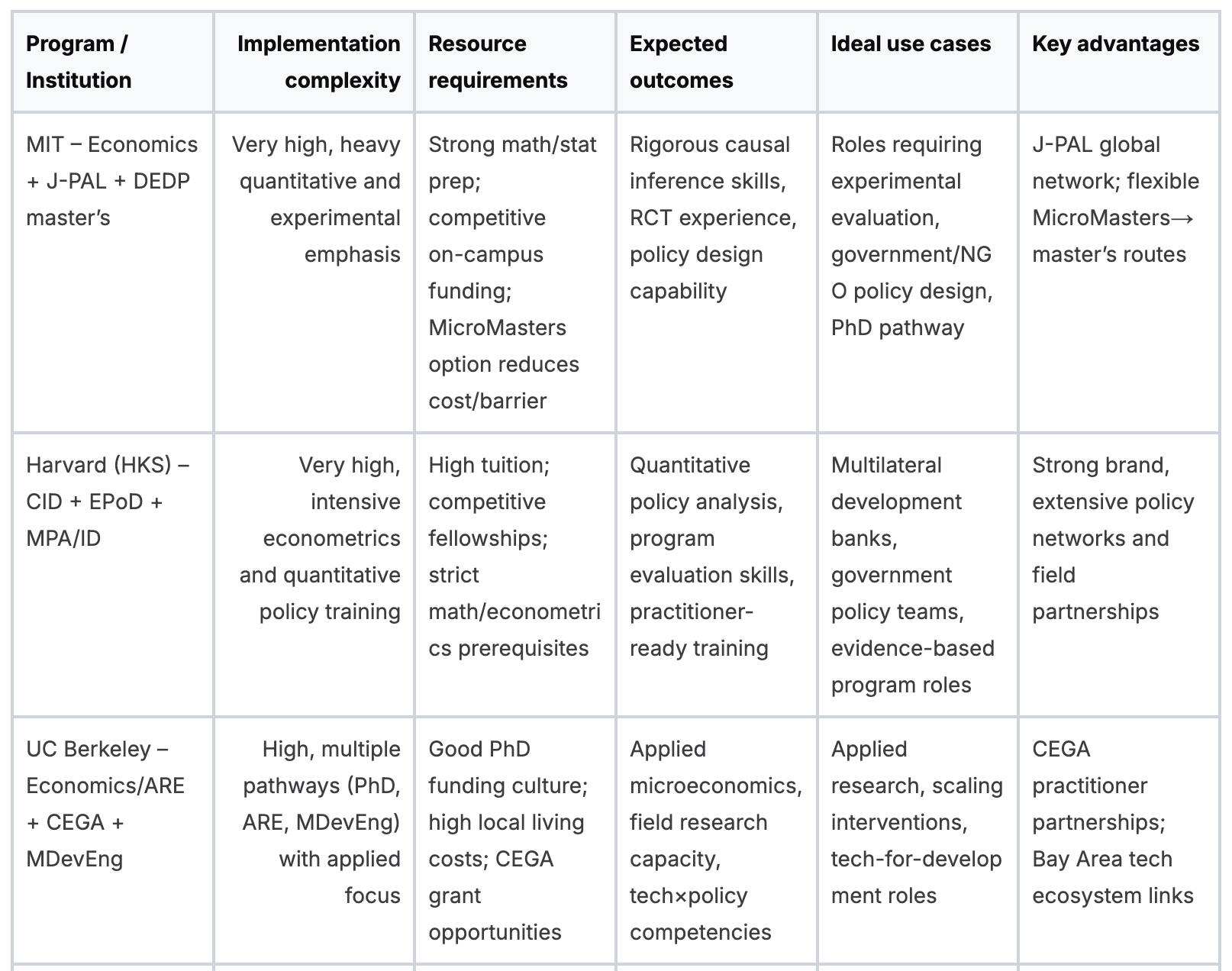
Top 7 Universities for Development Economics, Comparative Snapshot
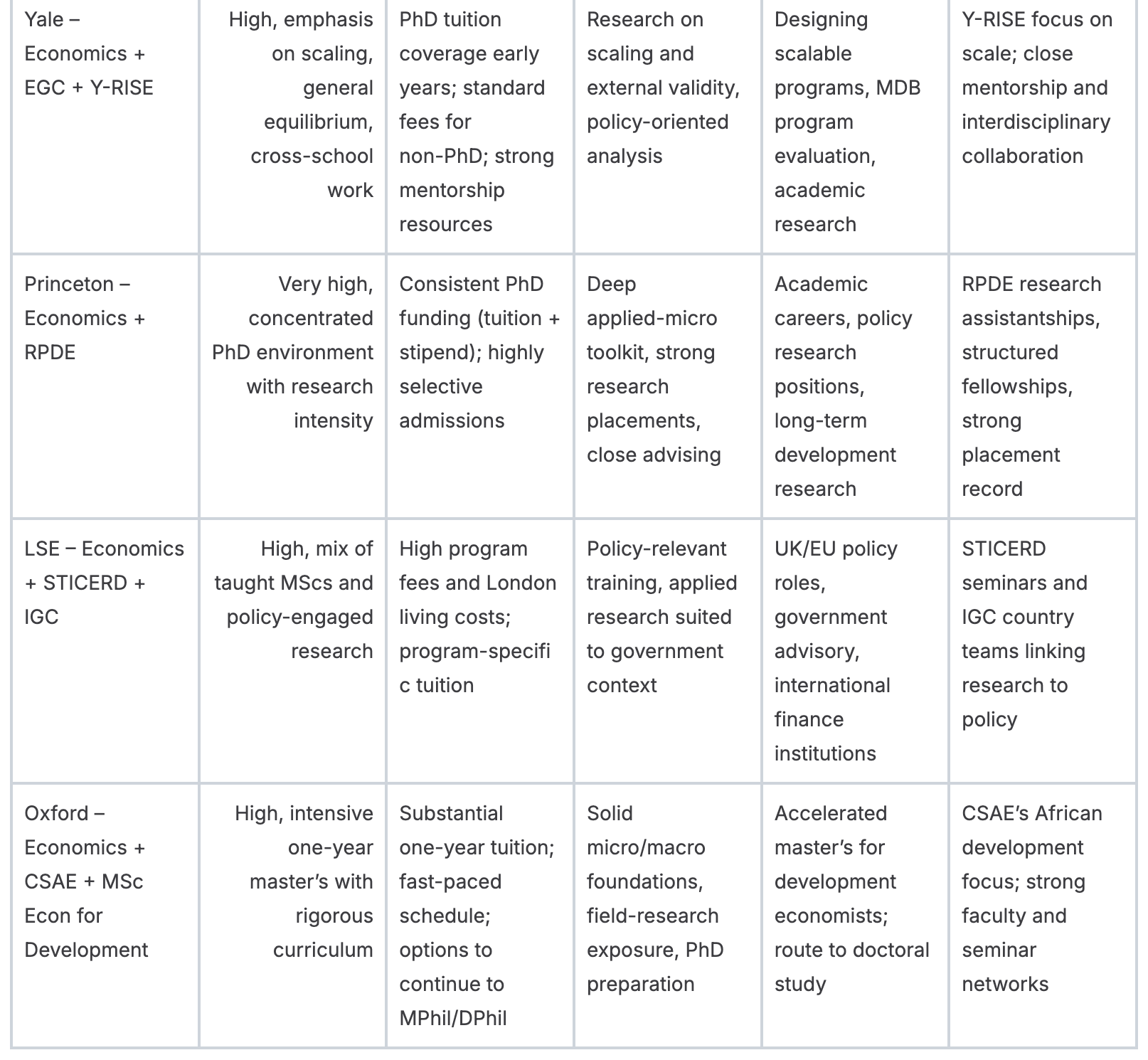
Making Your Final Decision
The wrong degree choice can cost you years if your target is an MDB economist or operations role. Brand matters, but recruiter fit matters more. For this decision, I would judge each program by one question: which one gives you the best shot at the kind of MDB job you want?
Start from the entry point you are aiming for. If you want economist-track roles, including research, country economist, or Young Professionals pipelines with heavy technical screening, choose the program with the toughest training in micro, econometrics, and applied quantitative work that you can realistically survive and perform well in. MIT, Princeton, Harvard, and Yale are usually the strongest bets in that lane. If you want policy design, implementation, public finance, or operational roles that sit closer to government counterparts and project teams, Berkeley, Harvard, LSE, and Oxford can be a better match.
I have seen applicants overpay for prestige and underinvest in fit. MDB hiring teams notice the difference between a candidate from a famous program and a candidate who can already work with causal inference, policy evaluation, macro-fiscal analysis, or large administrative datasets.
Use three filters before you commit:
Quantitative fit: Will the first-term methods sequence stretch you productively, or bury your GPA and confidence?
Faculty and institutional access: Does the program give you real contact with faculty, research centers, and policy networks tied to governments, donors, and international financial institutions?
Placement reality: Do graduates move into the roles you want, such as economist-track jobs, YPP-style pathways, research assistantships that feed into PhDs, or operational policy posts?
Rankings can still help, but only if you read them for what they are. The QS Development Studies rankings show that strong options extend beyond the usual U.S. economics departments. That matters because MDB recruitment does not run through one single academic pipeline. It draws from elite economics programs, policy schools, and a smaller group of departments and centers that are known inside the development community for producing candidates who can do the work.
Popular program lists are less useful for career decisions. The College Factual page on most popular development economics and international development programs measures demand, not MDB placement. Treat that kind of source as market visibility, not employment evidence.
So do the extra checking yourself. Look at recent alumni titles on LinkedIn. Read faculty CVs and see who consults for the World Bank, regional development banks, IMF, or major donor agencies. Ask current students where summer internships happen. A program is much more valuable when it gives you both hard skills and a credible path into the institutions that hire for this field.
If you’re serious about turning one of these programs into an actual MDB career, subscribe to Multilateral Development Bank Jobs. It tracks full-time staff roles, consultant openings, and practical career guidance across major multilateral development banks, including the World Bank, IMF, Asian Development Bank, African Development Bank, and AIIB.