

You’ve probably done the obvious things already. You searched “international development jobs New York City,” set alerts on the big job boards, rewrote your cover letter three times, and still ended up staring at the same recycled listings. That frustration is normal. In NYC, the problem usually isn’t a total lack of opportunity. It’s that the market rewards people who understand how development hiring works here.
New York is dense, crowded, and strangely indirect. The city holds a huge concentration of globally oriented organizations, but the cleanest path into them often runs through roles that look operational, donor-facing, or technical before they look “international development” on paper. If you keep searching only for the label, you’ll miss the jobs that move careers forward.
Why Your NYC Job Search Is Stalling
Most candidates stall because they’re searching by identity instead of function. They want a role that validates their background in global affairs, humanitarian work, or public policy. So they type “international development officer,” “program associate,” or “UN jobs New York” and compete with everyone else doing the same thing.
That’s the wrong starting point in this market.
The bigger picture matters. The New York City metro area includes 1,414 international development and relief organizations that collectively employ over 4,200 people and generate more than $5 billion in annual revenue. That tells you two things immediately. First, the sector is large enough to support real career paths. Second, it’s fragmented enough that a generic search approach will fail.
The obvious path is the most crowded
Most applicants chase the same employers and the same titles. They aim at UN agencies, a handful of major NGOs, and public-facing roles that sound prestigious. Those jobs exist, but they draw heavy competition and often require very specific profile matches.
The hiring manager usually isn’t looking for broad passion. They’re looking for a person who can step into a defined workflow and reduce friction fast.
Practical rule: In NYC, broad interest in development gets attention in networking conversations. Specific operational value gets interviews.
What actually changes your odds
A better search starts with how institutions in New York are staffed. Headquarters and home-based teams need people who can handle donor reporting, proposal development, grants coordination, monitoring and evaluation, communications, partnerships, and cross-functional project support. Those are the jobs that keep organizations moving.
If your search has been stalling, reset it with these moves:
Change your keywords: Search for roles like proposal manager, grants associate, partnerships coordinator, M&E specialist, and business development analyst.
Target institutions, not titles: Build a list of organizations first, then search every open role on their own careers page.
Read postings for function: If a role involves funders, reporting, stakeholder coordination, or program delivery, it may be part of the development pipeline even if the title is bland.
Stop treating NYC as one market: UN system hiring, NGO hiring, consulting hiring, and foundation hiring all run on different logic.
That shift matters more than another round of cosmetic CV edits.
Understanding the Four Types of NYC Development Employers
A candidate applies to 40 “international development” jobs in New York and hears nothing back. Then they apply to a proposal coordinator role at a contractor, an M&E role at an INGO, and a grants role at a foundation. That second batch is much closer to how this market hires.
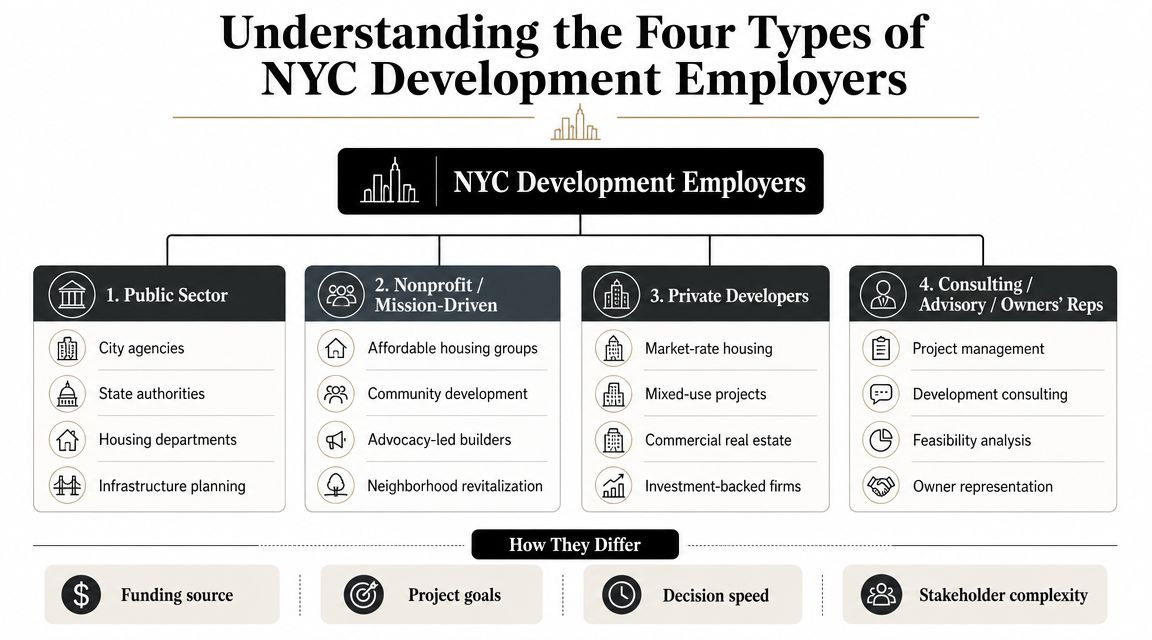
The New York development market is large, but the useful distinction is not volume. It is employer type. Each category hires for different reasons, screens for different signals, and offers different entry points. If you treat them as one pool, you miss the hidden market that sits inside functional teams.
UN agencies and multilateral institutions
These employers attract the most attention and create the most applicant noise. Their hiring is formal, slow, and tightly matched to the posted criteria. In practice, New York roles often center on coordination, partnerships, communications, policy support, and headquarters-side program management rather than field implementation.
That distinction matters. Candidates often pitch broad mission alignment when these offices are screening for multilingual drafting, intergovernmental process knowledge, stakeholder coordination, or experience handling complex internal review chains.
For early-career candidates, adjacent experience can matter more than brand-name aspiration. Paths such as international youth development jobs can build the reporting, partnership, and program support background that larger institutions often expect.
Large INGOs
INGOs are where many candidates should spend more time. New York offices frequently house fundraising, grants management, donor reporting, executive support, advocacy, partnerships, and global program coordination. The work may be one step removed from implementation, but it often gives stronger exposure to budgets, funders, and decision-making than junior field roles do.
This is also where hidden entry points show up. A title like grants associate or program coordinator may place someone at the center of proposal timelines, donor communications, and cross-country reporting. That experience travels well across the sector.
Culture varies a lot. Some INGOs reward policy fluency and external presence. Others care far more about compliance, systems discipline, and clean internal execution. Read the posting for what gets measured.
Consulting firms and contractors
This is one of the most overlooked channels in NYC. Firms supporting USAID, MCC, multilateral clients, public sector reform programs, infrastructure transactions, and evaluation work rarely label every role “international development,” even when the client portfolio clearly is.
They hire against deadlines and deliverables. That changes the profile they want. Strong candidates can manage proposal calendars, coordinate subject matter experts, edit under pressure, support capture work, track procurement requirements, and produce client-ready material without much supervision.
A business development coordinator, proposal manager, research analyst, or project associate role at one of these firms can be a faster entry point than a heavily oversubscribed program title at a better-known NGO. It is less romantic. It is often more practical.
Foundations and philanthropic organizations
Foundations hire fewer people and can be difficult to access without a strong match. They still matter because New York-based philanthropy influences funding priorities, convening agendas, and which implementing partners gain traction.
The common mistake is assuming foundations mainly want field-heavy profiles. Many teams are hiring for judgment, synthesis, concise writing, grants process management, and the ability to assess organizations and ideas quickly. Program associate, grants manager, research associate, and partnerships roles are typical entry points.
Institutional fit carries real weight here. A candidate can be technically qualified and still lose if they come across as purely operational, too transactional with grantees, or unfamiliar with how foundations make decisions behind the scenes.
The short version is simple. UN hiring rewards precision and patience. INGOs reward operational range. Consultancies reward execution under pressure. Foundations reward judgment and fit. Once you sort employers this way, the New York market becomes easier to read and a lot less mysterious.
Where to Find the Jobs That Aren’t Obvious
The highest-value search adjustment is simple. Stop relying on the phrase international development as your main filter.
A lot of strong NYC opportunities are remote or hybrid, tied to New York offices, and buried under functional titles. UNTalent’s New York-linked home-based listings show how many internationally oriented roles now sit outside the classic on-site model. That matters because candidates still search as if every serious role requires daily presence in Midtown.
Search by job family, not by sector label
These functions are common entry points:
Proposal management: Good fit if you can write clearly, coordinate subject matter experts, and work under deadlines.
Monitoring and evaluation: Strong path for candidates who can handle indicators, data systems, reporting logic, and donor requirements.
Partnerships and external relations: Useful for people with stakeholder management, fundraising, or institutional communication skills.
Grants and donor reporting: Often less glamorous from the outside, but central to how NGOs and foundations operate.
Program communications: Strong option if you can translate technical work into donor-ready language.
The title may not look exciting. The exposure often is.
What to type into search bars
Broad phrases often yield noisy results. Use combinations that reflect how real teams hire:
proposal manager global health
grants coordinator international NGO
monitoring evaluation specialist New York
partnerships associate foundation
business development coordinator donor funded
program communications international
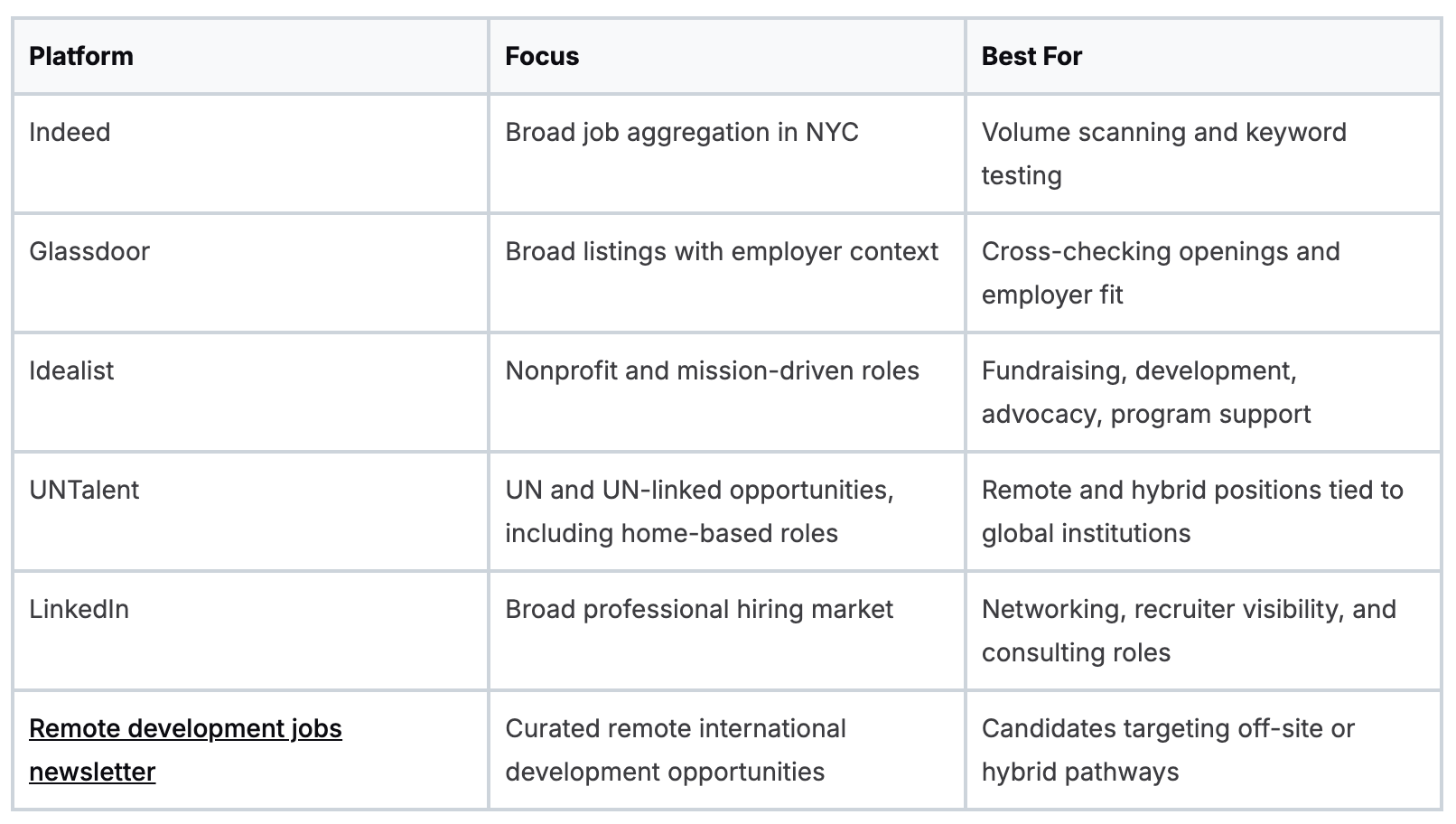
Search on LinkedIn, Indeed, Idealist, organization career pages, and niche platforms. Then search the same terms without “international development.” That second pass usually surfaces roles candidates miss.
Here’s a practical shortlist of platforms to use.
The hidden market inside adjacent institutions
A lot of candidates miss employers that don’t market themselves as development-first brands. Consulting firms serving donor-funded projects, foundations with global portfolios, and public-interest organizations with international partnerships often hire the same core skill sets.
I’ve seen good candidates waste months chasing prestige titles while ignoring the roles that would have made them more employable within a year. Proposal support, donor reporting, and partnerships work may feel indirect. In NYC, they’re often the primary entry point.
Search for the machinery, not the slogan. The machinery hires more consistently.
Tailoring Your CV for the NYC Market
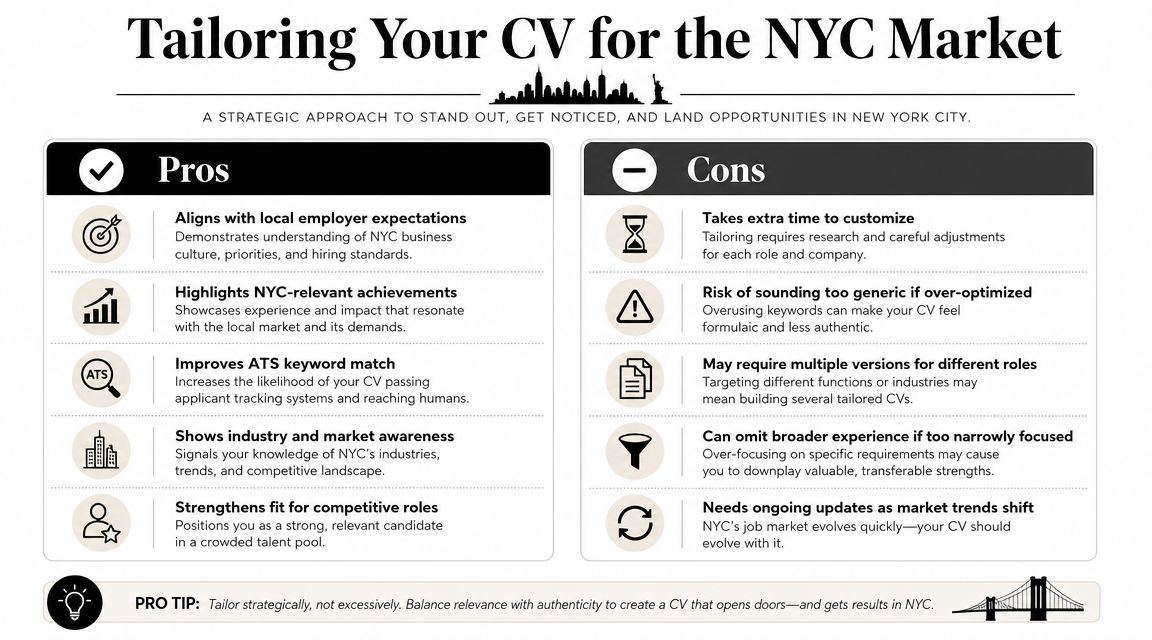
In New York, a generic CV goes unnoticed. It looks educated, earnest, and completely interchangeable.
The local labor market gives you a clue about why. The NYC Comptroller reports that in 2023, 48.2% of workers with a bachelor’s degree held a “good job,” compared with 56.6% for workers with advanced degrees, while non-citizens were nearly twice as likely to be excluded from good jobs as U.S. citizens. For development candidates, that translates into a blunt reality. Credentials, specialization, and work authorization clarity shape outcomes.
What recruiters want to see
Recruiters in this market respond to evidence that you can do specific institutional work. Replace broad labels with functions they can map to a job description.
Instead of this:
Conducted research on international development issues
Supported nonprofit programs
Engaged stakeholders across sectors
Use language like this:
Drafted donor reports and coordinated inputs from program staff
Supported grant deliverables, deadlines, and compliance documentation
Tracked project indicators and contributed to monitoring frameworks
Managed stakeholder communications across internal and external teams
Prepared briefing materials, presentations, and proposal content
The point is accuracy. You’re not dressing up the work. You’re translating it into hiring language.
What to cut
A lot of smart candidates bury their value under academic phrasing.
Cut or reduce:
Overlong summaries: Your profile should show function, region, and tools fast.
Coursework lists: Keep only what strengthens the role you want.
Mission-heavy adjectives: “Passionate,” “committed,” and “driven” won’t separate you.
Fieldwork nostalgia: Keep the focus on execution, outputs, and team contribution.
Your CV should read like a hiring solution, not a statement of identity.
A better NYC CV structure
For this market, a strong layout usually includes:
Headline and specialization
Example: Proposal and partnerships professional with experience in donor reporting, cross-functional coordination, and global program support.Core skills block
Include terms that reflect real screening criteria such as grant management, M&E support, stakeholder coordination, proposal development, donor reporting, cross-cultural communication, and relevant tools.Experience bullets with operational verbs
Use verbs like drafted, coordinated, tracked, produced, synthesized, supported, and managed.Work authorization line if needed
Keep it simple and visible. Don’t make recruiters guess.
A networking email that gets replies
Most outreach fails because it’s vague or selfish. Keep it short and specific.
Hello [Name], I’m exploring NYC-based roles in proposal management, partnerships, and program support within international development. I noticed your background at [Organization] and would value a brief conversation about how your team hires for these functions. I’m particularly interested in how candidates can position experience in donor reporting and cross-functional coordination. If you have time for a short call, I’d appreciate it.
Best, [Your Name]
That works because it respects time, names a function, and shows you’ve done basic homework.
Navigating Interviews, Salary, and Visas
You get the interview. The hiring manager likes your background in global health or education. Then the conversation shifts to a real NYC question: can you keep a proposal on track when legal, finance, and a country office all want changes by 5 p.m.? That is often the deciding point in this market.

Interview for the job you will actually do
Many NYC development roles are not pure policy jobs. They sit in proposal management, partnerships, grants, program operations, and M&E support. Interviews reflect that reality.
A consulting firm may test whether you can manage version control, donor compliance, and impossible timelines without drama. An INGO may want evidence that you can coordinate across headquarters and field teams. A foundation-facing partnerships team may care less about your passion for development and more about whether you can write clearly, brief senior staff, and follow through.
Use examples with operational detail. Name the donor, the reporting cycle, the stakeholders involved, the bottleneck, and the result. Strong candidates do not stay abstract.
Behavioral interviews are common, especially at larger institutions. This guide on how to pass a competency-based interview is useful if you need to sharpen your examples.
A simple structure works well: context, action, result, then what changed because of your work.
Salary conversations in NYC
Pay varies sharply by employer type, funding model, and contract structure. A foundation-backed role, a nonprofit staff position, and a short-term consultancy can look similar on paper and pay very differently in practice.
Use posted salary ranges when they exist. As one reference point, a recent listing on Idealist for a Development Manager role in NYC showed a salary range of USD $61,000 to $65,000 per year. That is only one data point, not a market average, but it helps ground the conversation.
The trade-off is usually straightforward. Nonprofit roles may offer stronger mission alignment and more stable benefits. Consulting roles may pay more but expect longer hours, faster turnaround, and less hand-holding. UN-linked or multilateral-adjacent roles can carry prestige, but hiring may move slowly and contracts may start short.
Ask about compensation after the first serious conversation, once mutual interest is clear. Earlier than that can read as tone-deaf. Later than that can waste weeks.
Visa and work authorization reality
This issue shapes hiring more than many employers admit.
If you need sponsorship, say so clearly and early. Recruiters in New York are screening for risk, budget, and timing as much as skill. A team may like your profile and still pass if they need someone in seat quickly or lack internal approval for visa support.
The hidden market matters here too. Roles in proposal coordination, grants administration, research support, and partnerships operations sometimes offer a more realistic entry point than high-visibility policy jobs. They are closer to revenue, compliance, and delivery. That can make a hiring case easier to defend internally.
UN pathways follow their own rules. NGOs, consultancies, and foundations usually do not. Public-sector and quasi-public institutions can also be worth watching. Empire State Development careers include roles in grants, stakeholder management, growth, and program delivery. Those functions transfer well into development work and can help candidates build a New York track record while broadening their options.
Your 90-Day Action Plan to Get Hired
You don’t need a perfect strategy. You need a disciplined one.
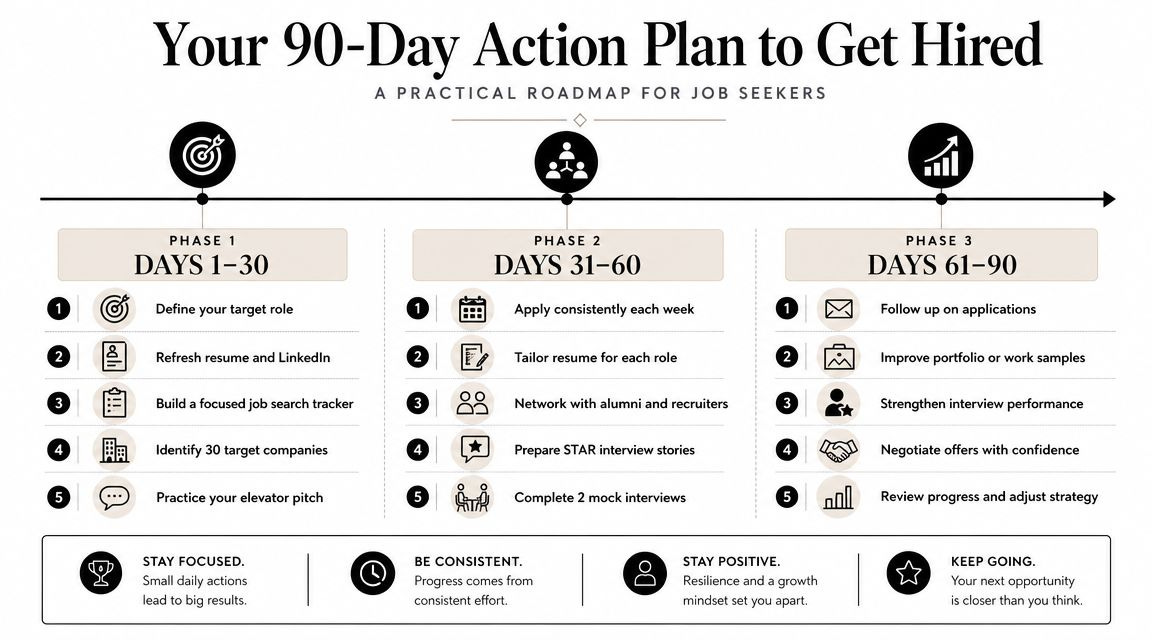
Days 1 to 30
Start with market mapping, not applications.
Build a target list of organizations across four buckets: multilaterals, INGOs, consulting firms, and foundations. Then identify the functions you can credibly pursue right now. Proposal support, grants, M&E, partnerships, communications, and program coordination are usually stronger bets than broad policy roles.
Do these first:
Choose your lane: Pick two or three job families only.
Build an employer sheet: Add target organizations, career pages, and recent openings.
Reach out selectively: Contact a small number of people whose roles match your target functions.
Rewrite your CV once: Tailor it to your chosen lane instead of trying to please every employer.
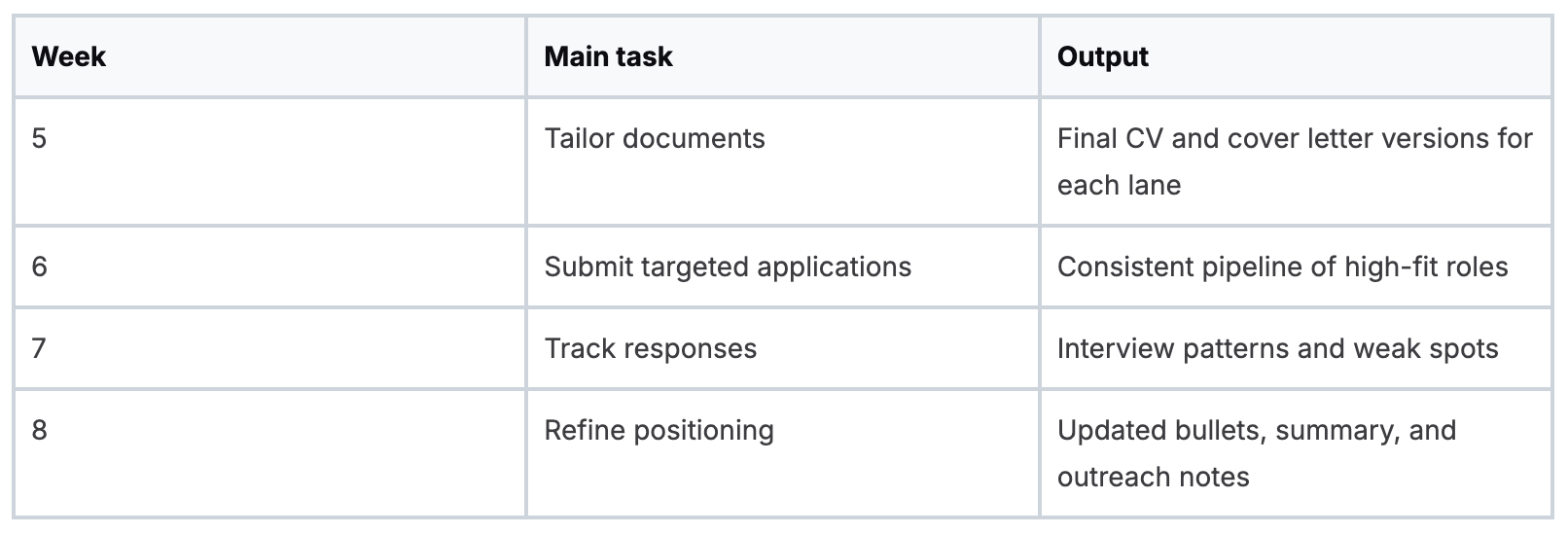
Days 31 to 60
Now apply, but apply narrowly and well.
Aim for a focused batch of targeted applications rather than a flood of generic ones. Match your CV bullets to the posting language. Adjust your cover letter opening so it speaks to the function being hired, not your life story.
Use a simple review loop:
Days 61 to 90
Shift into interview mode and closing discipline.
Prepare five strong behavioral stories that cover deadline pressure, teamwork, stakeholder management, writing, and problem-solving. Keep each example tight. Practice saying them out loud until they sound natural.
Then handle follow-through like a professional:
Send clean thank-you notes: Brief, specific, and within a day.
Track every process: Interview stage, contact person, next steps, and timing.
Evaluate fit objectively: Title prestige matters less than actual scope and growth.
Keep applying while interviewing: Processes fall apart all the time. Protect your pipeline.
Candidates usually lose momentum when they treat the search emotionally. Treat it operationally. That’s how people get hired in this city.
If you want a steady view of roles across multilateral institutions, consultancies, and adjacent development pathways, Multilateral Development Bank Jobs is a practical resource to keep in your mix. It publishes full-time MDB listings, consultant opportunities tied to MDBs and the UN, and long-form guides on topics like young professional programs, nationality requirements, and hiring realities that matter when you’re trying to build an international development career from New York City.