MDB jobs disappear fast. Are you tracking the latest openings?
Subscribe to the Premium Plan and never miss an opportunity:
• Get Staff roles on Mondays
• Get Consultant roles on Fridays
Grab a free trial here to see what you’ve been missing (no payment required).
The New Development Bank was founded by Brazil, Russia, India, China and South Africa to prove that developing countries could run a lender of their own. Eleven years on it has ten members, a former Brazilian president in charge until 2030, and a new five-year plan voted through in India's BRICS year. It lends a fraction of what the big banks do. It is also one of the few development banks where a passport from Dhaka or Tashkent is an advantage.
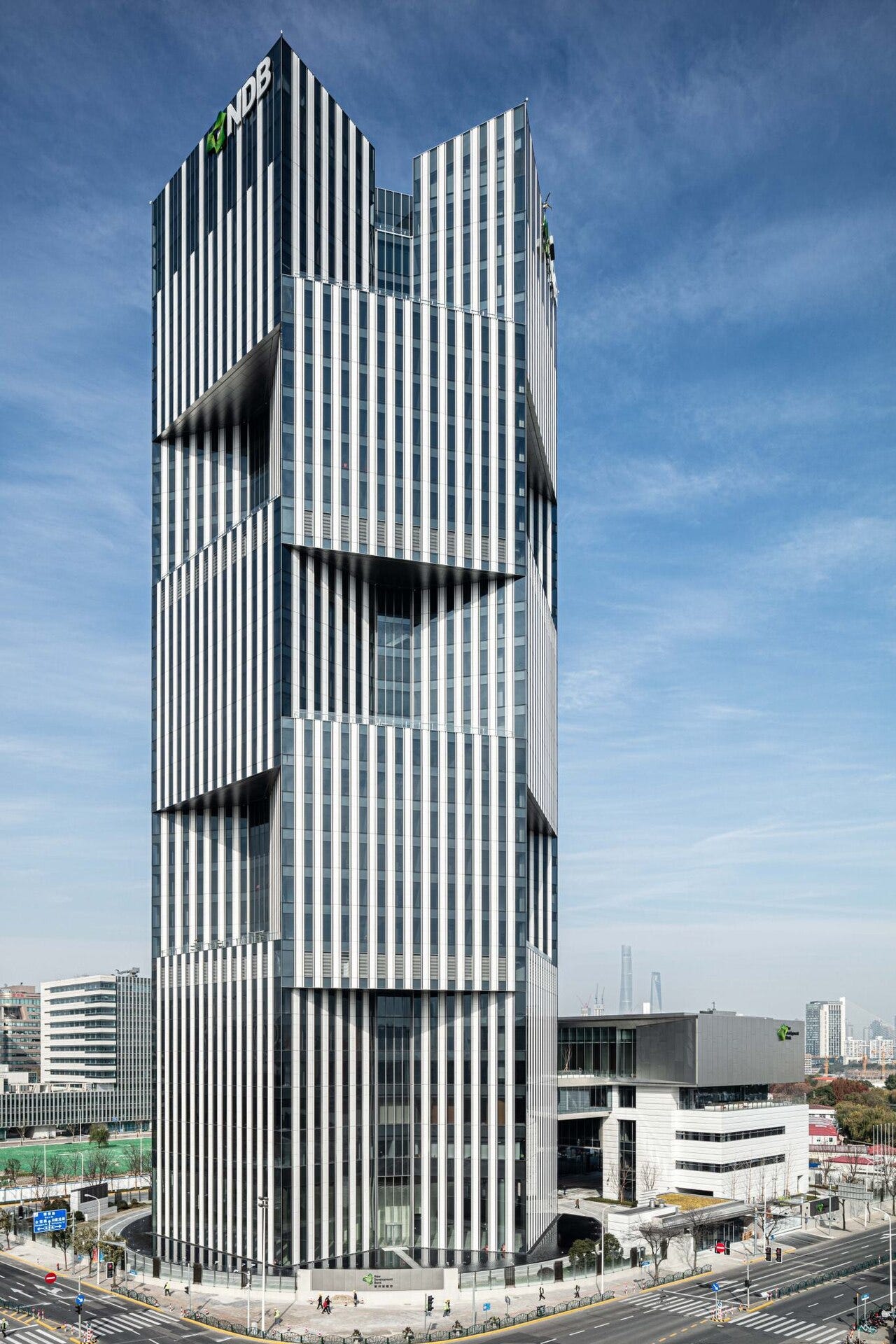
Two announcements came out of the New Development Bank on 10 September, and between them they explain the institution.
In Mumbai the bank’s Board of Governors, the finance ministers of its member countries, held a special meeting and approved a General Strategy for 2027 to 2031. India holds the BRICS chair this year, and the governors met on its turf. The document’s theme is “Delivering Impact with Purpose, Passion and Partnerships”, which could have come from any development bank on earth. What’s inside it could not.
The other came from the bank’s treasury, which had priced a 7 billion yuan Panda bond in three-year and five-year tranches. A Panda bond is a yuan bond sold inside China by a foreign borrower. The bank raises renminbi from Chinese investors and can then lend renminbi to its clients, with no dollars anywhere in the chain. So in the same week the governors voted for a strategy and the treasury went out and funded it in yuan.
The bank that did both is younger than most of the people who work in it. The BRICS leaders signed its founding agreement in Fortaleza, Brazil, on 15 July 2014, and it opened in Shanghai a year later with $100 billion of authorised capital, $50 billion of it subscribed at the start. The five founders took equal shares of 20 percent each. That was a deliberate break from the World Bank, where the United States is the largest shareholder by a distance, and it came with a second break that the bank’s president still repeats at every opportunity. “NDB is a Bank of the Global South, for the Global South,” Dilma Rousseff said in August, “mandated to mobilize resources without conditionalities.”
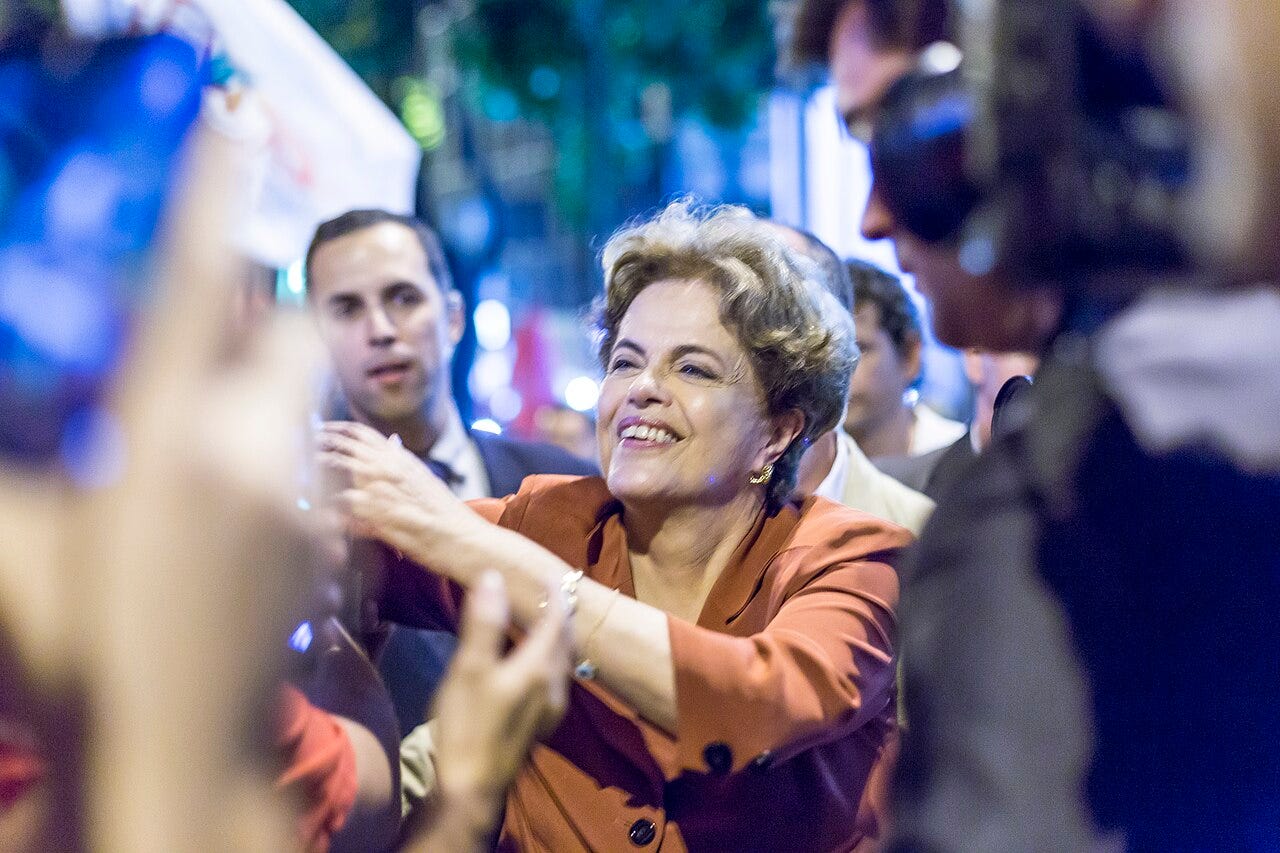
Rousseff is the reason people outside finance have heard of the place. She was president of Brazil from 2011 until her impeachment in 2016, and in March 2023 she became the bank’s third president, after the Indian banker K. V. Kamath and the Brazilian economist Marcos Troyjo. On 19 March 2025 the governors re-elected her unanimously for a term that runs from 7 July 2025 to 6 July 2030. So the strategy approved in Mumbai is hers to deliver, start to finish.
What she inherited is modest by the standards of the sector. By the first quarter of 2026 the bank had approved 140 projects worth $42.9 billion over its lifetime. In 2025 it approved 19 projects for $3.2 billion. The Asian Development Bank committed $29.3 billion that year and the Asian Infrastructure Investment Bank, which opened within months of the NDB, approved $10.6 billion. The bank’s own strategy for 2022 to 2026 had aimed for $30 billion of approvals over the five years, a pace that $3.2 billion a year doesn’t reach. One of its founders is also a problem. The bank put new transactions in Russia on hold in March 2022, which is awkward for a lender that drew a fifth of its founding capital from Moscow.
Membership has been slow too. Bangladesh and the United Arab Emirates were the first to join from outside the BRICS, in 2021. Egypt followed, then Algeria. Uzbekistan became the tenth member on 5 June 2026, the first from Central Asia, and Rousseff welcomed it “to the growing family of NDB member countries”. Uruguay, Colombia and Ethiopia have been admitted by the governors but aren’t full members until they deposit their accession papers.
Rousseff has been frank about the constraint. At the annual meeting on 20 May she told governors something development bank presidents rarely say. “The Bank cannot expand in all directions simultaneously. It must concentrate its efforts on where it can deliver the greatest impact to development.” The bank she described would be “larger, greener, more digital, more innovative, more agile, and more cooperative, while remaining grounded in pragmatism”. She called the coming years its “second golden decade”, which is generous to the first.
The strategy puts numbers on the concentrating. Rousseff set out the targets on 12 August, at a seminar the bank ran with India’s finance ministry on the margins of the BRICS finance ministers’ meeting. Non-sovereign operations, meaning loans to companies and banks without a government guarantee, are to reach 35 percent of financing, up from a 30 percent target in the current plan. Climate finance goes from 40 percent to 45. There is a new target of 10 percent for innovation and digital projects. Between 20 and 30 percent of projects are to be co-financed with partner institutions. And the share of lending in local currencies, which the current plan set at 30 percent, is to be 40 to 50 percent.
That last one is the bank’s real distinction, and it’s already ahead of its own paperwork. In 2025, 46 percent of approvals were in local currencies. The logic is easy to follow if you have ever been paid in one currency and owed rent in another. Take a water utility in Maharashtra. It earns rupees. If it borrows dollars and the rupee falls, its debt grows while its income doesn’t, and that mismatch has wrecked plenty of sound projects. A bank that can lend rupees, rand or renminbi takes the problem away. In June the bank’s directors approved rand loan pricing based on ZARONIA, South Africa’s overnight reference rate, alongside a $1 billion programme for eight South African metropolitan municipalities. The bank has done its first private sector financing in Indian rupees and has lent yuan for infrastructure in Brazil.
India is where the plan becomes concrete. The bank has approved nearly $10.5 billion for 35 projects there, eight of them non-sovereign deals in clean energy. Rousseff said in August that it plans an Indian rupee bond programme of 250 billion rupees, about $2.5 billion, over five years, plus $1 billion a year of sovereign lending for five years, which adds up to $7.5 billion. Nirmala Sitharaman, India’s finance minister and its governor at the bank, told the seminar the bank’s advantage lay in strengthening the investment climate as well as financing infrastructure. Rousseff’s version was more practical. “Well-prepared projects are far more likely to attract private capital.”
For a job seeker the first thing to know about this bank is its size. It has a few hundred staff. Headquarters is in Shanghai, with regional offices in Johannesburg, São Paulo, Moscow and Gujarat. A place that small posts few vacancies, and each one draws less competition than the equivalent at the World Bank, partly because so many applicants never look.
The second thing is the passport. The 2026 internship, which closed on 30 June, was open only to nationals of member countries, aged 30 or under, with no more than a year of full-time work experience and a master’s degree finished in the last twelve months or still under way. That is a narrow gate, and for the right person a useful one. If you are Bangladeshi, Egyptian, Emirati, Algerian or Uzbek, your country has a seat at a bank most of your peers have never thought of applying to. The same applies to South Africans and Brazilians who have assumed the bank is a Chinese and Indian affair.
The bank also hires Young Professionals into named departments. A public sector posting that closed in June 2025 asked for a master’s in economics or finance and at least three years in a financial institution or consultancy appraising investment projects, to work in Shanghai on sovereign operations in water, transport, urban development, energy and health. Another was for private sector and non-sovereign transactions. Read against the new targets, the second kind is where the growth is. A bank moving from 30 to 35 percent non-sovereign needs credit analysts and deal structurers. A bank lending half its book in local currencies needs treasury people who understand onshore bond markets in Mumbai, Shanghai and Johannesburg, and that is a rarer skill than dollar funding. The 10 percent digital target needs someone who can appraise a data centre or a payments system as carefully as a road.
There’s a real caveat. This is a bank whose volumes are small, whose largest founders don’t always agree with one another, and whose ambitions have run ahead of its approvals before. Five years in Shanghai is also a bigger life decision than five years in Washington for most people. But the governors have now told Rousseff what they want by 2031, and a few hundred people have to deliver it.
Make sure you subscribe to MDB Jobs to get the latest vacancies delivered straight to your inbox each Monday, and consultant positions each Friday.