Hey guys,
We’re extending our 1st birthday offer for another two days. You can get 50% off an MDB Jobs subscription.
That makes it ~15 Euros for an entire year 🤯.
Grab your discount here.
With a paid subscription, you’ll get:
Staff roles on Mondays
Get Consultant roles on Fridays
For a year, the UN80 reform was a story about money running out. Now it has become something more consequential: a story about which parts of the United Nations will still exist when the money comes back. Agencies are being merged, sunset and relocated, and a workforce of internationals is learning which skills the system of 2027 will actually pay for.
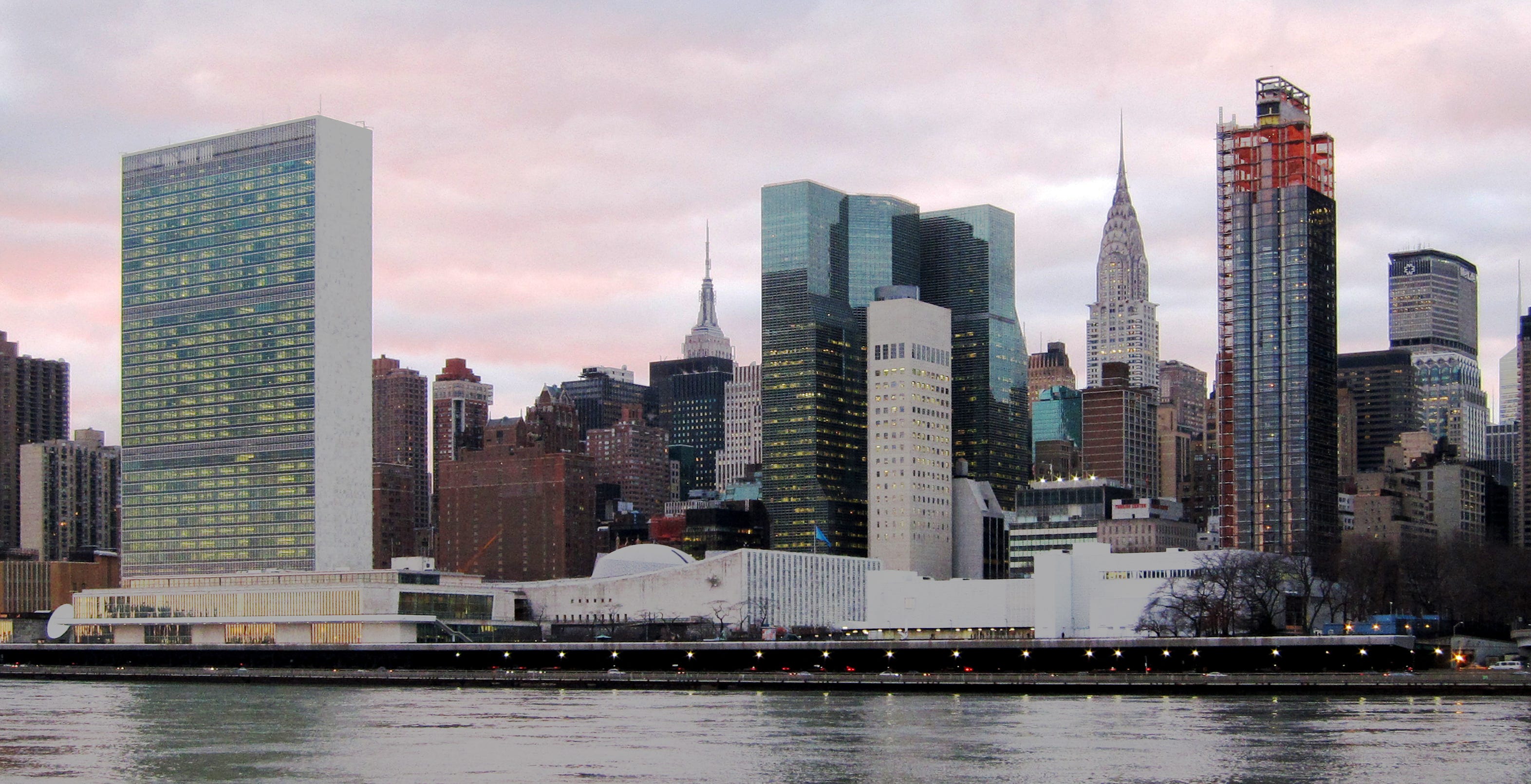
On 28 May 2026, António Guterres stood before an informal plenary of the General Assembly and told the member states that the reform he launched fourteen months earlier had entered “a critical new phase of decision-making and delivery.” The phrase was bureaucratically bland, which is how the United Nations tends to announce its most dramatic moments. What it meant in practice was this: the era of studying, assessing and consulting was over. The era of deciding which organs of the world body to fuse, which to shut down, and which cities would lose thousands of international jobs had begun.
The numbers behind the moment were settled six months earlier, in the small hours of the year’s end. On 30 December 2025, after twenty plenary meetings of the Fifth Committee, the General Assembly’s budget body, member states adopted a regular budget of 3.45 billion dollars for 2026. It passed without a vote, which in UN procedure signals consensus, though the consensus was of the grim variety. The budget abolished roughly 2,900 posts. Guterres himself would later describe it as “a 21 per cent reduction in Secretariat posts for 2026.” Across the wider system, the United Nations expects its total resources to fall by about a quarter, from 66 billion dollars in 2024 to 50 billion in 2026. The World Food Programme has warned it will cut at least 6,000 staff. Peacekeeping planners, watching roughly 1.6 billion dollars in unpaid member contributions, have prepared contingency measures that would trim mission spending by 15 percent and send home a quarter of uniformed personnel.
The architecture of the response is called the UN80 Initiative, and its engine room is run by Guy Ryder, the British former trade unionist who led the International Labour Organization for a decade before becoming Guterres’s Under-Secretary-General for Policy. Ryder chairs the UN80 task force that meets weekly; Guterres chairs the steering committee that meets monthly. Their plan, published in November 2025, contains 87 actions grouped into 31 work packages, a taxonomy that sounds dry until you read what the packages actually contain. One of them proposes merging the UN’s two agencies for women. Another would wind down UNAIDS entirely. “We are now entering the delivery-focused phase of our work,” Ryder said in April. He was not exaggerating.
The merger that has drawn the most fire is Work Package 4: the proposed combination of UNFPA, the sexual and reproductive health agency, and UN Women, the entity created in 2010 to champion gender equality. A strategic assessment published at the end of March found the merger “technically feasible” and proposed a composite entity, a structure in which the two organisations would keep their separate mandates but operate under a single governance roof. The model is borrowed from UN Women’s own origin story; it was assembled in 2010 from four predecessor bodies. The projected savings are 32 to 38 million dollars a year, a figure that critics note is small against the political risk. More than five hundred civil society organisations signed an open letter to Guterres warning that sexual and reproductive health and rights get “deprioritized, underfunded or rendered politically invisible” when absorbed into broader mandates. Sweden told the General Assembly it did not see sufficient analysis showing how a composite model would preserve mandate integrity. Brazil called the risks “almost certain.”
The two women running the agencies have walked a careful line in public. Sima Bahous, the Jordanian who leads UN Women, framed the question rather than answering it: “Could a different configuration better equip the UN system to deliver results?” Diene Keita, the Guinean former minister who took over UNFPA in 2025, was blunter about the difficulty, warning that “a potential merger of this scale is very complex” and that phased sequencing and explicit safeguards would be essential. Above them both, Deputy Secretary-General Amina Mohammed has been unambiguous about the direction: “The status quo is not an option.” The full assessment went to the two agencies’ executive boards in May and June. The Secretary-General will then decide whether to send the General Assembly a formal merger proposal.
UNAIDS is getting the harsher treatment. The joint programme that led the global HIV response for three decades is not being merged; it is being sunset, with its functions mainstreamed into eleven co-sponsoring agencies, its secretariat shrinking and its country footprint consolidating while a final transformation plan moves toward decisions in late 2026. A merger assessment of UNDP and UNOPS is on the same May-June track as the gender one. Smaller consolidations have already been approved: a unified peacebuilding office, a single Women, Peace and Security unit, merged regional divisions in the political and peacekeeping departments. And a long-awaited review of the future of peace operations, drafted in-house with submissions from 47 member states, is due before the General Assembly and Security Council this summer.
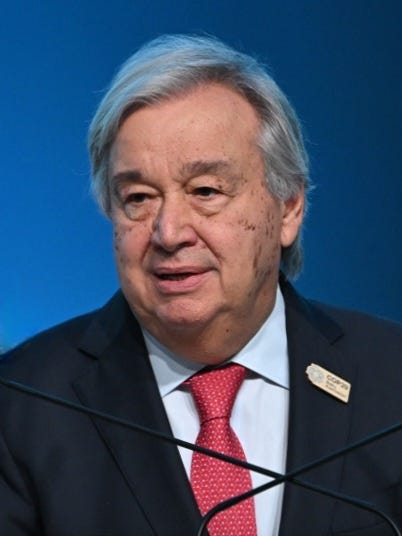
The staff are not going quietly. The Geneva staff union’s Laura Johnson called the exercise “rushed” and “the opposite of strategic reform,” warning it risks leaving the organisation with fewer resources and no new efficiencies. The coordinating committee representing 60,000 international staff wrote to all 193 member states calling the initiative incoherent. Richard Gowan of the International Crisis Group offered the cold outside view: “The goal here is very much shrinking the United Nations,” he said, an exercise in “doing less with less.” Two scholars writing in Just Security put the deeper fear into words: an institution “hollowing itself from within” may be a bigger threat to the UN than any of its external detractors.
For readers building careers across the multilateral system, the practical question is not whether the wave is real but where it is depositing the sand. Look past the rhetoric at what the Secretariat has actually done. Eleven separate administrative teams in New York have been merged into a single platform serving 6,000 personnel, with five more duty stations to follow. Ten payroll centres have become one global team. Some 220 Secretariat posts have been relocated out of high-cost cities, with around 1,900 more moving across the wider system; the destinations gaining weight are Nairobi, Bonn, Vienna and a new Digital Hub in Valencia. A UN Data Commons spanning 26 entities goes live in September. A Unified Services Roadmap is consolidating procurement, supply chains, finance, ICT, logistics and human resources across the system, and supply chains alone account for roughly 70 percent of humanitarian spending. The functions growing through the wreckage are operational: shared services, data, digital platforms, supply chain management. The functions shrinking are the ones the old system had in abundance: policy posts in New York and Geneva, duplicated back offices, conference machinery that by one NYU analysis consumes 360 million dollars a year producing 2,300 pages of documents daily, a fifth of which are downloaded fewer than a thousand times.
The career strategy that falls out of this is uncomfortable and clear. Candidates targeting the UN system should aim at the consolidating operational functions and the rising duty stations rather than the legacy policy centres, and should treat data, digital delivery and supply chain skills as the strongest currency in the 2027 system. And those weighing the UN against the multilateral development banks should notice the asymmetry: while the UN cuts a fifth of its Secretariat, the World Bank and the regional banks are still hiring, and the operational skills the UN is teaching its survivors transfer almost perfectly.
The last complication is the calendar. Guterres’s term ends on 31 December 2026. The General Assembly president, former German foreign minister Annalena Baerbock, has already said implementation will run well into the next session, which means the most consequential restructuring in UN history will be executed by a Secretary-General who has not yet been chosen. Guterres, for his part, has framed the gamble in the language of a man who knows he is out of alternatives. “Change is a given,” he told the member states in May. “The question is whether it will be reform that is planned and strategic.” The system he leaves behind will be smaller. Whether it will be better is the question his successor inherits.
Make sure you subscribe to MDB Jobs to get the latest vacancies delivered straight to your inbox each Monday, and consultant positions each Friday.