MDB jobs disappear fast. Are you tracking the latest openings?
Subscribe to the Premium Plan and never miss an opportunity:
• Get Staff roles on Mondays
• Get Consultant roles on Fridays
Grab a free trial here to see what you’ve been missing (no payment required).
In the first days of July the European Bank for Reconstruction and Development opened its doors in Lagos. It took a treaty change, three years of ratifications and a German economist who had already built one new region for the bank. The office is the first of five planned south of the Sahara, the deals are coming quickly, and the people being hired to do them mostly did not come from development at all.
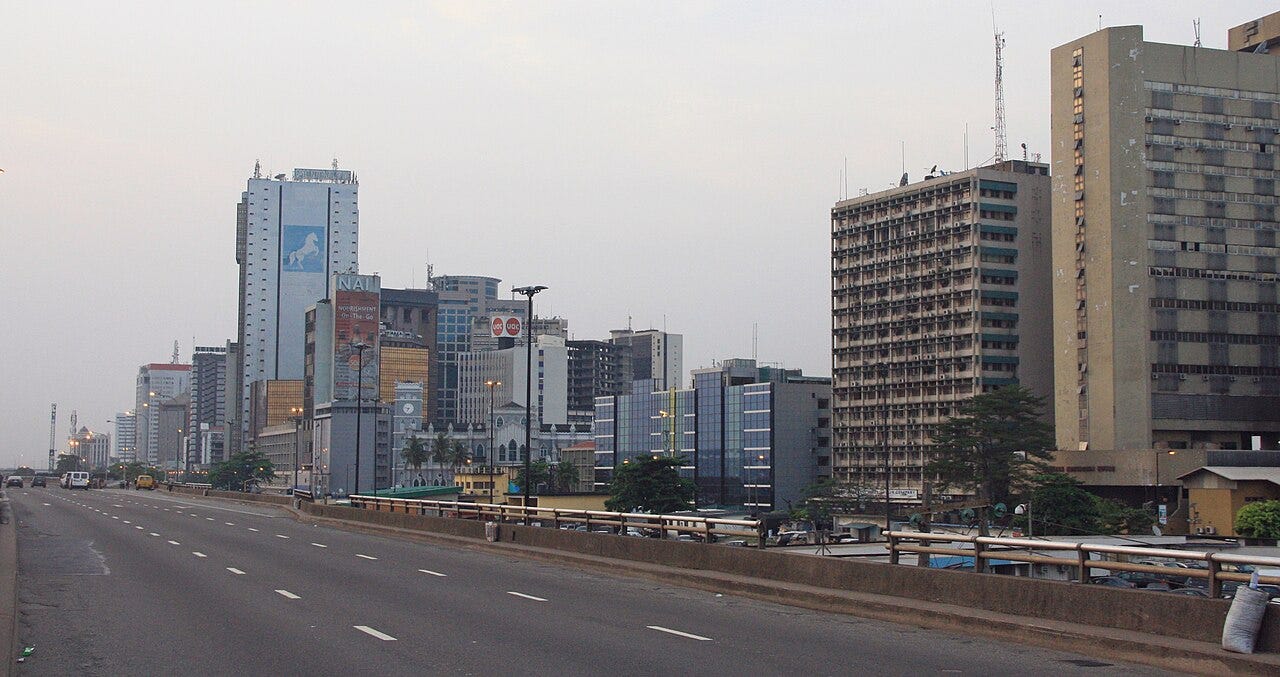
Heike Harmgart was in Lagos on Friday 3 July with a number she clearly enjoyed saying out loud. “I’m personally very proud of Hamza and the team that we are already at $280 million,” she told reporters, “although we’ve only been here for less than a year.”
Hamza is Hamza Al-Assad, the bank’s director for Nigeria. The team is 16 investment professionals. And “here” is a city about 5,000 kilometres from the headquarters of an institution whose name still describes a different job on a different continent. The European Bank for Reconstruction and Development was set up in 1991, after the Berlin Wall came down, to help the countries of the old Soviet bloc build market economies. For its first two decades it stayed close to that brief. Its vice president for banking, Matteo Patrone, had flown in that week to open the bank’s first office in sub-Saharan Africa, with Nigeria’s finance minister, Taiwo Oyedele, and the European Union’s ambassador, Gautier Mignot, among those he met. “The opening of our office in Lagos marks an important step in the EBRD’s work in Nigeria,” Patrone said.
Harmgart, the bank’s managing director for sub-Saharan Africa, then gave the figure that made the local headlines. “We want to pursue as many opportunities as possible. Over the next three years, our expectation is that we would do a minimum total of $1.5 billion.”
A minimum. In one country.
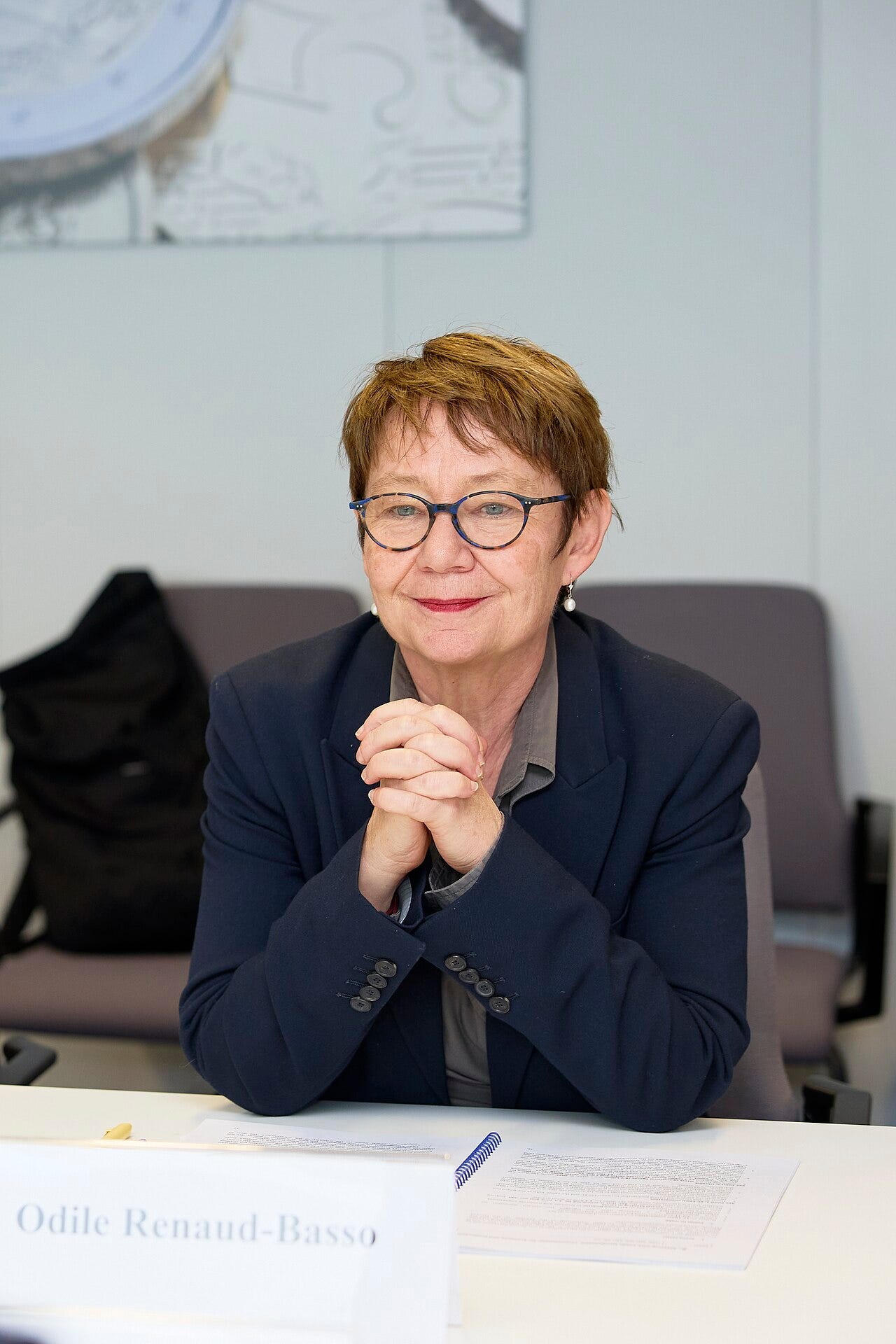
How a European transition bank ended up making that promise in West Africa is a story about an institution that keeps outgrowing its name. The first time was in 2011, when the Arab Spring persuaded its shareholders to let it invest in Egypt, Jordan, Morocco and Tunisia. That region, which the bank calls the southern and eastern Mediterranean, had absorbed €19 billion across 363 projects by 2023. So when the governors met in Samarkand in May 2023 they had a precedent in front of them. They voted to amend the bank’s founding treaty to allow what the bank called a limited and incremental expansion into sub-Saharan Africa and Iraq. Six African countries were named: Benin, Côte d’Ivoire, Ghana, Kenya, Nigeria and Senegal. “This is a very important moment for the Bank,” said Odile Renaud-Basso, the former French treasury official who has been its president since 2020.
Then nothing visible happened for two years, because a treaty amendment is a slow thing. The change was to Article 1, the clause that defines where the bank may work, and it needed formal acceptance from enough of the shareholders, one capital at a time. The threshold was reached in April 2025. On 15 May 2025 the governors granted Benin, Côte d’Ivoire and Nigeria the status of countries of operation, effective when the amendment came into force that July. “We are looking forward to launching our activities there swiftly and establishing official representations in these countries,” Renaud-Basso said. Kenya and Senegal became shareholders on 23 July 2025, taking the membership to 79. Kenya’s treasury secretary, John Mbadi, called it “a significant milestone in the country’s deepening integration into global financial architecture”. A few weeks earlier, at the UN’s financing for development conference in Seville, President William Ruto had announced, as Financial Afrik reported it, that the bank had picked Nairobi for its first African headquarters.
While the lawyers waited, Harmgart built. She is German, with a doctorate in economics from University College London, and she joined the bank as an economist in 2006 after stints at the Economist Intelligence Unit and the Institute for Fiscal Studies. In 2013 she went to Amman to head the Jordan office. By the time she left the Mediterranean region she was running it from Cairo, with 150 staff and about €2 billion of business a year. In September 2024 the bank gave her the title of managing director for sub-Saharan Africa and a region with no offices, no clients and no portfolio.
She started with people. Launch Base Africa, which tracked the appointments, listed three country heads by September 2025. Al-Assad, an Egyptian-Jordanian who had worked on climate strategy for the bank in the Mediterranean, got Nigeria. Khalil Dinguizli, a Tunisian-French banker who had run the bank’s Lebanon office and before that worked at Crédit Agricole’s investment bank, got Senegal. And for Côte d’Ivoire the bank went outside. Asari Efiong is a British-Nigerian with more than 15 years in finance at Merrill Lynch and Morgan Stanley. Two insiders who had done a start-up region before, and one investment banker.
The deals followed quickly. The first was a €30 million sovereign loan to Benin’s national power distributor, which the bank recorded as its first investment ever in sub-Saharan Africa. Nigeria came next with a $100 million trade finance facility for Access Bank, and Côte d’Ivoire with agribusiness. In February 2026 Renaud-Basso made what the bank called a historic first visit to Nigeria, telling her hosts that the country was one “where our private-sector-focused model can make a real difference”. At the annual meeting in Riga in June she was more relaxed about it. “We have got off to a flying start in our new region,” she said, “just as we did 15 years ago in the southern and eastern Mediterranean.”
July bore her out. A week after the Lagos opening the bank approved a senior loan of up to €270 million to Yas, a pan-African telecoms company, including up to €170 million for network investment in Senegal and Kenya, its first project in Senegal. It also opened a trade finance line of up to €15 million with Ecobank Senegal. On 29 July it announced a $100 million loan to KCB Bank Kenya for small businesses, with 35 percent set aside for firms led by women and young people and 30 percent for green investment. Devex, in a long report on the Africa push, counted roughly €400 million signed since the previous October and nearly 100 staff hired across five offices. In Nigeria alone, Harmgart said, the bank had invested $180 million in the first half of 2026 and expected to reach $300 million by the end of the year.
The EBRD does not work like the World Bank or the African Development Bank, and you need to know the difference before applying. Most of its money goes to private companies and banks, with only a small share lent to governments. It takes equity stakes as well as lending. And in Nigeria, Harmgart said, it is working without country allocations, financing whatever viable projects turn up. The sectors her team has named are agribusiness, telecoms, technology and mining. Devex reported that the emerging strategy includes local currency lending, port infrastructure and critical minerals, up to and including equity in mineral exploration, which is about as far from a classic aid project as a development bank gets.
That shapes who gets hired. The new staff, Harmgart told Devex, have mostly come from the African private sector, from commercial banks and accounting firms. That is a hiring policy, stated plainly. A banker in Lagos who has spent six years in corporate credit at a Nigerian lender, knows which mid-sized manufacturers are good for the money and can read a set of local accounts is more use to this bank than someone with a development studies degree and no deal experience. The same goes for trade finance officers, telecoms and infrastructure analysts, and anyone who has worked on mining transactions. An accountant who has audited the companies the bank wants to lend to is a serious candidate.
Four more offices are due, in Kenya, Benin, Senegal and Côte d’Ivoire, and each will need the same mix that Lagos has: bankers who originate and structure deals, portfolio staff who monitor them, an economist or two, and the office staff who make the place run. French is close to mandatory for Dakar, Abidjan and Cotonou. If you’re a francophone banker in West Africa, the pool you are competing in is small. The bank recruits through the careers page on its own website.
There are limits, and the bank wrote them into the treaty. “Limited and incremental” means six countries and no more for now, and Ghana, the sixth, was still working through its membership when the first three were admitted. A hundred people is a small team for a region of that size. The EBRD invested a record €16.8 billion across all its countries in 2025, so sub-Saharan Africa’s first €400 million is still a rounding error in London. And an institution that learned its trade in Warsaw and Cairo will get things wrong in Lagos.
But the pattern from last time is worth knowing. The Mediterranean region began in 2011 and by 2023 had taken €19 billion. Harmgart was there for most of it and ended up in charge. People who made their names in those offices are now the ones opening Lagos and Dakar. A new region at a development bank is the nearest thing the sector has to a start-up, and the early hires in this one are being made now.
Make sure you subscribe to MDB Jobs to get the latest vacancies delivered straight to your inbox each Monday, and consultant positions each Friday.