
MDB jobs disappear fast. Are you tracking the latest openings?
Subscribe to the Premium Plan and never miss an opportunity:
• Get Staff roles on Mondays
• Get Consultant roles on Fridays
Grab a free trial here to see what you’ve been missing (no payment required).
Fifteen diplomats have now voted eight times, in secret, on who should run the United Nations from 1 January. A Costa Rican economist leads every count that leaks, five permanent members hold a veto nobody has shown yet, and the winner takes over an organisation that has spent two years cutting itself down. For anyone hoping to work there, the choice matters more than usual.
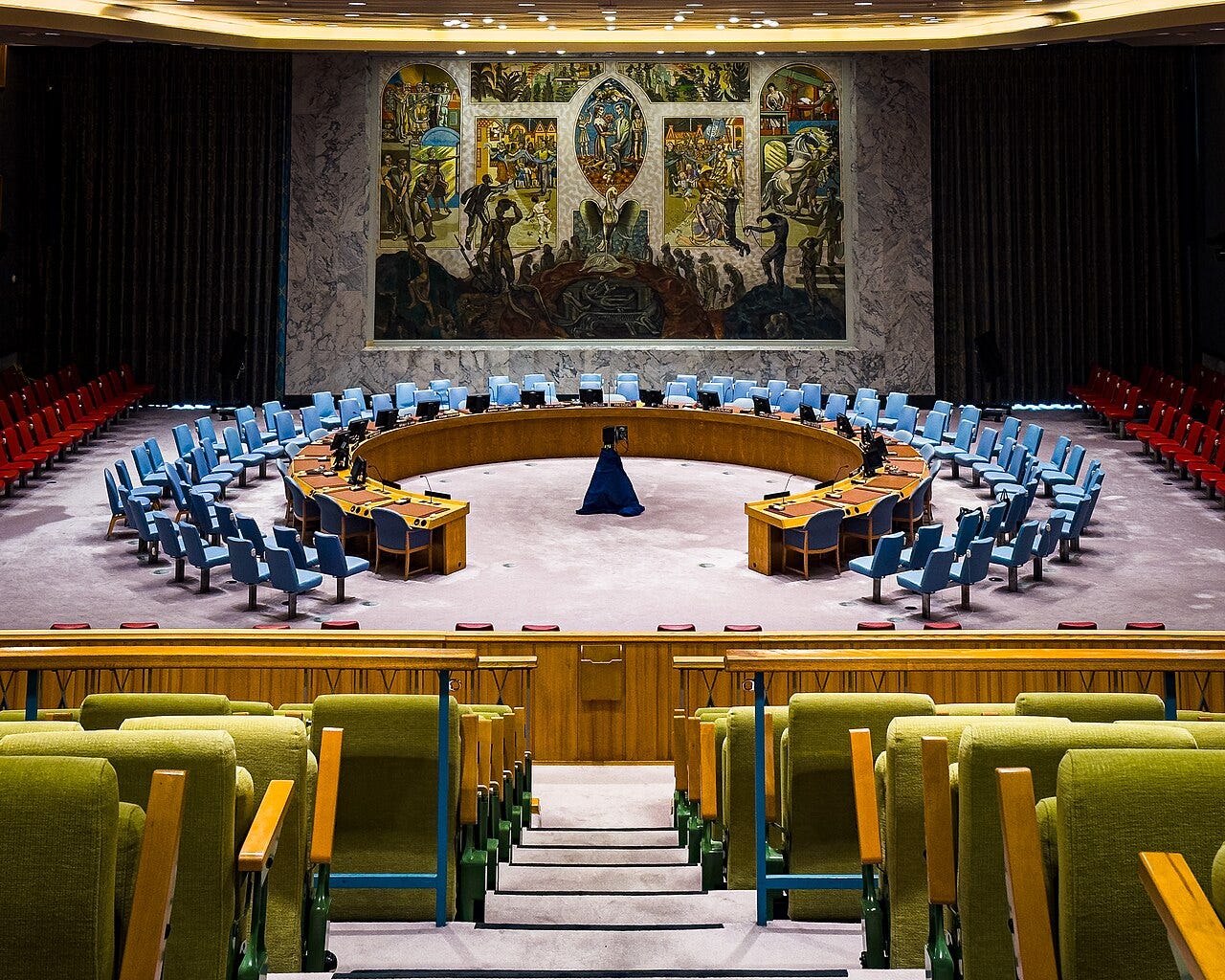
The eighth ballot
The eighth ballot took place on Thursday, 5 November, behind closed doors. Latvia holds the rotating presidency of the Security Council this month, and its ambassador, Sanita Pavļuta-Deslandes, confirmed afterwards that the vote had happened. She declined to say what it showed. That restraint lasted a few hours.
By the evening PassBlue, the independent outlet that covers the UN, had the numbers, and The National and Al-Monitor soon carried the same figures from diplomats. Rebeca Grynspan of Costa Rica had 12 votes to encourage her, 3 to discourage and none undecided. It matched her widest lead of the race. Rafael Grossi of Argentina, the head of the International Atomic Energy Agency, had 9 to encourage, 4 to discourage and 2 with no opinion. Carolyn Rodrigues-Birkett of Guyana was on 8, 5 and 2. Lana Nusseibeh of the United Arab Emirates sat at 7, 6 and 2, the same as her debut a week earlier. The newest name, Feridun Sinirlioğlu of Türkiye, managed 3 encourages against 8 discourages and 4 abstentions.
On paper Grynspan had cleared the bar twice over. But the ballots that day were all one colour. Nobody outside the five permanent missions could say whether any of her three discourages came from a permanent member, and that’s the only question that counts.
How the vote works
A straw poll is an informal, anonymous test of the mood. Each of the Council’s 15 members gets a slip for every candidate and ticks encourage, discourage or no opinion. To be recommended a candidate needs at least nine votes in favour and no veto from the five permanent members: the United States, China, Russia, Britain and France. A plain ballot tells you about the first condition and nothing about the second. So at some point the Council switches to colour-coded paper, red for the permanent five and white for the ten elected members. Think of it as the moment the people with the keys stop pretending to be ordinary voters. A red discourage is a warning that a veto may be coming.
None of this is official. The UN doesn’t publish results, and every tally in this story comes from leaks.
The race so far
The race formally opened on 25 November 2025, when the President of the General Assembly, Annalena Baerbock, and the President of the Security Council, Michael Imran Kanu, sent the joint letter inviting nominations. Before the candidates’ public dialogues in April, Baerbock called the post “one of the toughest jobs in the world.”
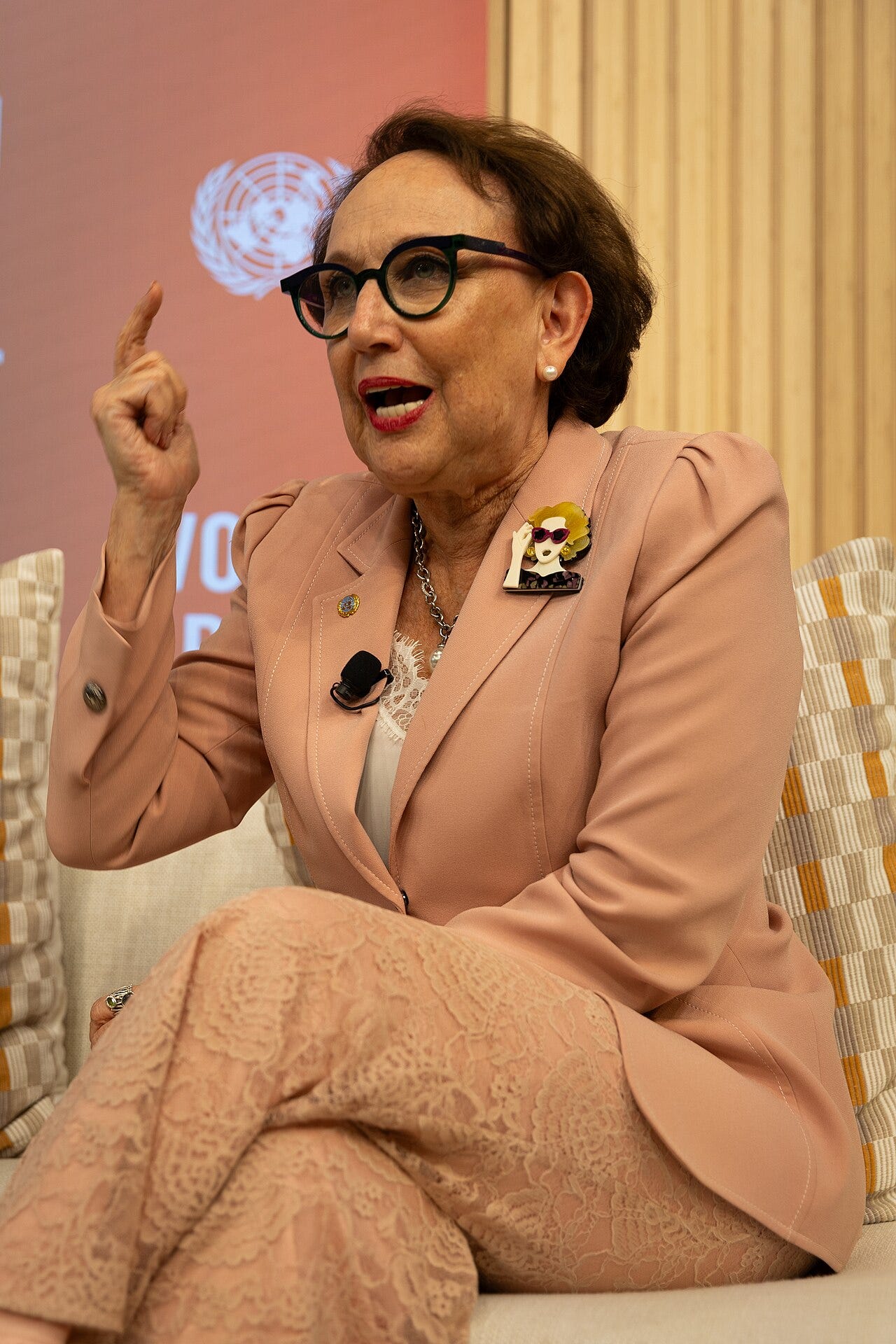
Grynspan was the obvious favourite from the start. She is 70, an economist, and she was her country’s vice president from 1994 to 1998. She went on to be the number two at the UN Development Programme, then ran the Ibero-American General Secretariat in Madrid, and in September 2021 Guterres made her Secretary-General of UNCTAD, the UN’s trade and development body. She was the first woman to lead it. She stepped aside from that job to campaign, after the General Assembly asked UN officials to consider doing so. “For me, this is not a difficult decision,” she told PassBlue. “It is simply the consistent one.” Grossi, who has run the IAEA since December 2019, kept his.
The first straw poll came on 30 July. Grynspan got 10 encourages and Rodrigues-Birkett, Guyana’s ambassador to the UN and a former foreign minister, got 9. Grossi was a surprise third. Further rounds followed on 21 August, 18 September and 29 September, and Grynspan dropped to second in one August round before recovering. The September rounds started clearing the field. Michelle Bachelet, the former Chilean president, had lost her own government’s backing in March, when Chile’s new president, José Antonio Kast, withdrew it. Brazil and Mexico had kept her nomination alive. In the 18 September round she got 1 encourage, 11 discourages and 3 no opinions, according to PassBlue’s figures. The next day she posted a video on Instagram. She said she didn’t regret “having taken on this great challenge,” but that “the time was not right.”
Then came 16 October and the first red ballots. They were brutal for everyone. Grynspan led with 9 encourages and 5 discourages, Grossi and Rodrigues-Birkett were level on 8 and 6, and every candidate in the race drew at least two negative votes from permanent members. Le Temps reported that Grynspan’s permanent-member votes split three in favour and two against, with one of the two from the United States. The next day Macky Sall, Senegal’s former president, withdrew. Neither the African Union nor his own government had backed him, and he said he was stepping aside to help build agreement around a consensus candidate.
A deadlock invites new entrants, and two arrived. On 21 October the UAE nominated Nusseibeh, its minister of state and its ambassador to the UN from 2013 to 2024, the first woman in that post. Her campaign was immediately tangled up in Sudan, where the UAE is accused of supporting the Rapid Support Forces, a charge Abu Dhabi denies. On 1 November Türkiye nominated Sinirlioğlu, a career diplomat who heads the OSCE, was briefly Turkey’s foreign minister in 2015 and represented it at the UN from 2016 to 2023. Greece and Cyprus gave him a rough time at his General Assembly dialogue on 6 November.
The seventh poll, on 30 October, went back to plain ballots because Nusseibeh had only just entered. Bahrain, Russia and the United States wanted to keep the colours, according to a diplomat who spoke to The National, but most members didn’t. Grynspan went to 11 encourages and 4 discourages. Grossi was on 9, 4 and 2, Rodrigues-Birkett on 8, 6 and 1, and Nusseibeh on 7, 6 and 2. Mark Leon Goldberg of Global Dispatches summed it up as “a clear frontrunner, but no clear winner.” A week later the eighth ballot said the same thing a little louder. The newcomers, as Jewish Insider put it, “took nothing from the front-runners.”
The custom that makes Grynspan the favourite is unwritten. The job is supposed to rotate among the world’s regions, and Latin America and the Caribbean is widely seen as next. There’s also pressure to pick the first woman to hold the post. Juan Manuel Santos, the former Colombian president, ruled himself out on exactly that ground. Russia has said it intends to honour the rotation. “At the early stages of the race we promised to respect this tradition to our Latin American partners,” Kirill Logvinov, who directs the Russian foreign ministry’s department for international organisations, told reporters. Then he left a door open for a candidate “that would meet our criteria and could command as much support from UN Security Council members as possible.” Nusseibeh is from the Asia-Pacific group and Sinirlioğlu from the Western group, so both are bets that the rotation is softer than it looks.
Lessons from 2016
Guterres’s own race is the obvious comparison, and it isn’t comforting. In 2016 the Council held six straw polls between 21 July and 5 October. Guterres topped every one. The colour-coded ballots came out only in the sixth, when he got 13 encourages, no discourages and 2 abstentions. The Council adopted Resolution 2311 recommending him by acclamation the next day, and the General Assembly appointed him on 13 October. This year’s race has already run two ballots longer and no one has come close to a clean sheet. Daniel Forti of the International Crisis Group pointed out that the October timing of 2016 “doesn’t set a precedent,” and that there have been races where nobody had prevailed by November. PassBlue reported that some diplomats think the balloting could run into December.
The steps from here are fixed even if the dates aren’t. As of the second week of November no date had been set for a ninth poll, and diplomats were saying the colours might come back. Once one candidate gets nine encourages without a red discourage, the Council adopts a resolution recommending that person to the General Assembly, which appoints them, traditionally without a fight. The term starts on 1 January 2027.
A smaller, poorer UN
What starts that day is the part a job seeker should care about. On 13 October Guterres presented a budget to the Fifth Committee, the General Assembly committee that handles money, and noted that he was doing it “for the final time.” He asked for $3.302 billion and 11,150 posts for 2027. He reported that UN80, his reform drive, had already cut 3,116 regular budget posts, using early separation and reassignment to soften the blow. Back in May the UN said Secretariat posts were being reduced by 21 percent for 2026, that 220 Secretariat posts were moving out of expensive duty stations, and that about 1,900 more were moving across the wider UN system. Earlier plans named Nairobi, Bonn, Valencia, Tunis and Vienna as destinations, and a digital hub has opened in Valencia. The 2027 proposal adds 44 more relocations across 12 entities, the largest share to Nairobi, and the UN has said further cuts to senior posts will show up in the 2028 budget, the first one the new Secretary-General will own outright.
The money is still tight. On 19 October Surendra Adhana of India’s UN mission told the Fifth Committee that unpaid regular budget dues stood at $1.46 billion, down from $1.87 billion a year earlier, and still “at unacceptably high levels.” The United States paid $725 million towards the regular budget in September and still owed the organisation more than $4 billion across the regular and peacekeeping budgets. The Fifth Committee usually settles the budget in December, so the new Secretary-General arrives just as one budget fight ends and the next begins.
What the front-runners want
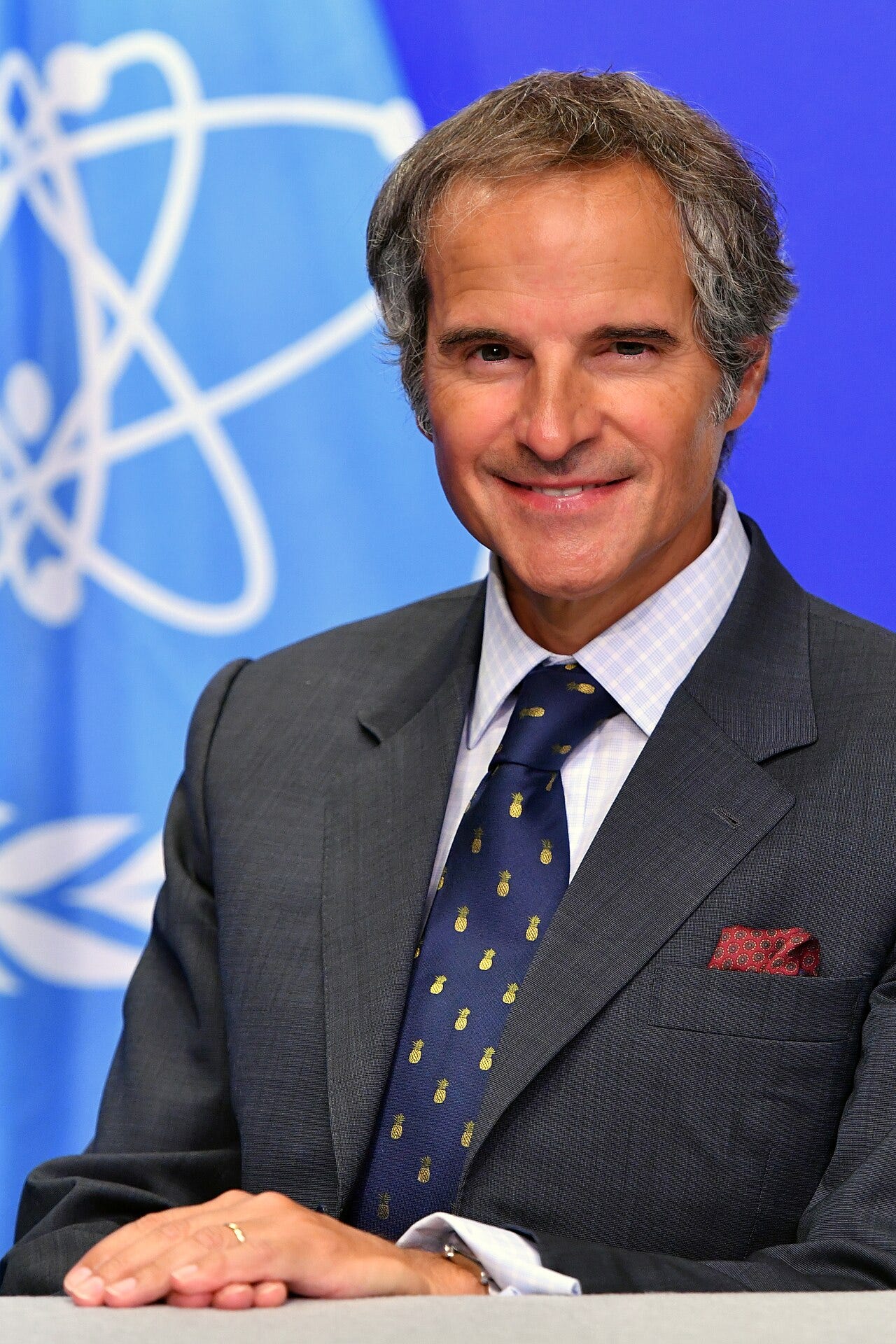
Nobody in this race is promising to give those posts back. Grynspan has run cuts herself. In June 2025 she told Reuters that UNCTAD’s 2026 budget would cut 70 of its roughly 500 posts, the most in its history in a single budget. “This is painful. There’s no way to disguise this,” she said. Her vision statement promises a UN that is “more useful, more agile and more accountable,” with mandates and budget structures aligned so that agencies stop competing with each other, and “transparent, merit-based and geographically equitable appointments.” Her calling card is the Black Sea grain deal of 2022, which she helped broker among the UN, Türkiye, Russia and Ukraine by, in her words, “knocking on every door,” banks, shippers and insurers included. Grossi’s statement reads more like a manager’s. He calls UN80 “an indispensable point of departure” for “a wider process of rightsizing,” and wants to “eliminate duplication, digitize operations, and align structures with clearly defined goals.” His best line is “Efficiency must serve a purpose, not satisfy a process.” He also wants the UN to work more closely with the international financial institutions, which is worth noticing if you already work at, or near, a development bank.
Read the two front-runners together and they point the same way, towards fewer and merged units, more work done from Nairobi, Bonn and Valencia than from New York and Geneva, and more weight on economists, data people and staff who can deal with banks and finance ministries. A Grynspan Secretariat would probably lean towards trade, debt and development finance, her own career. A Grossi one would lean towards technical management and measurable delivery, his. Neither looks like a place where generalist policy roles in New York come back.
Where the jobs are
So what do you do in a year when the boss is unknown and the budget is shrinking? Look at the doors that don’t depend on the regular budget, or that stay open regardless. The Young Professionals Programme exam for 2026 is in Development and Sustainability, which covers economics, statistics, data science, social affairs and the environment. It is open to nationals of 47 participating countries born on or after 1 January 1994, with placements at P-1 or P-2 in duty stations from Addis Ababa and Bangkok to Nairobi and Santiago. Applications close on 30 November, five days after this goes out. The Junior Professional Officer programme is paid for by donor governments under their own agreements with UN DESA, and as of January 2026 it was managing 360 JPOs from 30 donor countries. Most calls are restricted to the donor’s own nationals, so check whether your government runs one and when its next call opens. Consultancies will keep coming, but follow where the posts are going. A unit that moves to Nairobi or Bonn has to staff up somewhere.
The Council will meet again on this, probably with red paper on the table this time. Grynspan needs every one of the five permanent members to leave her ballot without a red discourage on it, and as of early November nobody could say for sure that they would. Guterres leaves office on 31 December.
Make sure you subscribe to MDB Jobs to get the latest vacancies delivered straight to your inbox each Monday, and consultant positions each Friday.