MDB jobs disappear fast. Are you tracking the latest openings?
Subscribe to the Premium Plan and never miss an opportunity:
• Get Staff roles on Mondays
• Get Consultant roles on Fridays
Grab a free trial here to see what you’ve been missing (no payment required).
A bank set up to build roads and power lines in Asia has just agreed to help eight South African cities stop losing their water. It’s the largest thing AIIB has ever done outside its own region, and it arrives seven months into a new presidency with a target to roughly double annual lending by 2030. The bank employs a few hundred people to do all of it.
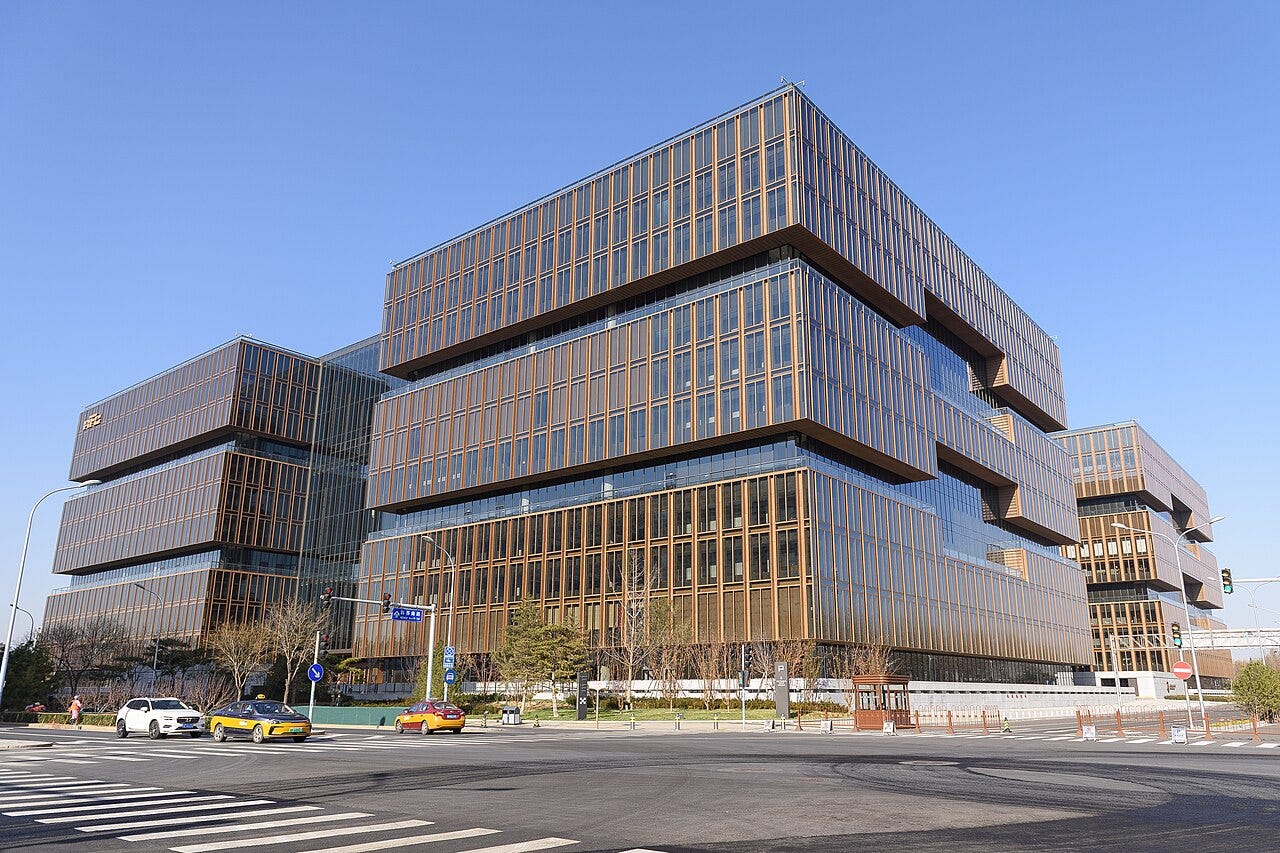
In eight South African metropolitan municipalities, roughly 41 percent of the water that enters the pipes never reaches a paying customer. Some leaks out. Some is taken. Some arrives and is never billed. Electricity distribution loses another 22 percent the same way, and the money that vanishes with it is money the metros do not have for anything else. Those two numbers are why a bank headquartered in Beijing put $500 million on the table in August.
AIIB announced the deal on 7 August 2026. The name is the South Africa Metro Trading Services Program, the loan is sovereign-backed, and the bank is co-financing it with the World Bank inside a broader $3 billion programme run by the South African government. The goals are dull and precise, which is usually a sign that somebody means them. By 2031 all eight participating metros are supposed to meet minimum performance conditions, non-revenue water is meant to come down from 41 percent to 28, and electricity losses from 22 percent to 12. “This investment marks the beginning of AIIB’s partnership with South Africa and reflects our shared commitment to building more resilient, sustainable and well-managed cities,” said Rajat Misra, the bank’s director general for public sector clients. Duncan Pieterse, director-general of South Africa’s National Treasury, said his government welcomed AIIB “as a new development partner” and wanted a long-term relationship out of it.
Now read the name of the bank again…
The Asian Infrastructure Investment Bank opened for business in January 2016 with $100 billion of authorised capital and a founding president, Jin Liqun, who had spent years convincing Western finance ministries that a Chinese-led development bank would not cut corners on procurement or safeguards. Its Articles of Agreement keep regional members holding at least 75 percent of the capital stock and cap financing in non-regional members at 15 percent of everything the bank approves. Inside that ceiling, AIIB has been edging outward for a while. Ecuador took $50 million in 2020. Rwanda took $200 million in 2021, Hungary $216 million the same year, Brazil $100 million in 2022. Writing for the Center for Strategic and International Studies, Pedro Allende argued that the pattern rhymes with the Belt and Road Initiative, which began in 2013 as a regional programme and was global by 2017.
Against that history the South African loan is a step change. It is more than double the Rwandan deal and it sits alongside the World Bank rather than in some quiet corner. South Africa itself is a non-regional member, and the money is going into municipal balance sheets rather than a single bridge or plant. It is the kind of operation the World Bank has done for decades and AIIB, until recently, did not.

The president who inherited all of this is Zou Jiayi, and her career explains a good deal about where the bank is going. She was born in Wuxi in June 1963, read at the University of International Relations in Beijing, and took a master’s in economics from the Chinese Academy of Social Sciences. She joined China’s Ministry of Finance in 1988. Between 1994 and 1996 she was a deputy chief handling World Bank affairs, and from 1996 to 1998 she advised China’s office at the World Bank’s Executive Board. She spent the middle of her thirties managing her country’s relationship with the institution on 19th Street. Three decades later she runs the bank that Washington spent 2015 lobbying its allies not to join.
The rest of the résumé is unusual for a development banker. In 2014 she took over the finance ministry’s international economic relations department, became assistant minister in 2015, then moved to the Central Commission for Discipline Inspection, the Communist Party’s internal enforcement body. In 2017 she was made a vice minister of supervision, joined the leadership of the new National Supervisory Commission in March 2018, and returned to the finance ministry as vice minister that June. In 2021 she went to the Chinese People’s Political Consultative Conference as executive deputy secretary-general. She is a member of the Party’s Central Committee. Nikkei Asia, reporting on her appointment, framed her arrival around the bank’s ambition to grow its global footprint as the United States pulls back from international cooperation.
The Board of Governors elected her on 24 June 2025. Jin Liqun finished his second five-year term on 15 January 2026 and she took office the next morning, which happened to be the bank’s tenth birthday. Then she went travelling. Before setting any direction she visited 15 member economies, meeting heads of state, finance ministers and clients. “The purpose was simple: listen,” she told Euronews in June. Her summary of what she is trying to do fits on a business card. “Our goal will be scaling up development impact with innovation and integrity.”
The numbers behind that phrase are the part worth watching. AIIB financed $8.4 billion in 2024. In 2025 it approved $10.6 billion across 57 projects, with 71 percent of regular financing counted as climate-positive, and the bank’s updated corporate strategy sets a target of $17 billion a year by 2030, something close to $75 billion deployed over five years. Zou has committed publicly to doubling annual financing volume by the end of the decade, with more of it going to non-sovereign clients, more local currency lending, and more private capital brought in alongside. Membership now runs to 111 approved members across six continents. “In a turbulent world today, multilateralism matters more than ever,” she said in the same interview. “We do have differences, but we choose to cooperate.”
Two weeks before the South African signature, the bank showed what the cooperation looks like in practice. On 21 July it agreed up to $1.5 billion for the Istanbul North Rail Crossing, structured as two $750 million loans with the second conditional on how the first one goes. The line will run from Çayırova on the Asian side of the city to Çatalca on the European side, using rail space that was built into the Yavuz Sultan Selim Bridge and left empty. The whole project costs about $8.27 billion. The World Bank approved $2 billion for it in March 2026, and six development banks between them are putting up $6.75 billion. AIIB is one voice at a crowded table, which is exactly how it prefers to work.
That preference is the key to understanding the bank as an employer. AIIB does not run a large network of country offices with resident missions and national staff. It co-finances, it leans on partner institutions for supervision on the ground, and it keeps headcount low relative to the money it moves. The bank passed 500 staff in 2023 and describes itself, with some pride, as lean, clean and green. Now consider what happens when an institution of that size is asked to lend $17 billion a year, half a world away from where its mandate says it belongs.
Something has to give, and it will be recruitment. The obvious growth areas are non-sovereign origination, because sovereign lending alone will not get anyone to $17 billion; treasury and structuring capacity for local currency lending, which Zou has named as a priority and which is genuinely hard to staff; and environmental and social specialists, since the South African programme is a governance and utility performance operation before it is a construction one. Anyone who has worked on municipal finance, non-revenue water, or utility turnarounds at the World Bank or a regional bank has a skill set AIIB is now buying. So does anyone with Africa or Latin America experience, which is a strange sentence to write about a bank with Asia in its name.
The entry route for younger candidates is the Graduate Program, a two-year rotational scheme based in Beijing that has been expanded to ten tracks covering investment, finance, risk management, strategy, environmental and social development, gender-focused social development and communications. The bar is a bachelor’s degree with two years of relevant experience or a master’s with one, plus fluent English. It is one of the few genuinely open front doors left in an MDB system that is closing side entrances everywhere else. The obvious catch is Beijing. Almost everything at AIIB happens there, and a career at this bank means living in China in a way that a career at the World Bank does not mean living in Washington.
What the South African loan really signals is a bank testing how far its charter will stretch while its shareholders are distracted. The 15 percent ceiling is still there. The Articles still say Asia. But the water losses in eight South African cities are being financed out of Beijing now, alongside Washington’s money, and by 2031 somebody will count the pipes and find out whether it worked. The people hired to do that counting have not all been recruited yet.
Make sure you subscribe to MDB Jobs to get the latest vacancies delivered straight to your inbox each Monday, and consultant positions each Friday.