MDB jobs disappear fast. Are you tracking the latest openings?
Subscribe to the Premium Plan and never miss an opportunity:
• Get Staff roles on Mondays
• Get Consultant roles on Fridays
Grab a free trial here to see what you’ve been missing (no payment required).
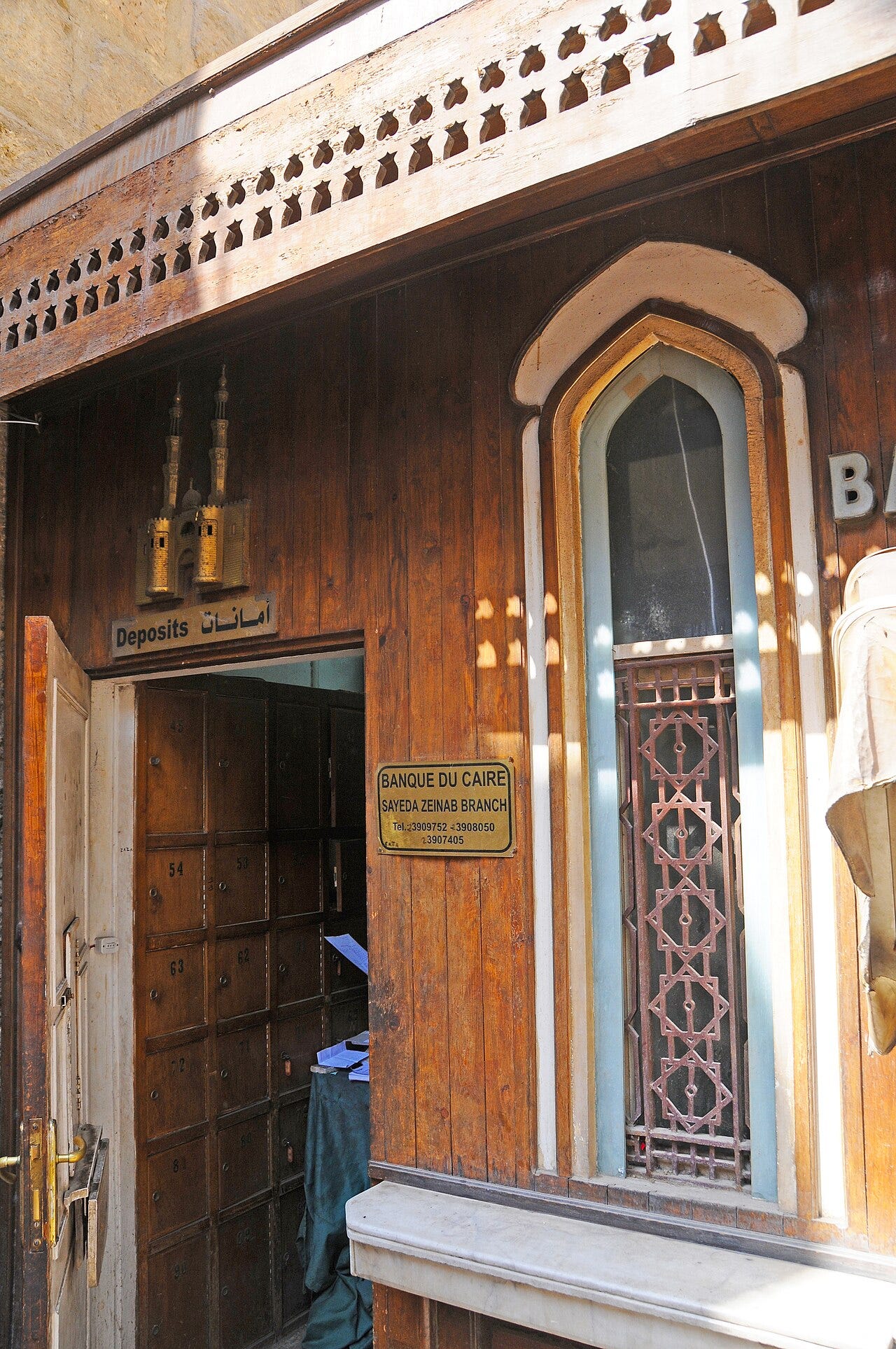
Egypt first tried to sell Banque du Caire in 2008. It tried again in 2020, in 2022 and in 2025, and each time something got in the way: a low bid, a pandemic, a war, an argument about price. In late October the sale finally went through, with two development banks taking roughly 7 percent each. The deal shows how the IFC and the EBRD use equity, and who they hire to do it.
A flat debut
For the first few minutes of trading on Monday 2 November, it looked as if Egypt’s longest-running privatisation would end with a pop. Banque du Caire had been sold at 5.30 Egyptian pounds a share. Shortly after the open, under the new ticker BQDC, it touched 5.68. The prime minister, Mostafa Madbouly, was at the Egyptian Exchange for the occasion, along with the central bank governor, Hassan Abdalla, the heads of both big state banks, and Hussein Abaza, the bank’s chief executive. Omar Radwan, who chairs the exchange, called the listing “a new and defining phase in the journey of the capital market.”
Then the price slid, at one point to 5.25, below the offer. It closed at 5.31, up 0.19 percent, according to EnterpriseAM, on a day when it was the most traded stock on the exchange, with 373.1 million shares changing hands for about 2.02 billion pounds. MNT-Halan had risen 6.9 percent on its debut earlier in the year. Gourmet hit the 40 percent daily limit in February. Banque du Caire went nowhere.
Randa Hamed, managing director of Okaz Asset Management, gave EnterpriseAM the simplest explanation. The government had priced the shares at full fair value. “There was no discount to give investors a reason to buy more after listing.” Which was the point, from the seller’s side. Egypt had spent nearly two decades refusing to sell this bank cheaply, and it was not going to start now.
Eighteen years of almost
The bank was founded in 1952. In May 2007 Banque Misr, one of Egypt’s two giant state lenders, took over all of its shares, and within months the government put up to 67 percent of it up for auction. Foreign banks came to Cairo to bid. National Bank of Greece offered the most, valuing Banque du Caire at about $2.025 billion according to Reuters. Mashreq valued it at $1.3 billion and a consortium of Arab National Bank and Arab Bank at $1.2 billion. On 25 June 2008 the government cancelled the auction, saying the bids had not met its reserve price. A planned float of 28 percent on the exchange was dropped too.
What followed was a long sequence of almost. The shares were listed on the exchange in 2017 but never traded. In 2020 a $500 million offering, managed by EFG Hermes and HSBC, was lined up and then postponed in April because of Covid. In July 2022 it was delayed again as the war in Ukraine shook emerging markets, and the plan was eventually dropped. In March 2025 Banque Misr went looking for $1 billion to $1.2 billion for 45 percent of the bank, and the talks collapsed months later over valuation. A listing was then pencilled in for the second quarter of 2026, and the war with Iran pushed it back.
In June, Hashem El Sayed, the assistant prime minister who runs the cabinet’s unit for state-owned companies, moved the target to the end of the year. The investment banks had asked for the pause so they could take the deal to more investors once the summer lull was over. In September a cabinet committee approved a refreshed valuation method. Roadshows went out across Europe.
The IMF wants receipts
Behind all of it sat the International Monetary Fund. Egypt’s current programme began on 16 December 2022 as a $3 billion Extended Fund Facility, a multi-year loan released in tranches as the government passes periodic reviews. In March 2024, after a currency float that cost the pound around 40 percent of its value against the dollar, the IMF board raised it to about $8 billion. One condition the Fund kept returning to was the State Ownership Policy, Egypt’s published commitment to pull the state out of sectors where private companies can do the job, and to sell stakes in the businesses it owns. In plain terms, the government promised to stop competing with its own private sector, and the IMF wanted to see receipts.
Receipts were slow to come. When the Fund completed its seventh review in July 2026, releasing about $1.8 billion, it said the divestment programme had moved more slowly than expected. The arrangement expires on 15 December. On 29 October, with a mission in Cairo for the final review, IMF spokesperson Julie Kozack listed speeding up divestment among the priorities. “The goal of these reforms is to support stronger, more private sector-led growth in Egypt,” she said. Banque du Caire was the state’s first IPO since United Bank in late 2024, and EnterpriseAM reported that close to $1 billion was still missing from a $1.5 billion divestment target.
How the deal was done
So when the bank announced its intention to float on 12 October, the stakes were higher than one bank. The plan was to sell 30 percent, about 4.575 billion shares. Every one of them belonged to Banque Misr. This is what bankers call a fully secondary offering. Banque du Caire raised no new money, the way a homeowner who sells a house gets the cash while the house stays exactly as it was. All the proceeds went to the seller, and the cabinet later said the finance ministry would take up to half.
The price range was 4.82 to 5.30 pounds. Four foreign funds signed up as cornerstones before the books opened, committing $256 million between them: Helikon, Redwheel, Sustainable Capital and Waha Investments. A cornerstone investor promises to buy a fixed amount in advance, usually accepting a lock-up, so that everyone else can see serious money has already said yes. The private placement for institutions opened on 19 October and sold out within hours. When it closed on the 23rd it was covered about six times, and nearly 20 times if you strip out the money committed in advance.
That demand let the sellers do something the prospectus allowed but nobody had promised. The Financial Regulatory Authority approved raising the sale from 30 to 45 percent of the bank, or 6.86 billion shares, priced at the top of the range. The extra shares went 95 percent to institutions and 5 percent to the public. Retail subscriptions ran until 28 October. When they closed, Egyptians had asked for roughly 9.29 billion shares against the 228.75 million first set aside for them, a coverage of 27.08 times. The total raised was 36.37 billion pounds, more than $650 million, which local press called the largest offering in the history of Egypt’s capital market. Banque Misr kept 55 percent.
The development banks step in
Two of the biggest buyers weren’t on the cornerstone list. In August the International Finance Corporation, the World Bank Group’s private sector arm, and the European Bank for Reconstruction and Development had been reported to be eyeing about 10 percent of the bank between them. When the deal was upsized, each agreed to take up to 15.74 percent of the enlarged private placement. Each ended up paying $100 million. The IFC said that bought it about 7 percent of Banque du Caire. The EBRD put its own stake at 6.9 percent. Their agreements include no voting arrangements with Banque Misr.
Francis Malige, the EBRD’s managing director for financial institutions, called the IPO “a resounding success” and said the bank “invests as a long-term institutional investor”. Ary Naïm, the IFC’s division director for North Africa and the Horn of Africa, framed it around borrowers. “Through our partnership, we aim to help businesses access the finance they need to grow.” Abaza, for his part, called the listing “a defining milestone in the bank’s history”.
Abaza is worth a moment. He joined Commercial International Bank, Egypt’s largest private lender, in 1985 straight out of the American University in Cairo, worked his way through risk and operations and ran CIB as chief executive from 2017. In September 2024 he crossed over to run Banque du Caire, and he has described the IPO as the first step in a CIB-style sell-down.
Why anchor a state bank
Why would two development banks want 7 percent each of an Egyptian state bank? Partly because of where the bank lends. Banque du Caire has 233 branches, 143 of them outside Greater Cairo, and the IFC says more than three-quarters of its clients are outside the capital. It wants to grow the number of customers it finances from about 899,000 to 1.9 million by 2030 and its loan book from about $5 billion to $8.9 billion, with small businesses at the front of the queue. Micro, small and medium firms produce more than a third of Egypt’s GDP and employ almost 40 percent of its workers. The IFC had already lent the bank $50 million in 2024 for small business lending, half of it earmarked for women-owned firms, plus a $50 million trade finance line.
And partly because an anchor’s money buys influence over how a bank is run. The EBRD will give Banque du Caire technical help on digital transformation, cybersecurity and environmental and social risk, as part of its move to listed-company standards. The bank has improved a lot already (its cost-to-income ratio fell from 48.7 percent in 2017 to 35.9 percent in the first half of 2026), but Ostoul, a local brokerage, still had it trailing peers, with a return on equity of 29.4 percent against 35.2 percent. The EBRD has worked in Egypt since 2012 and invested more than €16 billion across 238 projects.
What the job looks like
For a job seeker, this is the part of development finance that looks most like an investment bank, and it is worth seeing clearly. Malige himself is a good map of the route in. He came up through Arthur Andersen, McKinsey and BNP Paribas, where he worked on bank acquisitions, before joining the EBRD’s financial institutions team as a director in 2010. Since 2018 he has run the whole Financial Institutions business group, which invests in banks, insurers, non-bank lenders and capital market infrastructure. At the IFC the equivalent unit is the Financial Institutions Group, and it has a Cairo office. An older IFC posting for an associate investment officer there, reporting to the group’s regional manager for North Africa, asked for a master’s degree and five to seven years in the financial sector, preferably in investment roles or private equity.
The EBRD has also been building in Cairo. In August it advertised for an associate director to serve as deputy head of its financial institutions team in Egypt, a role that included managing junior staff in the Cairo FI team. That post is filled. But a deputy head implies a team, and a team that just took 6.9 percent of a listed bank will spend years on it.
Look at what the people around this deal actually argued about, because it’s the job description. Analysts fought over price to book (about 1.2 times at the offer price), price to earnings (around 5 times), net interest margin and whether it would slide from a peak of about 8 percent, and credit risk as the bank pushes into microfinance. They read lock-up terms and stabilisation mechanics. CI Capital, which led the deal with EFG Hermes, will buy back shares from retail investors at 5.30 until 1 December if the price falls below it. If you can build a bank valuation model, read an offering circular and explain a cornerstone allocation to a credit committee, you have the core skills. Arabic, a working knowledge of the Central Bank of Egypt’s and the FRA’s rules, and contacts on the Cairo sell side make you much harder to replace. Plenty of applicants have one of those. Few have all three.
The work also lasts longer than the IPO. An anchor’s job starts when the bell rings, with board seats or governance work, environmental and social systems, reporting and eventually an exit. The investment officer who books the deal in October 2026 may be the one still answering questions about it in 2031.
What comes next
There is more coming. Misr Life Insurance is expected to list in late November or early December, with El Nasr Glass and Yayat in December, and the IMF’s board is due to consider Egypt’s final review by mid-December. The National Bank of Greece once valued Banque du Caire at about $2 billion. At the offer price in October it was worth about 80.8 billion pounds, roughly $1.5 billion. Banque Misr still owns the other 55 percent, and it has agreed not to sell any more for a year.
Make sure you subscribe to MDB Jobs to get the latest vacancies delivered straight to your inbox each Monday, and consultant positions each Friday.