
MDB jobs disappear fast. Are you tracking the latest openings?
Subscribe to the Premium Plan and never miss an opportunity:
• Get Staff roles on Mondays
• Get Consultant roles on Fridays
Grab a free trial here to see what you’ve been missing (no payment required).
For thirty years the people who check World Bank projects for harm to communities and the environment worked in separate tribes, one for government loans and one for private deals, policed by three different complaints offices. In 2026 all of it is being pulled into a single structure borrowed from the back office of a commercial bank. Around 80 posts are expected to go. Others are being advertised in Kampala and Nairobi. This is what changed and where the work is heading.
Anyone who has worked in a bank branch knows the phrase. One clerk keys in the payment and a second clerk approves it. The first is the maker, the second is the checker, and the rule that they can never be the same person is about the oldest control in finance.
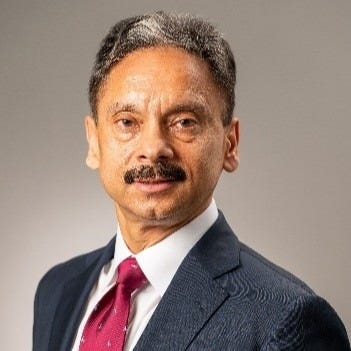
This spring Maninder Gill used those two words to describe the future of a profession that has nothing to do with payments. Gill is the World Bank’s global director for the environmental and social framework, the rulebook that governs what happens when a Bank-financed road displaces a village or a dam floods a forest. Speaking at an event with civil society groups, reported by Devex, he said the Bank’s environmental and social function would be split in two. The makers would set policy and decide how it applies to each deal. The checkers would watch, flag risks, and catch what was going wrong, with the most scrutiny reserved for the riskiest projects.
Then came the number. The Bank had merged the public and private sector teams that do this work, and it planned to cut about 10 percent of its roughly 825 environmental and social staff.
Gill was careful about how he put it. Nobody was being fired outright, he said. The Bank would offer incentives for some people to leave, mainly in areas where it believed it had more capacity than it needed, and it would hire in teams that were stretched. That is a restructuring by attrition, and it is still around 80 jobs out of one of the largest specialist families in the institution.
He knows the work from the ground up, which is partly why he was the one sent to explain it. Before joining the Bank in 1995 he was an Indian civil servant who ran a town, directed a rural development programme and managed resettlement for a hydro-irrigation project. Inside the Bank he rose through social development in Europe and Central Asia and in Latin America, became director for social development in 2014, and served as chief environmental and social standards officer from July 2021 until December 2025. He has spent thirty years on the question of what a development bank owes the people who live where its projects land.
That question has a history, and it starts with a dam. In the early 1990s the Bank was financing the Sardar Sarovar project on the Narmada river in India, which was displacing people on a scale that drew protests around the world. The pressure grew until the Bank commissioned an outside review, and the review found that the Bank had broken its own resettlement and environmental rules. The Bank left the project. In 1993 its board created the Inspection Panel, the first body at any international organisation that allowed ordinary people to file a complaint against the institution itself. The Panel has received 186 complaints since. In fiscal 2025 it handled nine, from Ecuador, Nigeria, Pakistan, Poland, Serbia, Tajikistan, Tanzania and India.
Everything built afterwards followed the Bank’s internal borders. The public sector side, which lends to governments, got the Inspection Panel and later a Dispute Resolution Service. IFC and MIGA, which finance and insure private companies, got a separate office called the Compliance Advisor Ombudsman. The rulebooks diverged as well. Government projects follow the Environmental and Social Framework, approved by the board in August 2016 and in force since 2018, which by the end of June 2025 covered 75 percent of the Bank’s active investment project portfolio. Private deals follow IFC’s Performance Standards. A specialist could spend a whole career on one side and never learn the other.
Ajay Banga’s project since 2023 has been to erase borders like these. He calls it One World Bank Group, and from January 2026, as The Africa Report described the plan, it reached the corporate functions, with treasury, risk and environmental and social work consolidated across the public and private arms. The Bank’s annual report describes the result as “two integrated E&S teams across the World Bank Group with distinct, complementary functions”. Operational teams design and structure projects. A separate oversight team, reporting to the chief risk officer, monitors compliance. The stated principle is that “the same people who design and execute a project will not be the ones evaluating it afterward”.
On paper that’s hard to argue with. The worry is about what gets lost in the merge. At the event with Gill, civil society representatives warned the Bank against importing what they see as IFC’s weaker culture on transparency and accountability. Several said that cutting staff would undermine the Bank’s ability to enforce its safeguards at all. The Bretton Woods Project, a London-based watchdog, put the cuts in a longer list in July. The Social Development Global Practice had been dissolved, it reported, with staff who worked on citizen engagement displaced, and the hiring of short-term consultants had been halted. It tied all of it to shareholder pressure on costs. The United States Treasury Secretary, Scott Bessent, had told the Bank’s Development Committee in the spring that Washington appreciated plans for “maintaining flat real budget growth on a Bank Group-wide basis over the next few years”. This came after IBRD, the Bank’s main lending arm, had reported record income for fiscal 2025.
The complaints offices were next. In September 2025 the board appointed a two-person task force to look at whether three accountability mechanisms were two too many. A draft report went out for a 30-day public consultation on 26 March 2026, setting out options that ran from better coordination to a single body. On 9 June the boards chose the single body. The Inspection Panel, the Dispute Resolution Service and the Compliance Advisor Ombudsman will become one Independent Accountability Mechanism, led by a vice president and director general recruited through an open competition, reporting to the boards and carrying out three functions, compliance, dispute resolution and advice. The existing three keep working under their current rules until it is ready. The Bank’s press release called the decision “part of a broader effort to reduce fragmentation and strengthen coherence across World Bank Group operations”.
Dustin Schäfer of the German campaign group Urgewald was unconvinced. “The Bank’s press release called it a step to ‘strengthen’ accountability,” he wrote in July. “I read that word with a degree of scepticism.” Danny Bradlow, a professor at the University of Pretoria who had co-written a rival proposal for the merged body in May, called the board’s decision “worrying because it leaves unclear whether the new structure will include a truly independent Panel/compliance unit”. More than 50 civil society organisations wrote to the board asking for a say in choosing who leads it.
So that is the fight. What does it mean if this is your profession, or the one you hoped to enter?
Start with where the cuts fall. Gill said the surplus was in particular sectors, and the Bank’s own vacancy board suggests the shortage is in the field. During 2026 it has advertised senior environmental and social development specialist posts in Kampala and Nairobi, with others in Ethiopia, Malawi, India and Türkiye. Those jobs sit in the countries where projects are built, they involve supervising a borrower’s compliance, and they also involve the newer task of strengthening the national systems that are supposed to do the supervising in the long run. They typically ask for a master’s degree and at least five years of experience. If you’re a safeguards specialist in Washington with a portfolio you supervise by video call, the direction of travel is not in your favour. If you are in Lusaka or Dhaka with field experience, it probably is.
The checker side is a new employer inside the old one. The chief risk officer’s vice presidency advertised an environmental and social development specialist this summer to work on its grievance redress service, a post that closed on 16 July. Oversight roles like that reward a different temperament from project work. You are paid to find the problem, and nobody thanks you for it. People with audit, compliance or investigations backgrounds fit, and so do former staff of the complaints offices. The new Independent Accountability Mechanism will need its own people too once its head is appointed, and three sets of procedures will have to be merged by someone.
The skill that gains most value is being bilingual. For three decades you could know the Bank’s framework or IFC’s Performance Standards. An integrated team needs people who can apply both, who can assess a government highway on Monday and a private port concession on Tuesday, and who understand that you put pressure on a private client differently from a ministry. Specialists coming from environmental consultancies, commercial banks that apply the Equator Principles, or other development finance institutions have often worked with the Performance Standards already. That used to be an IFC qualification. It’s now a World Bank Group one.
The route in is narrower than it was, and it would be dishonest to pretend otherwise. A great deal of safeguards supervision was done by short-term consultants, hired for 30 days here and 60 days there, and many staff specialists began that way. That contract type ends in January 2027. With a headcount that’s shrinking by a tenth, the Bank is not going to convert all of that work into staff posts.
The profession is larger than one employer, though. The Asian Development Bank launched a new environmental and social framework of its own and is in the middle of hiring 700 people this year. The EBRD is opening offices across West and East Africa and every project it signs there needs an assessment. Borrowing governments, which carry the legal responsibility under the Bank’s framework, need people in their project units who can meet it. The World Bank spent thirty years training the world’s supply of safeguards specialists. Some of that supply is about to work somewhere else.
Make sure you subscribe to MDB Jobs to get the latest vacancies delivered straight to your inbox each Monday, and consultant positions each Friday.