
MDB jobs disappear fast. Are you tracking the latest openings?
Subscribe to the Premium Plan and never miss an opportunity:
• Get Staff roles on Mondays
• Get Consultant roles on Fridays
Grab a free trial here to see what you’ve been missing (no payment required).
On 1 September 2026 the African Development Bank woke up with a new organisation chart. The reform, approved by the boards and driven by a president who spent a decade running a smaller bank his own way, moves decision-making out of Abidjan and into eight regional centres. The Bank has 2,263 staff and says it does not have enough. Here is what the reshuffle means for the people it will hire next.
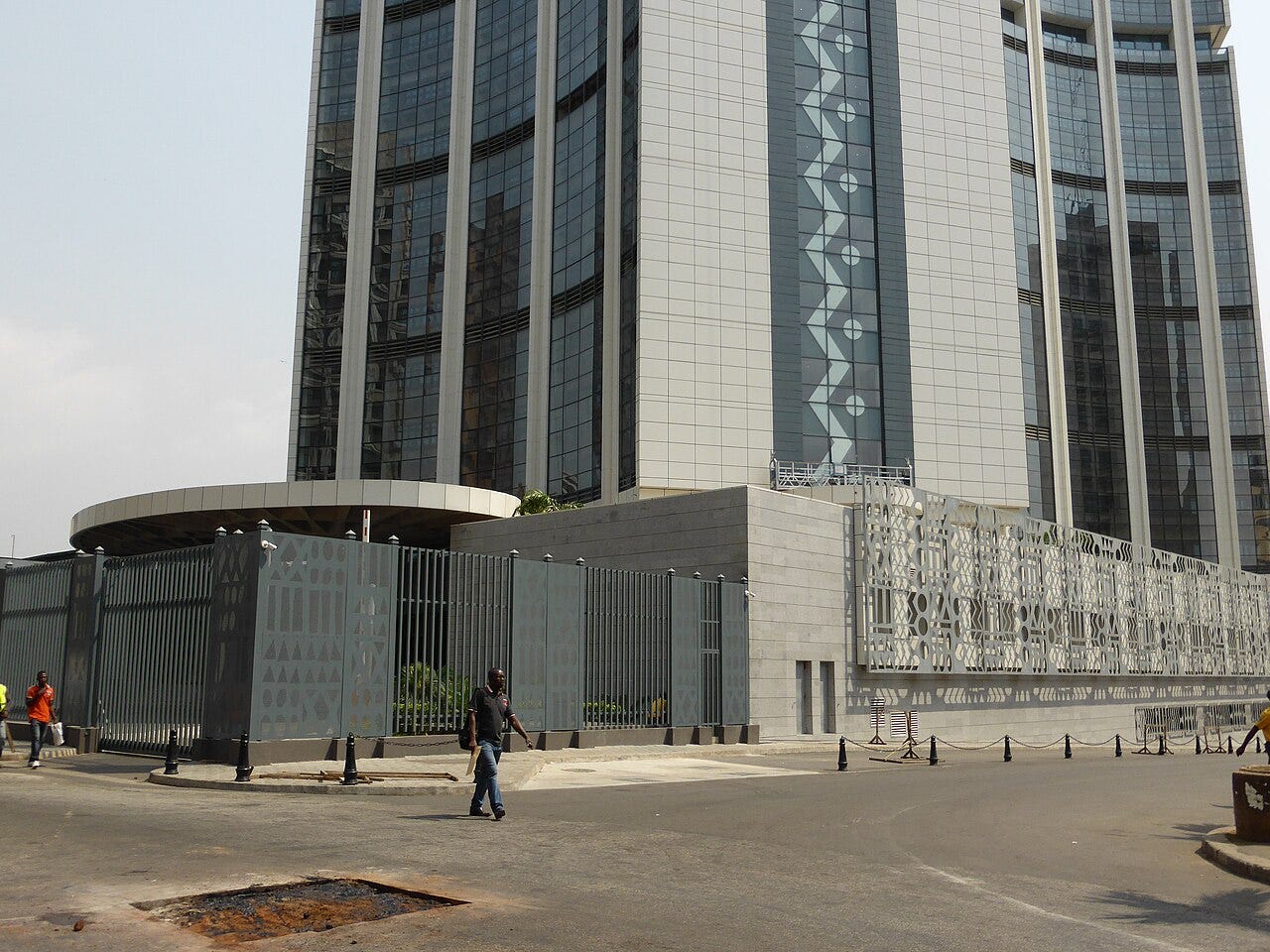
Sidi Ould Tah took the oath as the ninth president of the African Development Bank on 1 September 2025. Exactly twelve months later the institution he inherited stopped existing in its old form. That is not a coincidence. Every new president of a development bank redraws some boxes, but the reorganisation that took effect on 1 September 2026 is, by the account of the people who cover the Bank most closely, of a different order from the usual tidying.
Financial Afrik, whose publisher Adama Wade broke the story on 14 August, described the shape of it in a single sentence. The Bank “redistributes decision-making centres around two Managing Directors, six vice-presidential complexes and eight Regional Growth Poles”. The boards of directors had approved it. The purpose, in the words of the same report, was to bring decision-making closer to the field. Africtelegraph, following up the same day, added the internal rationale: clarify the lines of authority, speed up the chain of decision, and point teams at the mandates the president considers priorities.
To understand why that matters you have to see what it replaced. The structure the Bank ran until the end of August was approved in May 2022, near the end of Akinwumi Adesina’s presidency. It had a presidency, a senior vice presidency and eight vice presidencies: Regional Development, Integration and Business Delivery; Power, Energy, Climate and Green Growth; Agriculture, Human and Social Development; Private Sector, Infrastructure and Industrialisation; Economic Governance and Knowledge Management, run by the chief economist; Finance; Technology and Corporate Services; and People and Talent Management. Operations ran through five regional hubs, for Central, East, North, Southern and West Africa, with Nigeria as a country department of its own. Those hubs were themselves the product of Adesina’s big reform, the Development and Business Delivery Model of 2016, which the then-president sold to staff as a way to “get closer to our regional member countries, decentralise decision-making and accelerate project and program development, financing and disbursements”, and to work “on the front lines, not from the headquarters in Abidjan”.
Ten years on, a new president has looked at five hubs and decided the answer is eight, with the word “growth” bolted on to tell you what they’re for. The senior vice presidency, which under Marie-Laure Akin-Olugbade has provided day-to-day oversight since October 2024, is being joined at the top by a pair of managing directors. Whether that means the senior vice presidency goes, or shares the floor, is one of several details that have not been laid out in public. What is clear is that eight complexes have become six and the regional layer has been thickened rather than thinned.
Ould Tah came to the job with a particular way of doing things. He was born in 1964 in Mauritania, took a doctorate in economics at Nice, audited the port of Nouakchott in the early 1990s, spent years at the Islamic Development Bank in Jeddah and served as Mauritania’s minister of economy and finance from July 2008 until 2015. Then, for almost ten years from July 2015, he ran the Arab Bank for Economic Development in Africa, BADEA, an Arab-funded lender that under him grew its assets from $4 billion to close to $7 billion and collected AA+ and AAA ratings. He won the AfDB presidency on 29 May 2025 with more than 76 percent of the vote, the largest first-term margin in the Bank’s history, on the strength of support that ran from Cairo to Riyadh. Africtelegraph’s summary of his reputation is “a rigorous manager and a skilled negotiator with Gulf funders”, and that reputation is now being applied to an institution of 81 shareholders, 54 of them African.
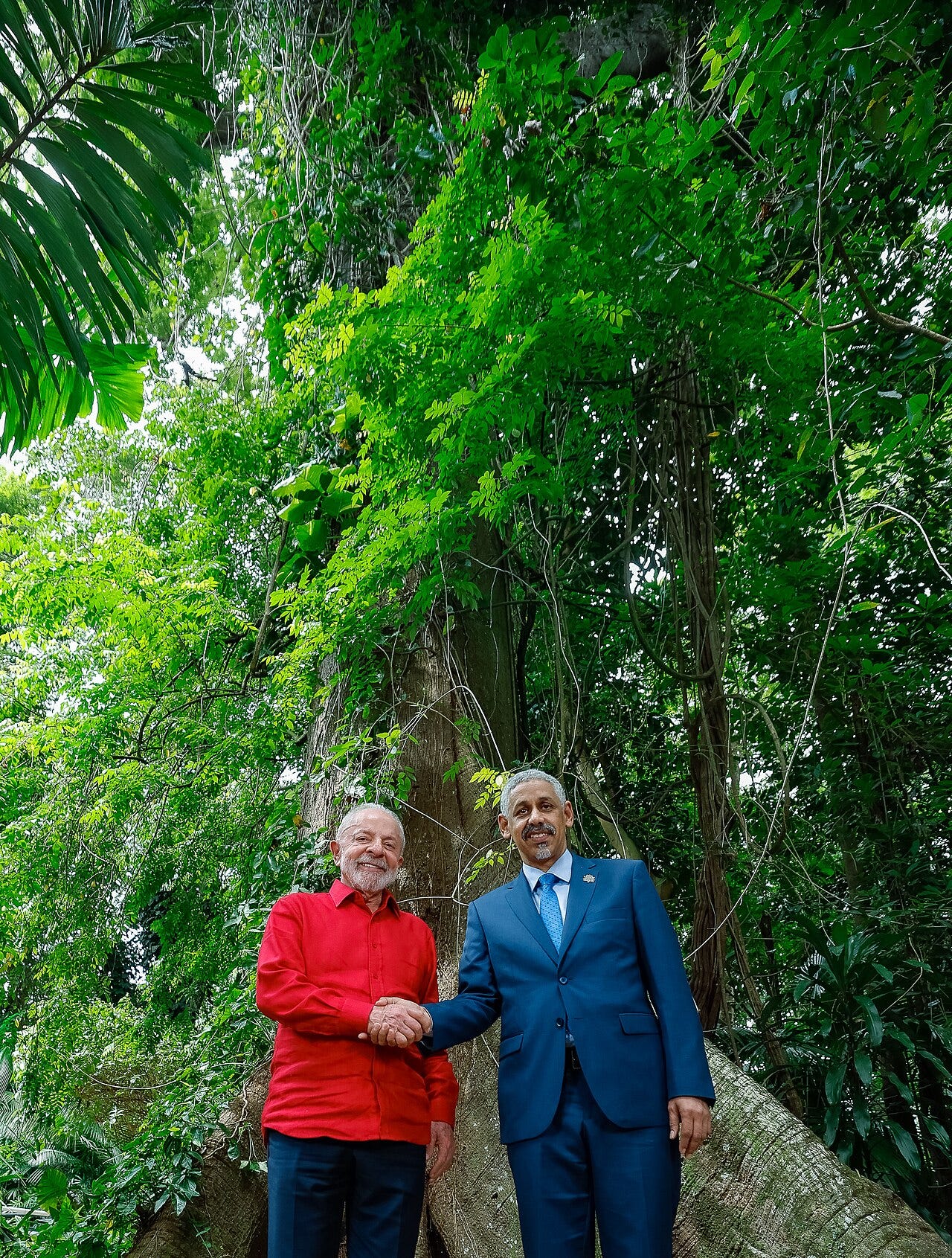
The reorganisation did not come from nowhere. It was trailed on 3 June, five days after the Brazzaville annual meetings closed, when Financial Afrik reported that Ould Tah had sent staff a message unveiling a series of reforms and had started an overhaul of the organisation chart. The governors had just endorsed his Four Cardinal Points, the strategy built around access to capital, reform of African and global financial systems, the demographic dividend, and climate-resilient infrastructure with local processing of natural resources. Hanging off that is the New African Financial Architecture, the framework meant to mobilise the continent’s own pension funds, sovereign funds and savings, much of it currently invested outside Africa, and to stitch together more than 100 national and regional development finance institutions that currently duplicate each other. You cannot run that agenda from eight sectoral silos in Abidjan. You run it from places where the pension funds and the national development banks actually are.
That is the logic of a growth pole. Instead of a hub that processes projects for a region, a centre that sits with the region’s governments and financiers and originates deals. Ould Tah has said for years that Africa’s foreign exchange reserves, sovereign wealth and tax revenues are under-used for long-term investment. The instruments he favours, guarantees, co-financing and partnerships with national public banks, are instruments that get structured close to the client. In January 2026 the Bank held its first meeting under his presidency with the Arab development finance institutions, the start of a structured partnership with the Arab Coordination Group, and it is moving to enlarge its stake in the African Trade and Investment Development Insurance agency, which insures investments. Both are about bringing other people’s money onto the Bank’s deals. Both need staff who can do that.
Which is where the staffing numbers come in, and they are not flattering. At the end of December 2025 the Bank had 2,263 staff from 77 countries. That is up sharply, from 1,798 in 2023 and 1,897 in 2024, and the growth is continuing. But the Bank’s own disclosures, analysed by Business Daily in Nairobi, contain an admission you rarely see an institution make in writing. “Staffing and budget constraints remain a challenge for field missions, especially in providing adequate implementation support to clients and borrowers.” Increasing headcount, the Bank says, remains a priority. The nationality breakdown shows where the institution currently lives. Ivorians, who host the headquarters, are the largest group at 347. Tunisia, where the Bank spent its exile years until 2014, is second at 127. Kenya and Nigeria are joint third at 124. Last year the Bank hired 19 Ivorians, six Ugandans, four Tunisians and a single Kenyan.
Put those facts together and the reorganisation starts to look like a recruitment plan. A structure with eight regional growth poles instead of five hubs needs more senior people outside Abidjan, not fewer: directors general, lead economists, country managers, investment officers and the operational staff that the Bank concedes its field missions lack. The 2016 decentralisation was evaluated by the Bank’s own Independent Development Evaluation unit in a report published in February 2026, and the fact that the new president has chosen to push further rather than pull back suggests the verdict was that the field is where the work is, and that the field is short-handed.
For someone trying to get in, that points in specific directions. The regional poles will need people who can originate and structure transactions with African institutional investors, which means capital markets experience, guarantee structuring, local-currency financing and the ability to sit across from a pension fund trustee in Lagos or Nairobi and explain why an infrastructure bond is a reasonable place for their members’ retirement savings. Gulf experience will count for more than it used to, because the president’s network and the Arab Coordination Group partnership run through Riyadh, Jeddah and Kuwait. Then there is nationality, and the premium on countries the Bank is under-represented in. The disclosures show that Egypt, the largest shareholder at 8.49 percent, has just 21 staff at the Bank. Germany, the fourth-largest shareholder, has eight. The Bank notices these things, and so do its executive directors.
The front door is the Young Professionals Program, which the Bank describes as a diversity-focused talent pipeline. The most recent cycle, for 2026, was a three-year assignment at grade PL6 rotating across complexes in Abidjan and other African duty stations, open to candidates aged 32 or under with a master’s degree, with applications closing at the end of November 2025. If the pattern holds, the next window opens this autumn, and it will be the first cohort recruited into the new structure. Women and nationals of under-represented member countries are explicitly encouraged, which in the light of the numbers above is not a formality.
The honest caveat is that reorganisations are slow and messy, and this one is not yet fully legible from the outside. Africtelegraph’s own reporting noted that redrawing portfolios and moving senior managers “can slow operational execution in the short term”, and that the success of the reform will depend “as much on the quality of recruitment as on the speed of execution of approved projects”. The first test is the African Development Fund, the concessional window for low-income countries, which closed a record $11 billion replenishment in London in December 2025. Donors will watch whether that money moves faster through eight poles than it did through five. The second is whether the poles actually get the authority that Adesina promised five hubs in 2016 and that, a decade later, staff in the field evidently felt they still did not have.
Ould Tah has had a year. He used it to build a map. The next year is about who he puts on it.
Make sure you subscribe to MDB Jobs to get the latest vacancies delivered straight to your inbox each Monday, and consultant positions each Friday.