
Hi everyone,
For those hunting MDB jobs (which I’m guessing might be you), subscribe to the paid plan to get fresh job listings every Monday. Apply early and track positions before they disappear.
Wondering what’s included? Job listings from October 13, 2025 and earlier are now free to access. Check out the most recent unlocked post here.
Want to get your foot in the door? Landing a consultant role is the best first step. Consultancy opportunities are published every Friday for paid subscribers.
The World Bank might have a humanitarian mission, but it still runs on a real business model. If you’re aiming to work at a multilateral development bank (MDB), you need to grasp how the World Bank funds itself and sustains its operations. It’s not a charity that magically hands out cash. It’s a unique kind of bank with a solid financial engine behind it. Let’s break down how the World Bank’s money machine works, in plain terms.
A Cooperative Bank Owned by Countries
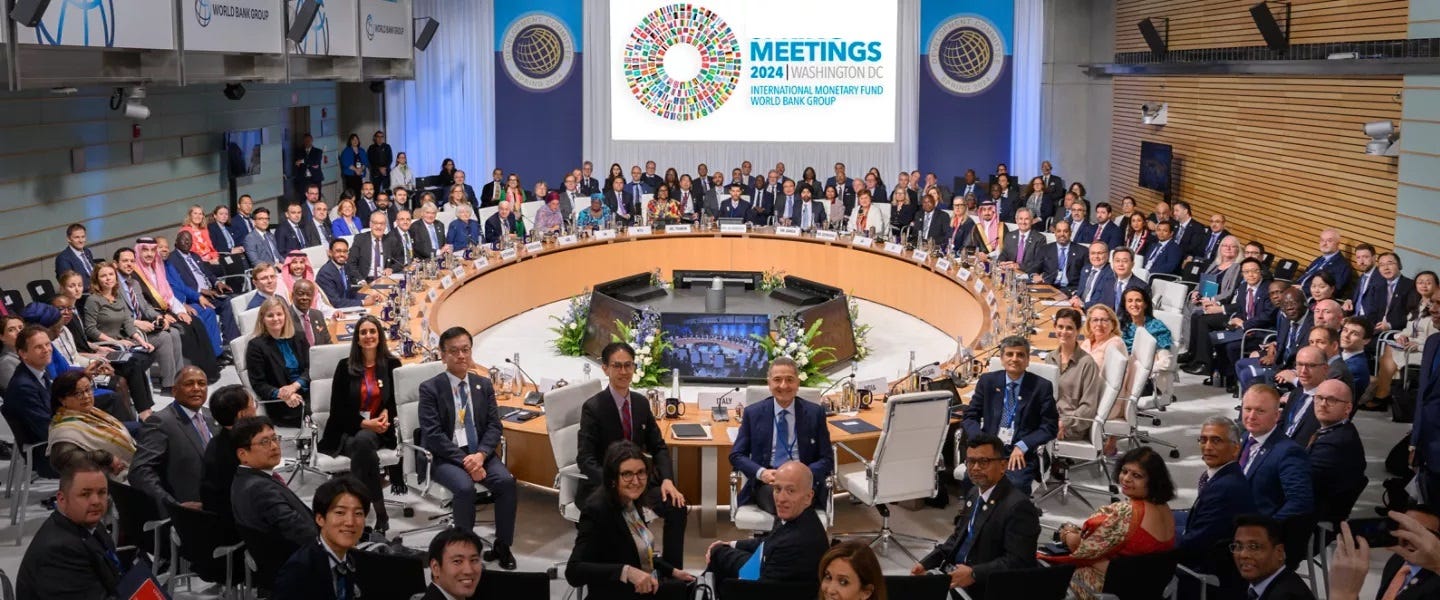
The World Bank isn’t owned by private investors or a single country – it’s essentially a giant cooperative owned by 189 member countries. Each member nation is a shareholder, and they provided the Bank with an initial pool of capital. In fact, member countries’ capital subscriptions (commitments of financial backing) form the foundation of the World Bank’s finances. Only a small portion of this capital is actually paid-in cash (the rest is “callable” if ever needed), but it’s critical because it gives the Bank financial credibility. Member governments – especially wealthy ones – also contribute funds periodically to support the poorest countries through special programs (more on that later).
Key point: The World Bank’s shareholder backing means it has the financial standing of all these governments behind it, which directly leads to its next big strength: an AAA credit rating. With essentially the world’s governments as guarantors, the Bank has earned the highest credit rating (AAA) from major agencies. This top-tier credit status isn’t just for show. It’s what allows the Bank to raise money cheaply.
Raising Billions on the Bond Market
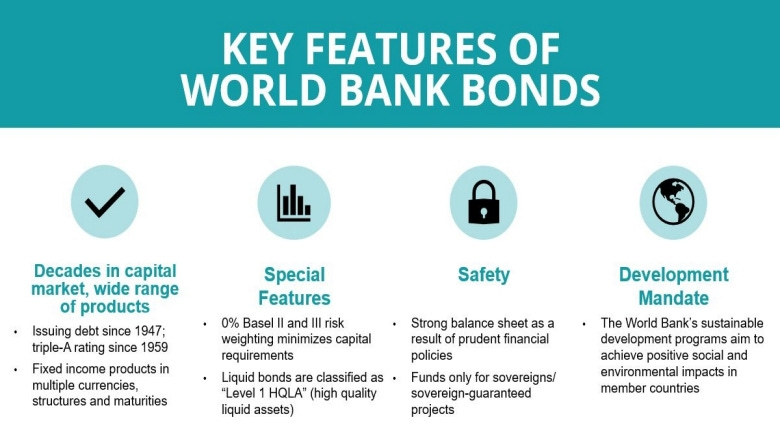
Armed with a strong capital base and AAA rating, the World Bank goes out to the global bond markets to raise most of its money. Think of the Bank as a borrower itself: it issues World Bank bonds that investors around the world are eager to buy (because AAA bonds are ultra-safe). In fiscal year 2025 alone, the World Bank Group raised about $79 billion from bonds issued to private investors. Investors get a low, safe return, and the Bank gets a huge pool of funds at very low interest rates.
What does the World Bank do with that money? It turns around and on-lends it to developing countries. Essentially, the Bank is a financial intermediary: borrow cheap, lend (slightly) less cheap. Because of its low funding cost, the World Bank can offer loans to developing countries at lower interest rates than those countries could get from commercial markets. It passes on the savings from its AAA borrowing to its clients. This is a win-win: investors trust the World Bank, the Bank accesses lots of capital, and borrowing countries get affordable financing for development projects.
Where the money comes from, in a nutshell:
Global investors: The Bank borrows from investors by issuing bonds (thanks to its AAA rating).
Member contributions: Countries (especially richer members) contribute capital and periodic funds, boosting the Bank’s resources.
Internal earnings: Income earned from loans and investments goes back into the pot.
Loan repayments: When countries repay past loans (principal + interest), that money recycles into new loans.
These funding sources combined give the World Bank the firepower to finance development at a massive scale. Since its inception, the World Bank (specifically IBRD, its main lending arm) along with sister organizations has leveraged about $29 billion in shareholder capital to deliver roughly $1.5 trillion in loans, grants, guarantees, and equity investments – over a 50x multiplier. That’s the beauty of the model: each dollar of actual capital unlocks dozens more in financing for projects around the world.
Earning Income Through Loans and Investments
Like any bank, the World Bank earns income from the loans it makes. Borrowing countries pay interest (often low interest, but with large volumes it adds up) and sometimes fees on their loans. This interest spread (i.e. the difference between the Bank’s own borrowing costs and the rate it charges borrowers) is a primary revenue stream. Importantly, the World Bank is not out to make big profits; it keeps rates as low as possible while charging just enough to cover costs and maintain its financial health. In practice, the interest and fees do more than just keep the lights on at the Bank – they usually generate a surplus each year.
What happens to that surplus?
Instead of distributing “profits” to shareholders (member countries don’t get dividends from the World Bank), the income is reinvested in development. A portion goes into reserves (to strengthen the Bank’s financial base), and a portion is often transferred to support low-income countries. For example, in fiscal year 2025 the World Bank’s main arm (IBRD) had a net income, out of which it set aside $1.2 billion to reserves and scheduled $782 million to be transferred to IDA, the fund for the poorest countries. This mechanism essentially plows earnings back into the mission – building capacity for more loans or directly subsidizing projects in the neediest places.
The Bank also earns money on its own investments. Funds that are not immediately loaned out are kept in a liquid investment portfolio to earn interest. This is a sensible way to ensure every idle dollar is working until it’s deployed to a project. Over time, these investment earnings contribute a bit more income to the pot.
To summarize how the World Bank “makes money” for itself:
Interest on loans: Developing countries pay back loans with interest, which covers the Bank’s borrowing costs and leaves a margin for income.
Fees and services: The Bank may charge loan origination fees or fees for guarantee products and other financial services, adding to income.
Investment returns: The Bank’s treasury manages a large portfolio, generating earnings that support operations.
Paid-in capital: While most capital is not used day-to-day, the small paid-in portion from members contributes to the Bank’s equity and some investment income.
Equity investment income: Through the IFC (the World Bank’s private-sector arm), the group also earns returns on equity investments in companies and projects (and IFC’s profits similarly support development activities).
Crucially, no one is getting rich off the World Bank’s profits. The “earnings” are recycled into its development work, ensuring the institution can continue and expand its mission sustainably.
The Role of Donors: IDA and Grants for the Poorest

Not all parts of the World Bank Group operate on a lend-and-earn model. The International Development Association (IDA), often called the World Bank’s fund for the poorest countries, relies heavily on donor contributions. Every few years, wealthy member countries (and even some not-so-wealthy ones who want to chip in) replenish IDA’s funds with big commitments. For instance, the latest funding round (IDA20 in 2021) gathered a record $93 billion to cover concessional lending and grants from 2022–2025. This is essentially money donated by governments to be given out as zero-interest loans and grants to low-income countries.
IDA does have some internal income as well: it receives transfers of money from IBRD and IFC profits, and some IDA loans (the ones that are loans, not grants) are eventually repaid, which provides a recycling of funds. In fact, the World Bank Group’s model intentionally funnels resources from its income-generating arms into IDA. Over the decades, IBRD and IFC have contributed billions of dollars of their net income to IDA , effectively subsidizing the poorest countries. This hybrid model – part donor-funded, part internally funded – keeps IDA running. It’s why we say the World Bank has both “hard money” and “soft money” operations: hard loans that earn interest (IBRD), and soft financing that’s mostly charitable (IDA).
For someone looking to work at an MDB, it’s important to understand IDA because it highlights how development banks balance financial sustainability with altruistic goals. The World Bank earns money with one hand and gives money (or very cheap credit) with the other, to ensure that countries most in need aren’t left behind.
Why This Business Model Matters (Especially to You)
The World Bank’s business model is elegantly designed to be sustainable. It’s not a traditional profit-maximizing bank, nor is it a one-way charity pipeline. Instead, it’s a self-replenishing system: leveraging global capital markets and shareholder support to finance development, while generating just enough income to keep going and growing. This model has proven so effective that other multilateral development banks (like the Asian Development Bank, African Development Bank, etc.) follow very similar approaches. They too are backed by member countries, maintain AAA ratings, issue bonds, and recycle earnings into their mission.
If you aspire to work for an institution like the World Bank, understanding this model is pretty important. For example:
You’ll better appreciate why creditworthiness and financial prudence matter even in a development context (AAA ratings don’t happen by accident; the Bank must manage risks carefully and maintain capital adequacy ).
You’ll understand the emphasis on projects generating returns (directly or indirectly), since loan repayments feed into funding the next project.
You’ll see why World Bank staff talk about “leveraging” resources (i.e. turning one dollar into several dollars of impact) because that’s literally the Bank’s financial DNA .
When engaging with government clients, you’ll grasp the importance of those clients eventually repaying loans, as that ensures continuity for the development finance cycle.
In short, the World Bank makes money through a blend of smart financing and global cooperation.
It raises cheap funds, lends at affordable rates, charges modest interest, and reinvests its earnings in development. Meanwhile, the generosity of its member countries supplements this cycle, especially for the poorest nations. The result is a financial powerhouse for good: one that pays its own bills and amplifies every dollar into many more for the world’s benefit.
Any of us who are keen to work in an MDB should take this model to heart.
It’s the key to why institutions like the World Bank can keep working year after year to tackle poverty, and knowing how the money flows will make you far more effective (and credible) in any role you take on.
In a mission-driven bank, money is the fuel for impact.
And now you know exactly how the World Bank fills its tank.
Make sure you subscribe to MDB Jobs to get the latest vacancies delivered straight to your inbox each Monday.