MDB jobs disappear fast. Are you tracking the latest openings?
Subscribe to the Premium Plan and never miss an opportunity:
Get Staff roles on Mondays
Get Consultant roles on Fridays
Grab a free trial here to see what you’ve been missing (no payment required).
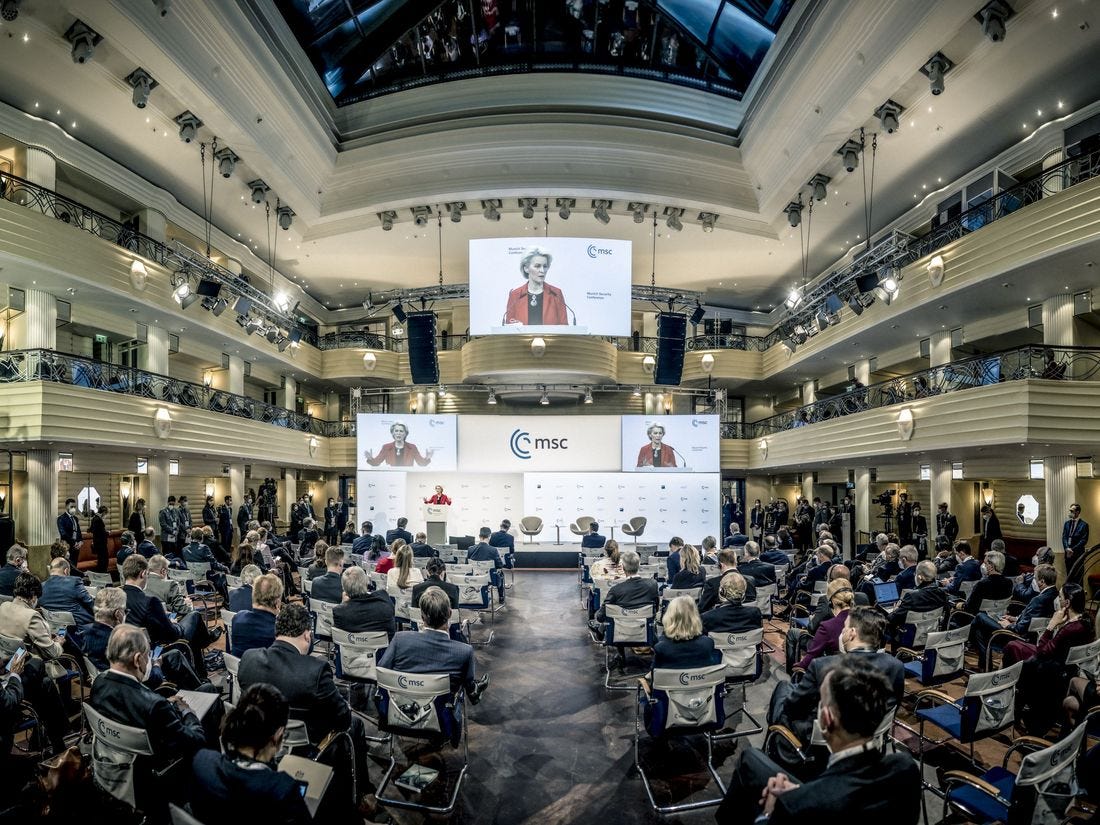
The winter air outside the Hotel Bayerischer Hof in February 2026 felt particularly biting to the thousand delegates gathered for the 62nd Munich Security Conference. Inside the ornate halls, sixty heads of state and dozens of foreign ministers moved with a shared sense of profound unease. The official theme of the conference was “Under Destruction.” The title served as a definitive autopsy of the international order established in the aftermath of the Second World War. The halls buzzed with talk of wrecking-ball politics, a new era defined by political forces prioritizing the sweeping dismantling of existing structures over incremental reform. The United States, the historical architect and primary guarantor of the global development system, had fully transitioned into its most prominent demolition man.
The collapse of the American mandate struck at the foundation of legitimacy and trust, far outweighing the immediate financial panic. By January of that year, the United States Agency for International Development had been completely dissolved as an independent entity. This was the agency that had steered the world’s largest foreign assistance budget and saved an estimated ninety million lives over two decades. Its dissolution, alongside the American withdrawal from sixty-six international organizations and treaties, created a vacuum of terrifying proportions. Projections circulating among the delegates suggested this permanent retreat would lead to fourteen million avoidable deaths by 2030. The human toll was already materializing in real time. In Sudan, the immediate halt of American funding in late 2025 forced fifteen hundred soup kitchens to close their doors overnight, accelerating a grave humanitarian emergency.
The United States had officially abdicated its role as a provider of global public goods. These are the shared, essential resources that benefit all nations regardless of borders, encompassing everything from pandemic prevention to climate stability and international shipping security. Without a central guarantor for these systems, the burden shifted chaotically. European partners found themselves struggling to decipher a volatile American strategy that oscillated wildly between reassurance and coercion.
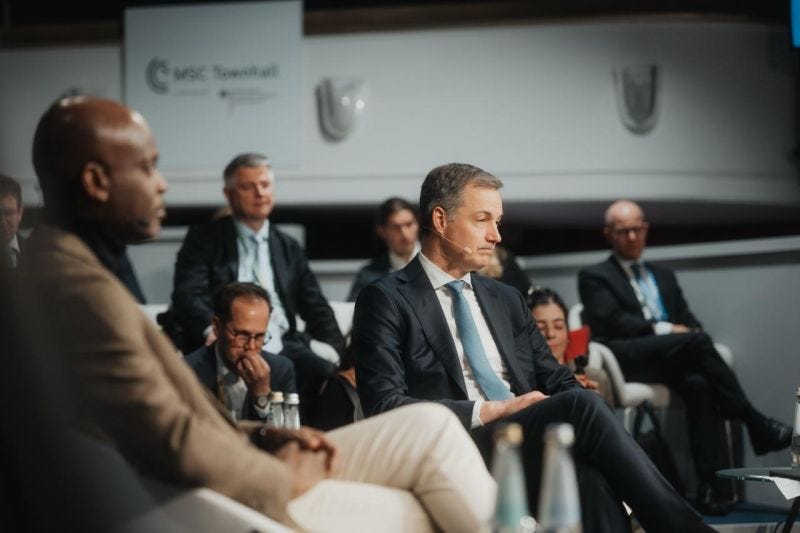
The central dramatic question of the weekend crystallized during a packed townhall session titled “Reboot or Repair? Toward A New Development Paradigm.” Alexander De Croo, the Administrator of the United Nations Development Programme, sat alongside Reem Alabali Radovan, the German Federal Minister for Economic Cooperation and Development. They faced a crowd acutely aware of the existential crisis threatening multilateralism. Traditional donor nations like Germany and the United Kingdom were already retreating inward. They were narrowing their definitions of national interest to focus strictly on economic competitiveness and immediate security threats. The post-war system of principled cooperation was rapidly dissolving into a landscape of transactional deals.
As state funding evaporated, private actors stepped into the void. Rebeca Grynspan of UN Trade and Development and Mark Suzman of the Gates Foundation highlighted this precarious shift. Organizations like the Gates and Rockefeller foundations were providing critical stability in global health and food systems. This reliance on private wealth carried severe risks. The delegates understood that philanthropic interventions could lead to a development landscape dominated by specific great powers and private interests, entirely bypassing the consensus of international norms.
The fractures in the global community were laid bare by the 2026 Munich Security Index. The data revealed a staggering polarization in risk perception between the wealthy G7 nations and the BICS coalition of Brazil, India, China, and South Africa. For the first time, nearly all surveyed countries viewed United States policy as a top-tier global threat. The G7 fixated on trade wars, cyberattacks, and financial crises, letting environmental concerns slide down their priority list. Conversely, the BICS nations maintained extreme weather and climate change as their undisputed primary threats. This divergence paralyzed traditional development finance. Western donors hoarded resources for economic protectionism while the Global South desperately demanded climate adaptation funding.
The most transformative shift of the conference emerged from this paralysis. Power was rapidly moving South. Global South actors were stepping up as co-creators of a polycentric authority. This refers to a global system driven by multiple, competing centers of power and regional alliances, replacing the outdated model of a single superpower calling the shots.
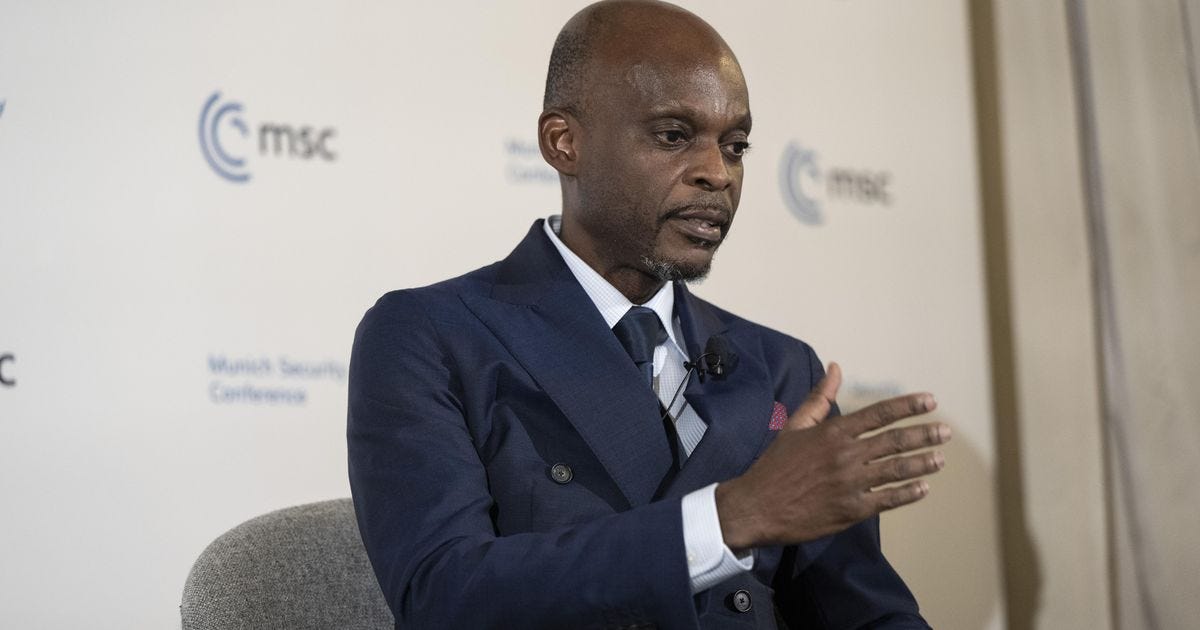
Robert Dussey, Togo’s Minister of Foreign Affairs, commanded the spotlight to articulate this new reality. He arrived in Munich to demand restorative justice and the complete decolonization of international development. Dussey launched the “Correct the Map” initiative, a campaign designed to shatter the traditional charity model. He told the assembly that the passive and silent Africa of yesterday was gone, replaced by a youth-driven continent demanding strategic autonomy. His blueprint included securing fifty percent reductions in grain imports to ensure food sovereignty and mandating local processing for critical resources like lithium and cocoa. Dussey framed development funding as the repayment of an unprecedented moral debt owed to African peoples. He made it clear that global peace required structural equity, rejecting the patronizing framework of Western aid entirely.
While the Global South charted an autonomous path, Western actors scrambled to invent new mechanisms for survival. The European Union unveiled a revolutionary ninety-billion-euro loan package for Ukraine. This initiative explicitly blended macro-financial assistance with the strengthening of defense capabilities. Macro-financial assistance provides direct budget support to keep a government operating and its economy stable during severe crises. Kaja Kallas described this integration of development and military funding as an antidote to imperialist aggression. Ukrainian President Volodymyr Zelenskyy specifically praised the PURL program, an initiative allowing development funds to purchase Patriot air defense systems to shield civilians. The line between international development and literal state survival had been completely erased.
In the absence of reliable leadership from Washington, subnational leaders stepped onto the global stage. California Governor Gavin Newsom maneuvered through the Rosewood Munich with the authority of a head of state. He positioned his state as a steadfast international partner, signing memorandums of understanding with Denmark for offshore wind development and with the Lviv Oblast in Ukraine for infrastructure reconstruction. Newsom proved that wealthy subnational regions could conduct their own foreign policy, bypassing the volatility of federal funding to maintain global climate and development goals.
The Munich Security Conference concluded with a collective realization that the era of benevolent, centralized international development was dead. The destruction of the old order had revealed a polycentric battlefield where climate resilience, migration, and artificial intelligence infrastructure were the new weapons of strategic competition. The single guarantor was gone. The challenge for the world’s remaining builders was no longer to reform the past, but to salvage the essential elements of human survival before they were completely consumed by the wrecking ball.
Make sure you subscribe to MDB Jobs to get the latest vacancies delivered straight to your inbox each Monday, and consultant positions each Friday.