

MDB jobs disappear fast. Are you tracking the latest openings?
Subscribe to the Premium Plan and never miss an opportunity:
Get Staff roles on Mondays
Get Consultant roles on Fridays
Grab a free trial here to see what you’ve been missing (risk-free).
The first Tuesday of 2026 broke cold and grey over Washington DC, typical weather for a city shaking off the holiday slumber.
Inside the glass and concrete fortress of the World Bank Group on H Street, the mood was cautious (of course) but routine. Thousands of economists, development specialists, and consultants moved through the soaring, light-filled atrium, grabbing coffee and preparing for another year of fighting global poverty.
They operated under the assumption that the unspoken agreement that the world becomes better through cooperation, shared norms, and gradual integration, was permanent.
By Wednesday morning, that consensus was dead.
The dismantling did not begin with a Truth Social post or a leaked rumor.
It arrived with the cold precision of a corporate hostile takeover. On January 7, Secretary of State Marco Rubio executed the latest phase of a strategy referred to as “transactional multilateralism.”
He announced the implementation of Executive Order 14199, a directive that seemed bureaucratic on the surface but was revolutionary in its intent. It contained a “List of 66”. Sixty-six international organizations from which the United States would immediately withdraw.
For the technocrats inside the World Bank, the list was a targeted strike against the “normative” layer of global governance. These were the agencies that set the standards and provided the moral arguments the Bank used to justify its existence. The United States was not just walking away. It was, as Rubio put it, dismantling a “sprawling architecture of global governance” that had been captured by an elite “NGO-plex.”
The shock waves had barely registered when the second blow landed the following day. Treasury Secretary Scott Bessent, a man who viewed the multilateral system less as a church of good intentions and more as a balance sheet of American assets, announced the U.S. was exiting the Green Climate Fund (GCF).
To the layperson, the GCF sounds like just another acronym in a sea of bureaucracy.
To the investment officers at the International Finance Corporation (IFC), the World Bank’s private sector arm, it was the fuel in their engine. The GCF provided “concessional financing”—essentially free or very cheap money that bankers could blend with market-rate loans to make risky projects profitable. It was the sweetener that made a solar farm in Namibia or a wind project in Vietnam attractive to private investors.
Without the GCF, the financial math collapsed. The “deal flow”, the lifeblood of any investment bank, would dry up instantly.
Bessent didn’t stop there.
He also pulled the Federal Reserve and the Federal Insurance Office out of the Network of Central Banks and Supervisors for Greening the Financial System (NGFS).
This was a technical body that set the standards for “climate stress testing,” or analyzing how climate change might bankrupt banks and insurers. For years, World Bank officials had flown into capitals from Nairobi to Dhaka, lecturing finance ministers on the necessity of adopting these standards. Now, their own largest shareholder had declared those very standards “inconsistent with priorities to grow the U.S. economy.” The hypocrisy stripped the Bank’s emissaries of their leverage before they even boarded their planes.
The Trilemma
The World Bank now faced an existential trilemma.
It was being squeezed by a fiscal contraction as U.S. trust funds evaporated. It was facing an ideological purge targeting its “mission creep” into climate and gender issues. And, perhaps most personally for its workforce, it was facing the weaponization of its location.
Washington, D.C. had always been the shining city on the hill for the global development class.
The deal was simple.
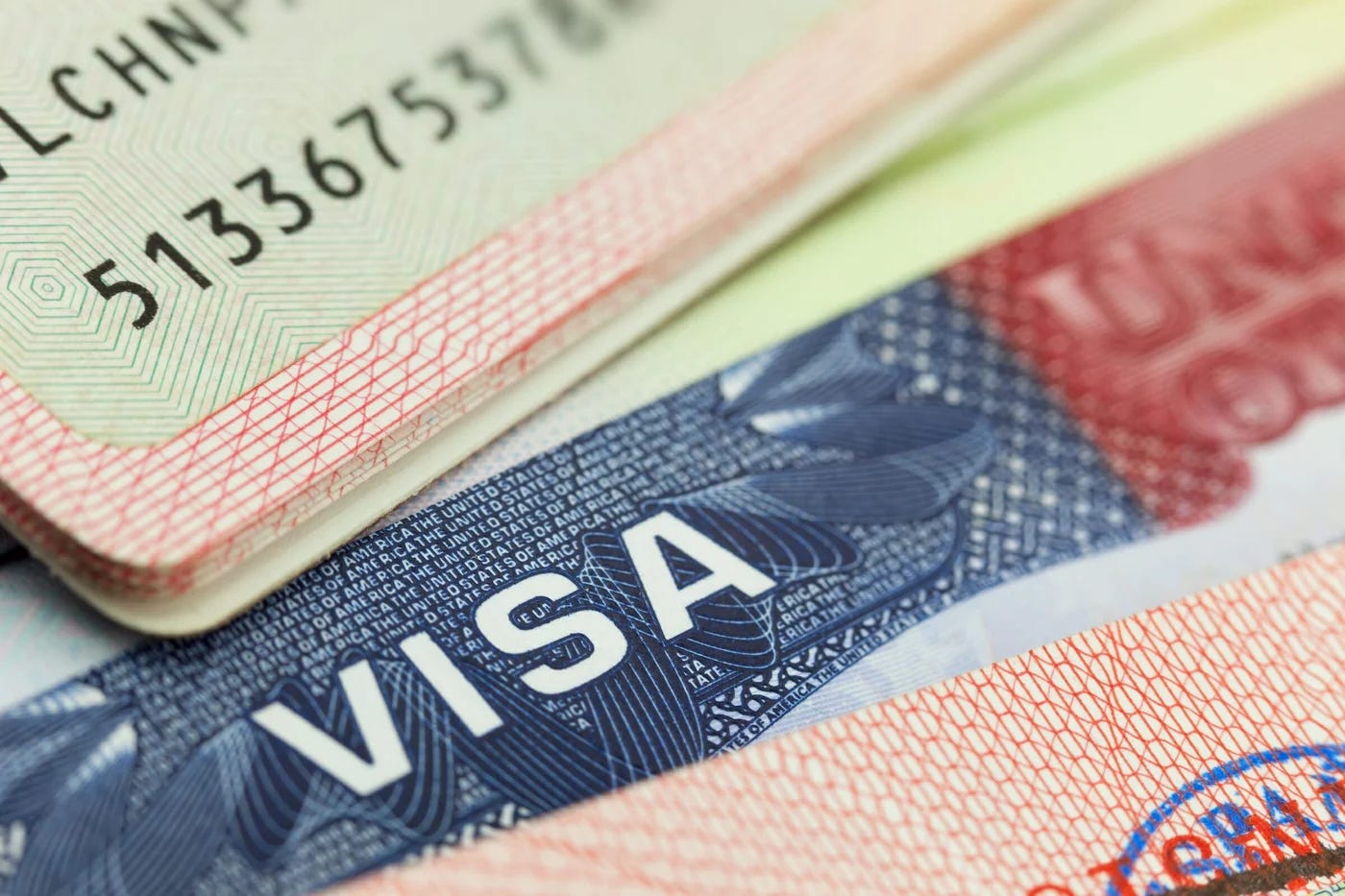
You come to D.C., you work to save the world, and in exchange, you get a G4 visa. This is a special diplomatic status that allows you to live in America. If you put in fifteen years, you earned a Green Card. It was the “golden handcuff” that allowed the Bank to recruit top talent from India, Brazil, and Nigeria.
The administration shattered this covenant.
The State Department abruptly cancelled the ability to renew G4 visas domestically.
Suddenly, a routine paperwork update became a high-stakes gamble. Staff were told they had to leave the country and visit a U.S. embassy abroad to renew their status. For a French national, this was an annoyance. For a staffer from a country on the administration’s scrutiny list, it was a career death sentence. They faced the risk of “administrative processing,” a bureaucratic limbo that could leave them stranded outside the U.S. for months.
Simultaneously, the “Special Immigrant” path to a Green Card was frozen. The retirement plan for thousands of staff vanished overnight. The message was clear. You are no longer welcome here.
The Banga Reformation
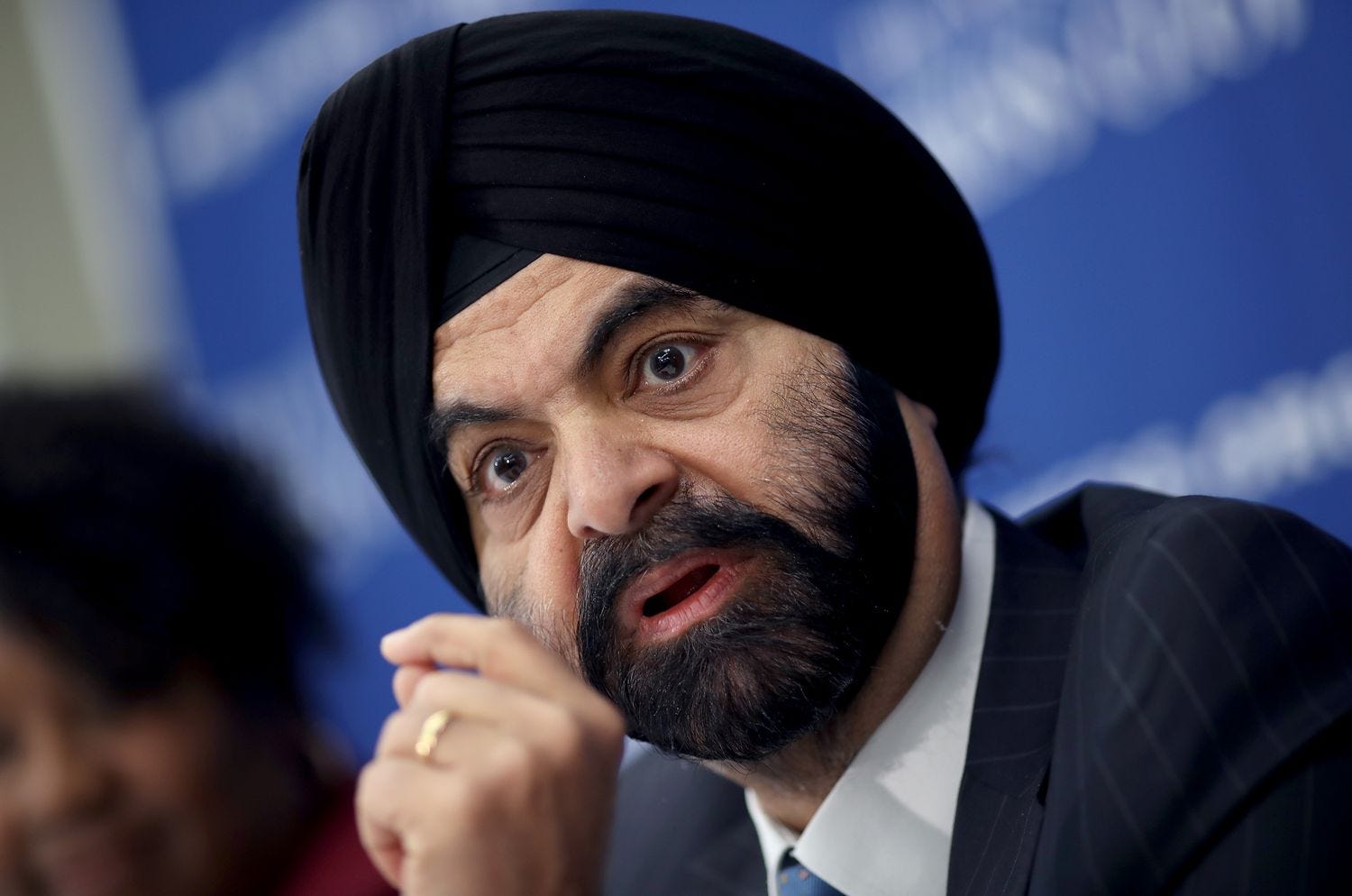
Inside the President’s office on Pennsylvania Avenue (the Bank’s address, not the White House’s) Ajay Banga had been reading the tea leaves for the last year. Banga was not a career bureaucrat. He was the former CEO of Mastercard, a man who understood markets and leverage. He realized that to save the institution, he had to sacrifice the mission.
The result was the acceleration of the “Banga Reformation.” If the U.S. wanted a lean, hard-nosed utility company instead of a “woke” development agency, Banga would give it to them.
The first casualty had been the “soft” agenda.
The administration had made it clear that Diversity, Equity, and Inclusion (DEI) initiatives and “climate orthodoxy” were hostile ideologies. The massive bureaucracy of the Climate Change Group, which reviewed every project for Paris Agreement alignment, was suddenly obsolete. The Human Resources units focused on internal culture were marked for defunding.
Banga pivoted the institution toward what Secretary Bessent demanded: “energy agnosticism.” The Bank would no longer turn up its nose at natural gas or nuclear power. It would focus on “hard infrastructure”: roads, dams, ports, and “critical minerals.” The U.S. needed copper and cobalt to compete with China, and the World Bank would become the tool to secure those supply chains.
This strategic pivot required a different workforce. The sociologists, gender specialists, and climate adaptation experts were out. Geologists, mining engineers, and supply chain auditors were in.
To balance the books, the Bank is preparing to server its most vulnerable limb: the Short-Term Consultants (STCs).
These were the “shadow workforce” of twenty-two thousand contractors who did much of the heavy lifting but had no job security. Management introduced a plan to eliminate STC positions entirely. It was a brutal efficiency measure that would strip the Bank of its surge capacity, but it would show the U.S. Treasury that the Bank could be disciplined.
The Great Migration
Nature abhors a vacuum, and the geopolitical market for talent is no different. Yet, the vacuum didn’t create the competition. It merely unleashed it.
The Asian Infrastructure Investment Bank (AIIB) in Beijing and the New Development Bank (NDB) in Shanghai didn’t have to scramble to react to the U.S. withdrawal.
Throughout 2024 and 2025, these institutions had been on a relentless global offensive. Their recruitment teams had toured capitals from Ankara to Jakarta, renting out hotel ballrooms to pitch a seductive narrative to frustrated development professionals.
Their pitch wasn’t ideological; it was operational.
They marketed themselves as the “start-up” alternative to the World Bank’s “legacy corporation.” While the World Bank was bogged down in safeguard reviews, compliance checks, and agonizingly slow approval cycles, the AIIB promised speed.
They offered a “client-first” culture stripped of the normative preaching that emanated from Washington. They had already been poaching mid-career talent who were tired of the bureaucracy, offering them the chance to actually build things again.
When the U.S. administration effectively declared war on the International Organization taff, the AIIB and NDB simply opened their doors wider.
For a climate finance expert tired of being called a “wasteful bureaucrat” in Washington, the AIIB offered a well-capitalized platform where green infrastructure was still the priority. For the treasury specialist weary of the dollar’s dominance, the NDB offered a mandate to innovate with local currency lending. Crucially, they offered stability. Employment in Beijing or Shanghai came with residency certainty, bypassing the increasingly hostile U.S. immigration system entirely.
The “Atlanticist” pool of talent has remained in D.C., working on the narrowed U.S. agenda of privatization and supply chain security. But the “Multipolar” pool, the technocrats who wanted to build the green transition and state capitalism, has begun to migrate East.
The New Reality
By the time the cherry blossoms arrived in Washington that spring, the World Bank was a different beast. The “Cosmopolitan Consensus” had been replaced by a starker, colder reality. The era of the “Global Public Good”, where the Bank worked on vague, universal problems like pandemics and climate change, was over. The era of “Strategic Competition” had begun.
For the staff remaining in the concrete corridors of 19th Street, the mission had narrowed. They were no longer architects of a global society. They were employees of a specialized financial utility, working to keep the lights on and the minerals flowing, hoping that their visas would hold out for just one more year.
Make sure you subscribe to MDB Jobs to get the latest vacancies delivered straight to your inbox each Monday, and consultant positions each Friday.
That's a haunting yet accurate view of things. Great text.