MDB jobs disappear fast. Are you tracking the latest openings?
Subscribe to the Premium Plan and never miss an opportunity:
Get Staff roles on Mondays
Get Consultant roles on Fridays
Grab a free trial here to see what you’ve been missing (risk-free).
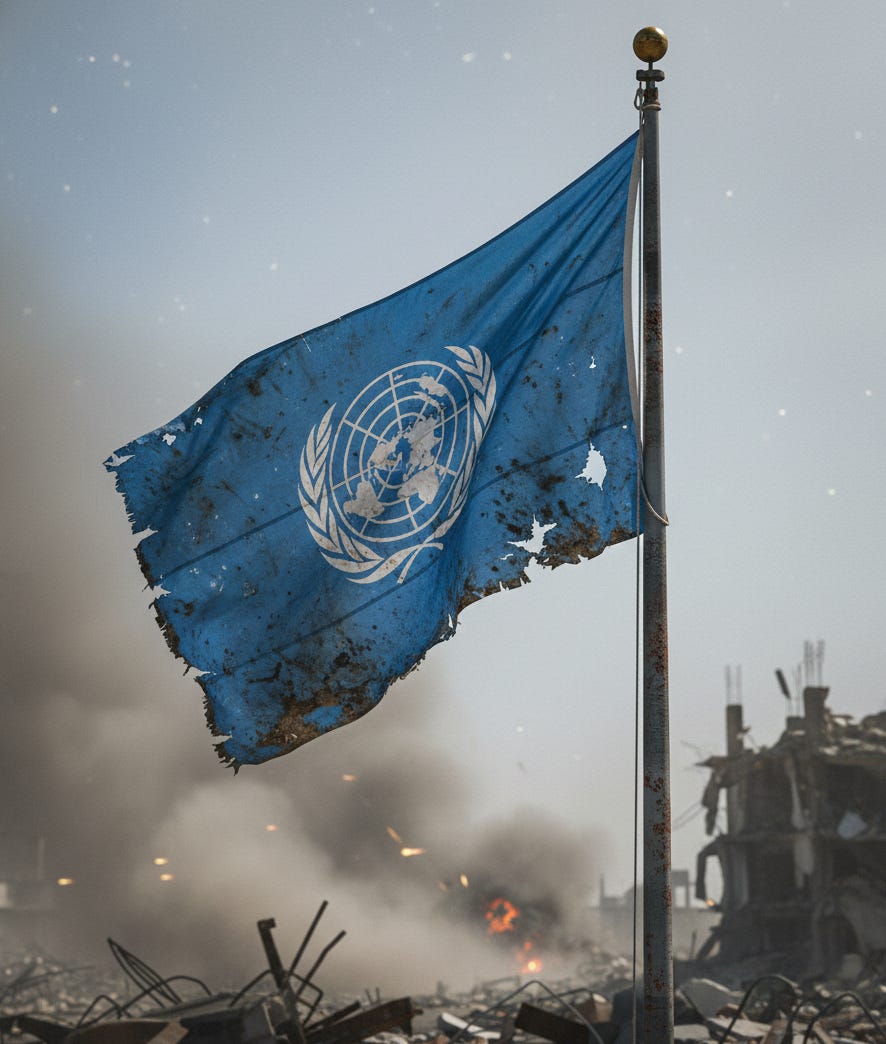
In the winter of 2025, the United Nations faced a reckoning that was as much a crisis of cash as it was a crisis of soul. This is the story of how a “liquidity weapon” was used to dismantle the 1945 status quo, forcing a 20th-century bureaucracy to either evolve into a digital-first “UN 2.0” or vanish into irrelevance. It’s a narrative of strategic insolvency, where empty hallways became the primary tool for structural transformation.
The air inside the conference rooms of the United Nations Secretariat in early 2025 was thick with a particular kind of dread. It was not the dramatic, cinematic dread of a looming war, but the quiet, grinding anxiety of an institution that had run out of money.
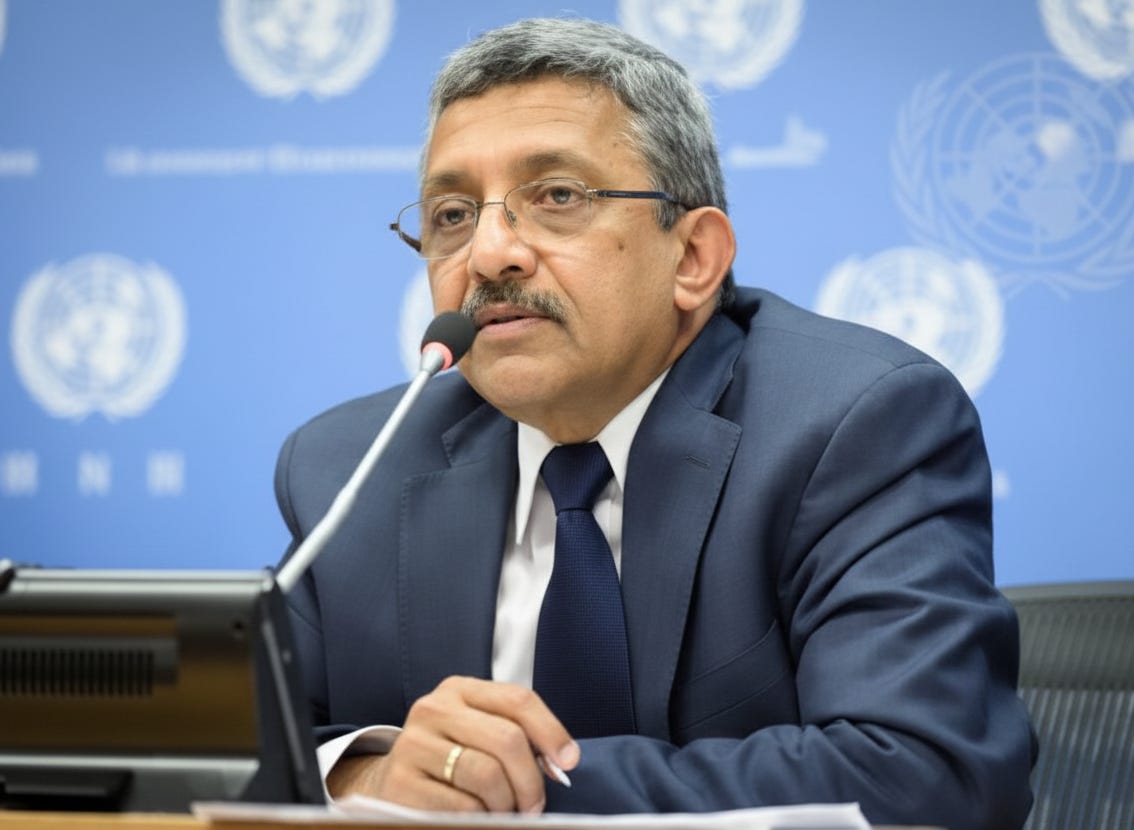
Chandramouli Ramanathan, the UN Controller and the man responsible for the organization’s ledgers, stood before the Fifth Committee with a message that felt like a funeral dirge. The organization was facing a liquidity shortfall so severe it threatened to deplete the Working Capital Fund. To the uninitiated, a liquidity crisis sounds like a technicality, but in the world of global governance, it is a chokehold. Think of it like a massive corporation that has billions in “assets”: i.e. the promises of member states, but literally zero dollars in the checking account to pay the electric bill or the staff in a field office in Sudan.
This was not a random accident of accounting. It was what some insiders called the weaponization of liquidity. For decades, the United Nations had operated under a gentleman’s agreement where the largest contributors, led by the United States, paid their dues eventually. By 2025, that agreement had evaporated. The U.S. and other major donors had moved toward a posture of aggressive conditionality. They weren’t just late; they were strategic. By withholding funds, they created a “hiring freeze” that became the most powerful reform tool in history. If a staff member retired or left, their desk stayed empty. The organization began to hollow out from the inside.
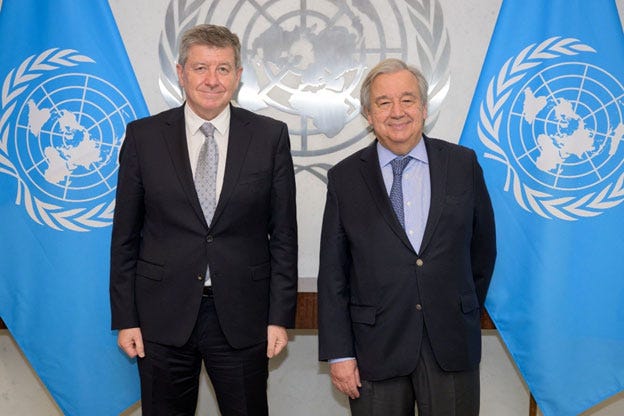
The most radical changes usually happen when the alternative to change is immediate death. The Secretary-General, António Guterres, a man who had spent his career navigating the tectonic shifts of global politics, saw the opening. Alongside Guy Ryder, the Under-Secretary-General for Policy and a veteran of the international labor movement, Guterres began to pitch a vision called UN 2.0. This was not a minor update. It was a fundamental re-engineering of what an international civil servant was supposed to be.
The old guard of the UN was built on the “career appointment.” You joined as a young professional and stayed for thirty years, mastering the art of the 50-page qualitative report and the delicate dance of consensus negotiation. Ryder and Guterres wanted to replace this with the “Quintet of Change.” They argued the UN was tethered to 20th-century modalities while the world was moving toward data analytics, foresight, and behavioral science. As David Rosenthal observes, the UN was effectively telling its legacy workforce that their core skills were now the primary obstacles to the organization’s survival…
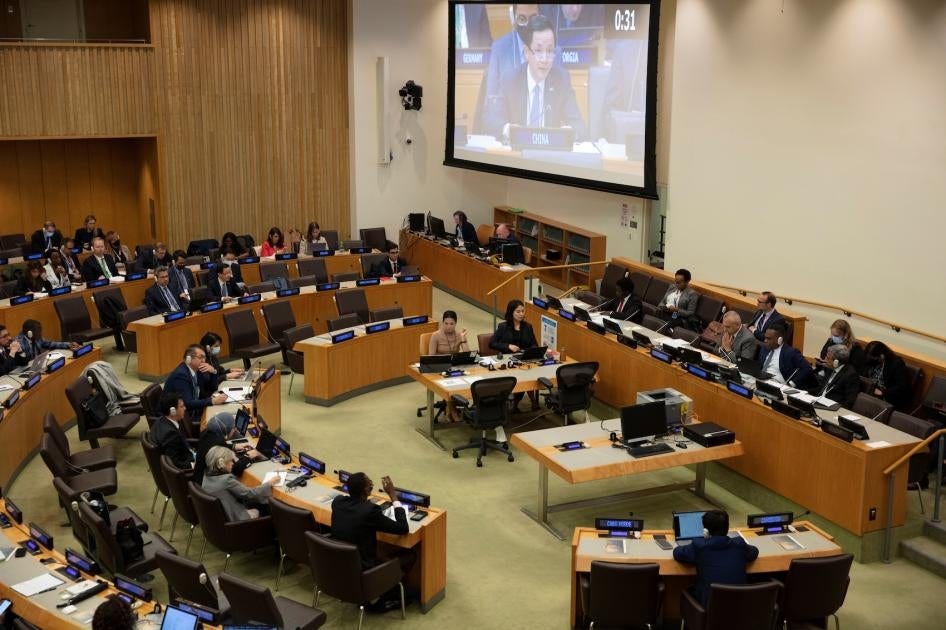
The tension peaked during the budget negotiations in late 2025. The arena was the Fifth Committee, the legendary “engine room” of the UN where diplomats argue over every line item of a multibillion-dollar budget. The G77, a coalition representing the Global South, fought to protect the “Development Pillar.” They saw the calls for “efficiency” as a Trojan horse designed to defund the programs that helped their nations while keeping the security apparatus of the great powers intact. But the G77 lacked the one thing that mattered in 2025: the checkbook.
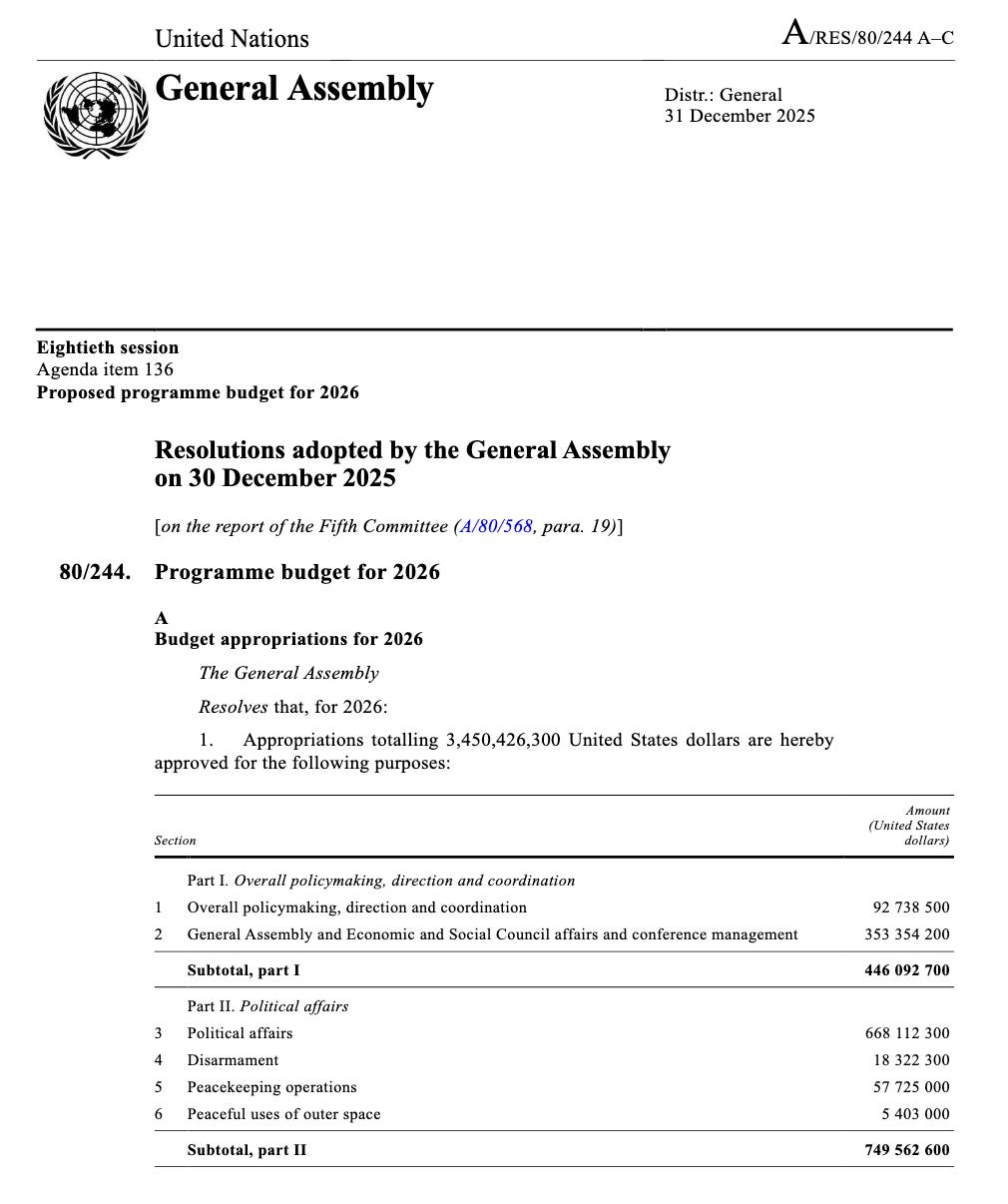
The result was Resolution 80/244, adopted on the penultimate day of the year. It was a document of austerity. For the first time, the UN moved from “Zero Nominal Growth” to active “Negative Growth.” The budget was cut by $270 million compared to the previous year. The mechanism for this cut was the “vacancy dividend.” Since the hiring freeze had kept thousands of posts empty for eighteen months, the member states argued that the organization had proven it didn’t need them. In a move of brutal corporate efficiency, those posts were simply abolished. The organization had survived without them, so it would now be required to live without them forever.
The human cost of this structural shift was perhaps most visible in the “Blue Line” learning platform. Management pushed staff to retrain in behavioral science and data analytics, but for many, the gap was too wide. In August 2025, the Office of Human Resources launched the Voluntary Separation Programme. It was a “buyout” in the classic corporate sense. Staff aged 55 or older were offered enhanced indemnities to walk away. The message from the 38th floor was unspoken but clear: take the buyout now, or face the certainty of your post being abolished in the next budget cycle.
This shift created what many began to call the “gigification” of the international civil service. The career appointment was dying, replaced by consultants and “Junior Professional Officers” funded by wealthy donor nations. The UN was becoming a “service backbone”—a centralized, leaner entity where administrative staff were treated as interchangeable commodities. The distinction between agencies like the World Food Programme and the Secretariat began to blur as their back-office functions were merged into a single “Unified Services Roadmap.”
By 2026, the United Nations that emerged from the reforms was a different beast entirely. It was leaner, certainly. It was more digitally adept, perhaps. But it was also more precarious. The social contract between the organization and its workforce had been rewritten under duress. The UN 2.0 model isn’t about building a permanent global bureaucracy; it is about building a nimble, “fit-for-purpose” strike team that can be scaled up or down based on the whims of the fiscal year.
The story of the UN80 reforms is a reminder that in the world of high-stakes business and politics, the most significant changes are rarely the result of a shared vision. They are the result of a pincer movement. On one side, a liquidity crisis that makes the status quo impossible. On the other, a leadership team ready to use that crisis to push through a new architecture. The United Nations didn’t change because it wanted to; it changed because the money ran out, and in the silence of those empty hallways, a new, more agile, and more vulnerable organization was born.
Make sure you subscribe to MDB Jobs to get the latest vacancies delivered straight to your inbox each Monday, and consultant positions each Friday.