MDB jobs disappear fast. Are you tracking the latest openings?
Subscribe to the Premium Plan and never miss an opportunity:
Get Staff roles on Mondays
Get Consultant roles on Fridays
Grab a free trial here to see what you’ve been missing (risk-free).
The panic on 19th Street in Washington, D.C., began long before the inauguration.
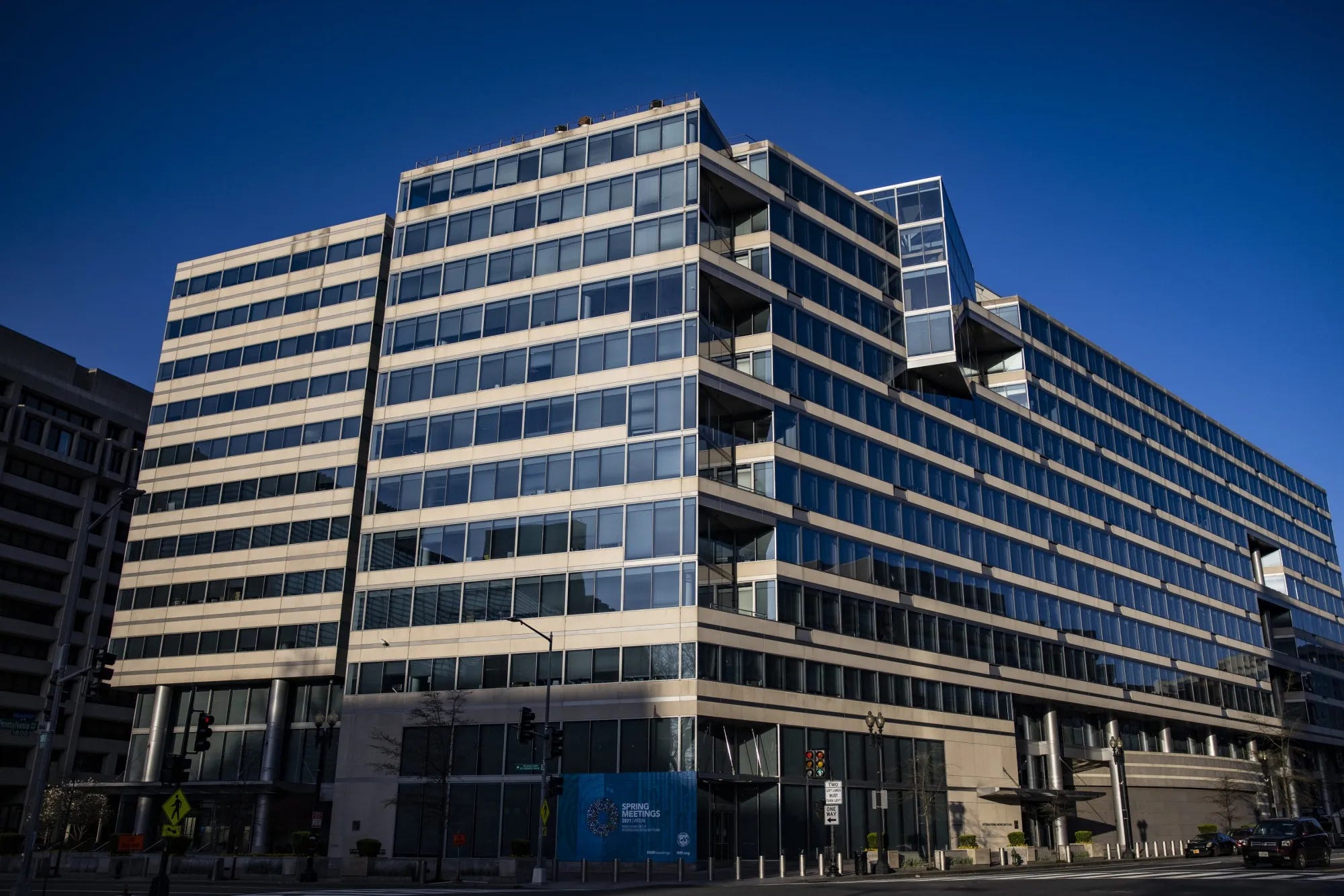
Inside the glass-and-steel headquarters of the International Monetary Fund, the mood in late 2024 hovered somewhere between dread and resignation. For seventy years, the Fund had served as the fire brigade of the global financial system. It was the technocratic heart of the post-war order. But a thick, right-wing policy blueprint known as “Project 2025” was circulating through the corridors, suggesting that the incoming administration viewed the institution not as an asset, but as a violation of American sovereignty.
The fear was simple.
Donald Trump was going to pull the plug.
When Scott Bessent walked onto the stage at the Spring Meetings in April 2025, the hundreds of finance ministers and central bankers gathered in the audience braced for a demolition order. Bessent, the newly minted Treasury Secretary, was a Soros Fund Management alumnus with a shark-like understanding of global markets.
But surprisingly, he didn’t look like an arsonist. He looked like an acquirer.
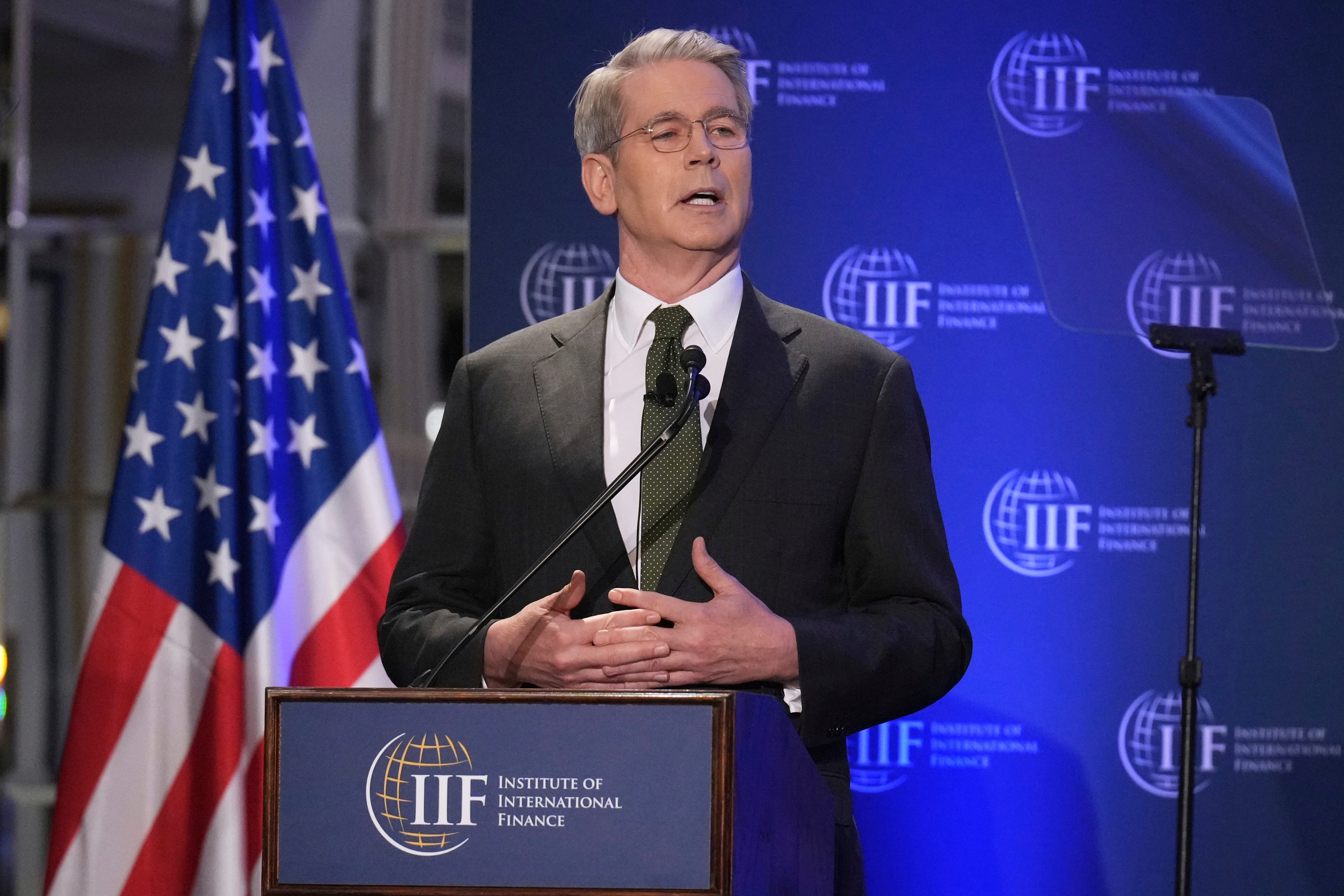
Bessent approached the podium and delivered a message that was far more sophisticated, and far more lethal to the status quo, than a simple withdrawal.
He told the room that the United States was not leaving. “America First does not mean America alone,” he said.
The relief in the room was palpable, though it was short-lived. Bessent then pivoted to his real agenda. The Fund, he argued, had been “knocked off course” by a “sprawling and unfocused agenda” of social grievances and climate activism.
It turned out he wasn’t there to destroy the bank. He was there to strip it down to the studs.
The “Bessent Doctrine,” as it would come to be known, was built on a single, ruthless insight. The United States didn’t need to abandon the multilateral system to achieve its goals. It simply needed to remember that it owned the controlling shares.
The first casualty of this new realism was the Fund’s expanding social mission. Under the previous leadership, the IMF had increasingly focused on “macro-critical” issues like climate change and gender equality, arguing that you could not fix an economy without fixing the society underneath it. The Treasury Department viewed this as a distraction.
They called it “mission creep.”
The execution fell to the bureaucracy. In a move that shocked the European delegations, the US demanded the immediate consolidation of the Fund’s dedicated Climate Change and Inclusion & Gender units. These were not small changes. They were the crown jewels of the previous era’s progressive consensus. Bessent’s ultimatum was stark. The Fund had to “fold its climate and gender units into one that is focused on macro-financial and structural policies”.
This was a bureaucratic massacre.
Specialists who had spent years designing “green” surveillance frameworks found themselves reassigned or marginalized. The message was sent down the chain of command that the era of the IMF acting as a global environmental regulator was over.
The European response was furious but impotent. German Finance Minister Christian Lindner publicly urged the Fund to “persist in advancing” its climate objectives. The European Central Bank warned of “green swan” risks that could topple financial markets.
Yet when the dust settled, the Americans had won.
Europe, paralyzed by its own economic stagnation and desperate for US support on Ukraine, could not afford a fight over org charts. By September 2025, the dedicated units were gone, merged into a generic structural department where their influence was diluted into irrelevance.
With the ideology corrected, the administration turned its attention to personnel. They needed an enforcer on the inside. By tradition, a European runs the IMF as Managing Director, while an American serves as the First Deputy Managing Director, or FDMD. The FDMD is effectively the Chief Operating Officer. It is the person who controls the paper flow, the budget, and the daily lives of the staff.
In October 2025, the White House played its ace. They nominated Dan Katz for the role.

Katz wasn’t a polite academic economist. He was a former investment banker at Goldman Sachs and a political street fighter who had served as Bessent’s chief of staff. He came from the Manhattan Institute, a think tank that viewed international bureaucracies with deep skepticism. His arrival at the Fund’s headquarters signaled the end of the polite cohabitation that had characterized the relationship between the US Treasury and the Fund’s management.
Katz’s mandate was twofold.
First, enforce the “back-to-basics” austerity that Bessent demanded. Second, ensure that American tax dollars never subsidized American adversaries.
This second objective brought the Fund directly into the center of the defining geopolitical conflict of the age: the cold war with China.
For years, the IMF’s governance structure had been a mathematical lie. The institution allocates power based on “Quotas”. These are essentially the membership fees countries pay, which determine their voting rights. As China’s economy had grown to rival that of the United States, its voting share had remained frozen at roughly 6 percent, while the US held over 16 percent.
The 17th General Review of Quotas was supposed to fix this.
It was the scheduled moment to update the formula to reflect the reality of the global economy in 2025. If the math were applied honestly, China’s share would double, and the US share would drop below 15 percent.
That number, 15 percent, was the “red line.” Major decisions at the IMF require an 85 percent supermajority. As long as the US holds more than 15 percent of the votes, it possesses a unilateral veto. Losing that veto was non-negotiable for the White House.
Bessent made the US position clear.
There would be no change to the formula.
The administration would block any attempt to dilute US power. They employed a strategy of tactical delay, refusing to engage in the negotiations and effectively freezing the governance structure in time.
The Chinese delegation was livid.
The People’s Bank of China issued statements condemning the move as “economic bullying” and a violation of the institution’s own articles of agreement. But without US consent, the reform was dead. The US had successfully weaponized the institution’s by-laws to contain its rival.
While the boardroom battles raged, the new doctrine began to bite in the field. The US demanded a return to “brutal truth-telling” in the Fund’s economic surveillance.
This is the process known as Article IV consultations—an annual physical exam where IMF economists inspect a country’s books and tell them what they are doing wrong.
Under Katz’s watch, these reports shed their diplomatic euphemisms. When the IMF team landed in Beijing for the 2025 review, they carried a mandate to target China’s industrial policy. The final report was scathing, labeling China’s state subsidies for green technology as “inefficient investment” that distorted global trade. It was exactly the intellectual ammunition the White House needed to justify its tariffs.
The shift was even more tangible for the desperate nations knocking on the Fund’s door for cash. The era of easy money was over. The US vetoed a new allocation of Special Drawing Rights (SDRs), an international reserve asset that functions like a coupon countries can exchange for hard currency. The administration argued that SDRs were unconditional handouts that benefited dictators as much as democracies.
Instead, countries facing crises were forced into the meat grinder of traditional conditionality. Ethiopia found this out the hard way. Seeking a lifeline after years of civil conflict, Addis Ababa faced a wall of American intransigence. The US Treasury refused to sign off on the loan until Ethiopia let its currency float, a painful, shock-therapy measure that caused the value of the birr to plummet but balanced the books.
Yet the “Bessent Doctrine” was flexible when it needed to be. The administration created a deliberate bifurcation in how it treated borrowers. For most, it was austerity. For strategic allies, there were loopholes.
When Ukraine needed money, the rulebook was rewritten. The Fund has strict rules against lending to countries with unsustainable debt. By all conventional metrics, Ukraine’s debt was unsustainable. But Katz helped engineer an “innovative economic partnership” that used frozen Russian assets to backstop the loans. The US proved it was willing to bend the iron laws of economics when national security was at stake.
By early 2026, the transformation was complete. The IMF had not been destroyed. It had been repurposed. It was leaner, meaner, and explicitly aligned with Washington’s strategic interests.
The risks of this victory were already becoming apparent. As the US tightened its grip, the rest of the world began to hedge. China accelerated its use of bilateral swap lines, building a shadow financial system outside of Washington’s reach. The “Global South,” alienated by the refusal to reform quotas, looked on with growing cynicism.
Scott Bessent and Dan Katz had saved the IMF from irrelevance, but in doing so, they had turned a global public utility into a western fortress. The capture of 19th Street was a tactical masterstroke. History would decide if it was a strategic error.
Make sure you subscribe to MDB Jobs to get the latest vacancies delivered straight to your inbox each Monday, and consultant positions each Friday.