



Hi everyone,
For those hunting MDB jobs (which I’m guessing might be you), subscribe to the paid plan to get fresh job listings every Monday. Apply early and track positions before they disappear.
Wondering what’s included? Job listings from November 3, 2025 and earlier are now free to access. Check out the most recent unlocked post here.
Want to get your foot in the door? Landing a consultant role is the best first step. Consultancy opportunities are published every Friday for paid subscribers.
If you’re hunting for an international development career, then I think it’s pretty safe to say that 2025 has fundamentally changed where you should be looking.
The UN system just experienced its worst hiring collapse in memory. UN jobs dropped 43% after the U.S. froze foreign aid in January. Some agencies got hit even harder. UNHCR posted 83% fewer jobs. WHO slashed postings by 81% after the U.S. announced its withdrawal. These aren’t minor fluctuations. This is structural damage.
Meanwhile, multilateral development banks are expanding. The Asian Development Bank just approved a 50% boost to its operations (I cover that here in more detail). The World Bank jobs are still on the rise. Regional banks are launching new initiatives that require fresh talent. The contrast couldn’t be sharper.
Let me walk you through what’s actually happening and how to position yourself accordingly.
The UN Funding Crisis Is Real
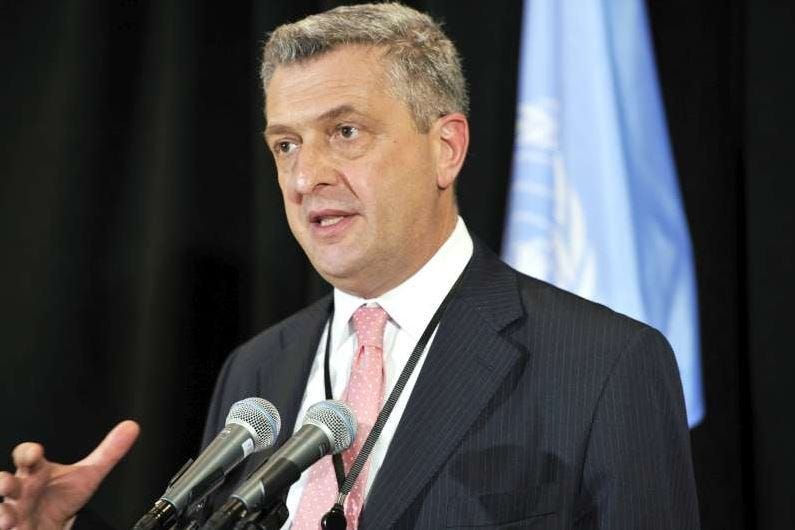
The numbers tell a brutal story. Filippo Grandi, who runs UNHCR, put it pretty directly: “I have never, ever seen such a challenge due to the lack of resources, cuts, freezes, and uncertainty.”
When your biggest donor freezes contributions, everything downstream gets hit. Programs scale down. Hiring stops. Contracts get shortened. The predictable career paths that attracted so many people to UN work have been replaced by budget-driven caution.
What’s particularly telling is the shift in contract types. Long-term consulting positions fell by nearly 67%. Permanent staff roles dropped over 44% (source). The hiring that continues is heavily weighted toward temporary and short-term arrangements. Agencies need flexibility when they can’t predict next quarter’s budget, let alone next year’s.
This affects every major duty station. Jordan, Ukraine, and Ethiopia each saw job postings decline by more than 50% (source). Even New York-based UN entities like UNICEF posted about 35% fewer positions compared to 2024. There’s no safe harbour in the traditional UN career system right now.
A few agencies bucked the trend. IOM posted 70% more roles than last year. UN-Habitat also increased postings (source). But look closer: these were overwhelmingly short-term gigs. Any growth in UN hiring is concentrated in flexible, project-tied appointments. That’s not career stability. That’s piecing together consecutive three-month contracts and hoping something permanent materialises.
Why MDBs Are Different
Multilateral development banks operate on a fundamentally different financial model, and that distinction matters enormously right now (I wrote more about the model here).
The G20 developed a roadmap for “Better, Bigger, and More Effective MDBs” that’s now being implemented. Since mid-2024, the major MDBs have unlocked an additional $250 billion in lending headroom for the next decade. Total potential new lending exceeds $650 billion. More projects mean more staff to design, implement, and oversee them.
The World Bank saw postings decline about 31% in 2025, which sounds bad until you realise that still represents 915 vacancies in three quarters (source). That’s hundreds of positions across the globe, even during belt-tightening.
The Bank’s president Ajay Banga has made job creation in client countries the “North Star” of operations, and executing that vision requires skilled professionals.
But the real story is at the regional banks.
ADB’s Historic Expansion
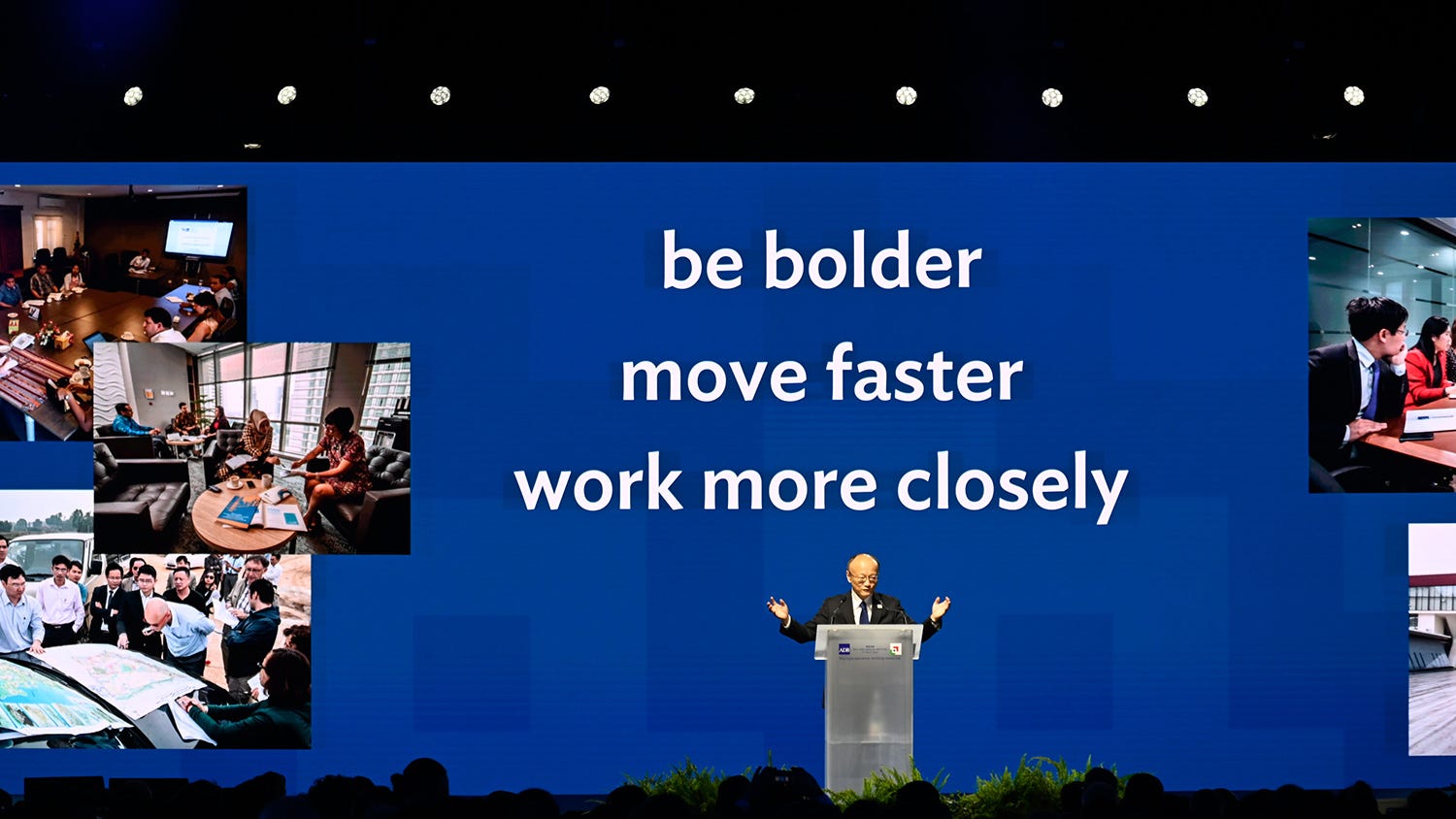
As I covered last week, ADB made history this year by amending its founding charter for the first time since 1966. The change removes an old lending cap and enables a 50% expansion of operations. Annual lending can now grow from about $24 billion to $36 billion or more.
ADB President Masato Kanda called it “a historic decision” that lets the bank raise financing ambitions without needing fresh capital from shareholders.
For anyone targeting MDB careers, this is pretty important.
More lending capacity means more projects across Asia-Pacific in climate-resilient infrastructure, private sector investments, energy transitions, and digital development. All of that requires human capital. By 2030, ADB aims to quadruple its private-sector financing and have 40% of operations directly support private sector development. That signals substantial hiring in finance and policy roles over the coming years.
AfDB and IDB Are Also Growing
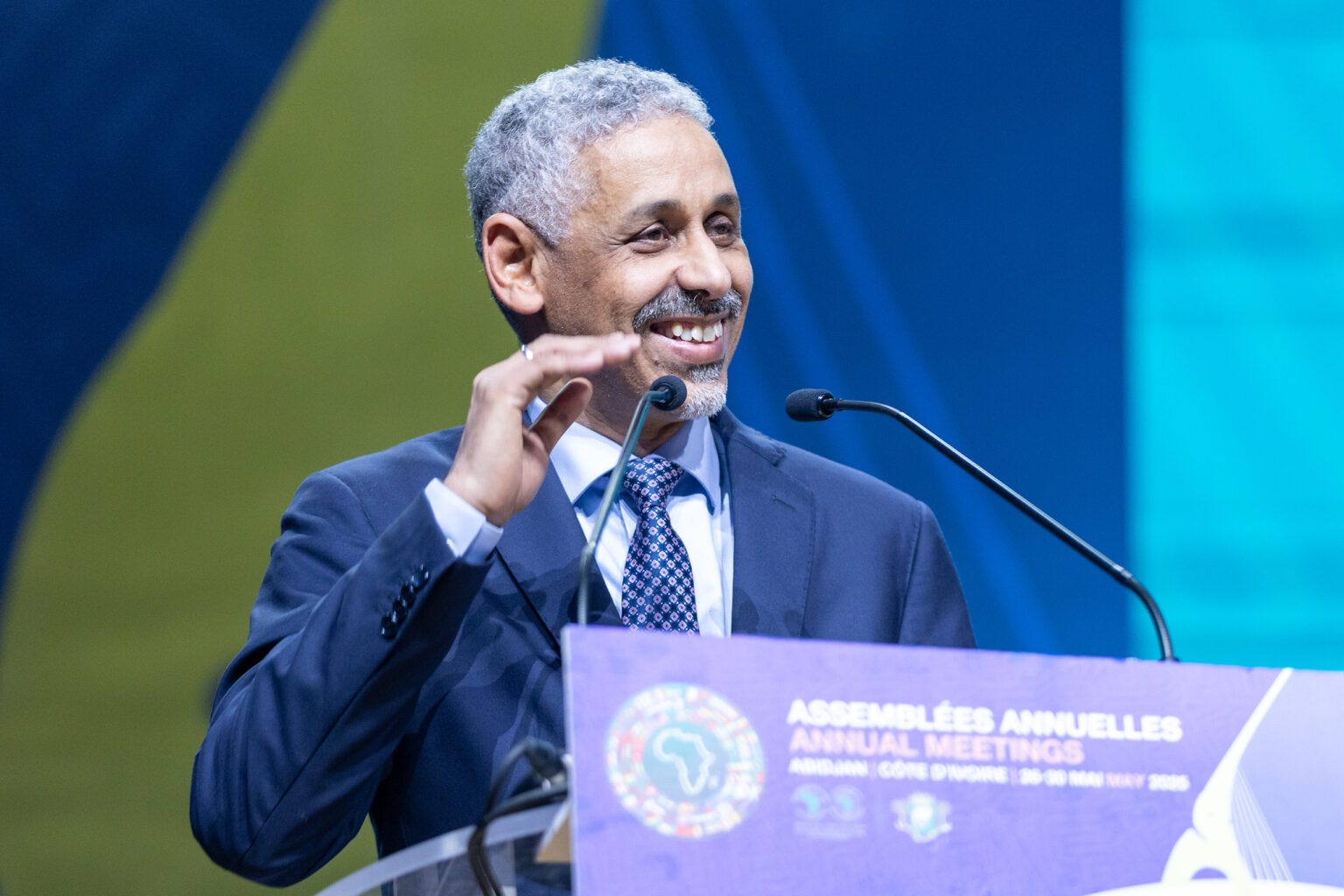
The African Development Bank has been championing its “Jobs for Youth in Africa” strategy, expected to facilitate 19 million jobs through $105 billion in financing by end of 2025. That focus requires experts in education, youth entrepreneurship, and skills development.
AfDB launched a new “marker” system to ensure investments maximise employment outcomes. Initiatives like that need staffing. The bank’s Young Professionals Program specifically highlighted skills aligned with its Ten-Year Strategy and “High 5” priorities: industrialise Africa, power Africa, feed Africa, integrate Africa, and improve quality of life. Candidates with expertise in energy, agriculture, infrastructure, and finance have strong prospects.
The Inter-American Development Bank is pushing into digital innovation, climate resilience, and inclusion. In 2025, IDB launched a region-wide initiative seeking AI solutions to transform education across Latin America. That’s a clear signal of interest in professionals working at the intersection of technology and development.
Even the European Bank for Reconstruction and Development has extended its geographic scope to sub-Saharan Africa, creating postings for country experts and sector specialists in new regions.
What This Means for Your Job Search
The compass for development career planning now points toward MDBs rather than the UN system. That requires adjusting your approach.
Follow the funding. Where money flows, jobs follow. Monitor announcements about capital increases, replenishments, and new trust funds. The ADB charter amendment enabling $12 billion more annual lending is exactly the type of signal that foreshadows recruitment drives. Pay attention to Spring Meetings and annual meetings where these decisions get announced.
Specialise in high-demand areas. MDBs want specialists, not generalists. The greatest number of World Bank vacancies this year were in finance, ICT, and environment. Those reflect institutional priorities around modernising development work and ramping up climate initiatives.
Climate finance experts, renewable energy engineers, digital development strategists, and impact investment professionals are all growth areas. Get comfortable with terms like “private capital mobilisation” and “climate adaptation finance.” These show up constantly in MDB job interviews and applications.
Understand the new contract dynamics. UN positions increasingly mean piecing together consecutive consultancies with no guarantee of extension. MDB positions, while often initially contract-based, tend to offer clearer pathways to longer-term employment.
Build donor and partnership skills. One of the striking trends of 2025 is a 150% surge in business development roles at U.S.-based development organisations. Fundraising, partnership management, and donor relations have become premium skills.
Even at MDBs, there’s value in professionals who can structure co-financing deals, manage donor portfolios, or form partnerships with governments. If you have grant writing or investor relations experience, emphasise it.
The last point I’ll say is a big one.
Stay geographically flexible.
With UN roles shrinking in Geneva and New York, consider field positions or postings in emerging operation centres. MDBs often decentralise staff to country offices from Abuja to Hanoi to Lima. Willingness to relocate improves your odds considerably. So if you’re hanging out for a plump position in Paris, you’re massively narrowing your chances…
The Bottom Line
The development sector’s overarching mission hasn’t changed. Fighting poverty, promoting sustainable growth, and delivering critical services still drive these institutions. But 2025 has fundamentally shifted where impactful opportunities exist.
The UN system, which, since I was a kid, was seen as a cornerstone employer in global development, is facing structural changes that may persist as long as major donors remain uncertain. MDBs are stepping into that void, acting with greater shared purpose and expanding their operations.
If contributing to international development is your goal, your best shot this year probably isn’t at a UN agency. It’s in the (massive) walls of MDBs like the World Bank, ADB, AfDB, and so on.
Make sure you subscribe to MDB Jobs to get the latest vacancies delivered straight to your inbox each Monday.
Stop Funding Swarms. Start Enabling Sources.
We are entering a strange phase of the “innovation” economy.
Everywhere I see the same pattern:
committees, panels, and “ecosystems” throwing fundamentally incompatible frameworks into one pot – just enough conceptual noise to justify a funding proposal and a new layer of administration.
The result is not intelligence. It is swarm-mode redundancy.
There is a different option.
If you have energy, capital, or positional power, you can either
• spend it on tactical games with stressed, ego-driven competitors in pseudo-democratic committees,
or
• align with a coherent, life-long, cross-disciplinary framework that already integrates cumulative human knowledge and is now scalable through AI.
I call these two roles:
• Minds of Integrity – those who protect and enable the conditions for real intelligence to act.
• Minds of the Core – rare polymathic thinkers on mission, whose unique trajectories have produced truly integrative frameworks, not just another local method.
The real question for serious decision-makers is not:
> “Which swarm should I join?”
It is:
> “Which Core do I want to enable – and what future does this make structurally possible?”
My own work – the Sapiopoietic Core and the Epistemic Integrity Umbrella – is precisely such a framework: an orientation architecture for AI-saturated societies that protects subject autonomy instead of consuming it.
If you recognise yourself as a Mind of Integrity with long-term leverage (foundation, family office, fund, or institutional role) and you prefer enabling a coherent source over feeding the next swarm, feel free to reach out.
You don’t need another committee.
You need a framework that already knows what it is doing.
— Leon Tsvasman
If you recognise yourself as a Mind of Integrity with long-term leverage (foundation, family office, fund, or institutional role) and you prefer enabling a coherent source over feeding the next swarm, feel free to reach out.
For a deeper sense of the underlying architecture, see:
“Designing the Epistemic Integrity Layer”
https://open.substack.com/pub/leontsvasmansapiognosis/p/designing-the-epistemic-integrity
You don’t need another committee.
You need a framework that already knows what it is doing.
— Leon Tsvasman