MDB jobs disappear fast. Are you tracking the latest openings?
Subscribe to the Premium Plan and never miss an opportunity:
Get Staff roles on Mondays
Get Consultant roles on Fridays
Grab a free trial here to see what you’ve been missing (no payment required).
In late May 2026, more than four thousand delegates from 81 countries gathered in a conference centre outside Brazzaville for the African Development Bank's first Annual Meetings under its new president, a soft-spoken Mauritanian economist who believes the money Africa needs is already sitting in Africa. Behind the governors' endorsement of his Four Cardinal Points lies a harder story: the year the old donor model broke, and the continent's bank decided to finance itself.
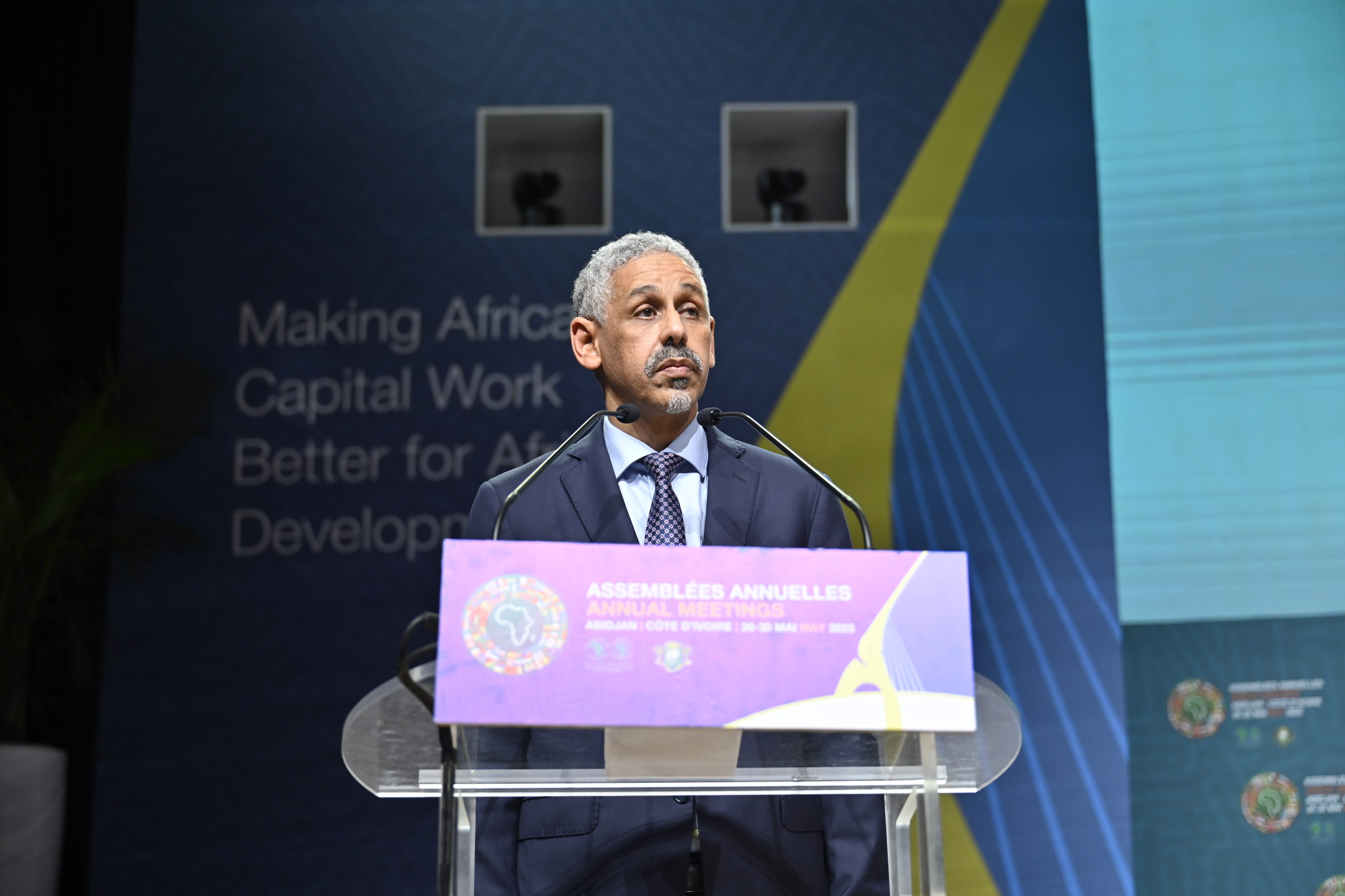
On the closing afternoon of the meetings, Friday 29 May 2026, Sidi Ould Tah stood before the assembled finance ministers and central bank governors of the African Development Bank’s member states and said something that bank presidents almost never say. “I have listened to you, and I have heard you.”
It had been five days of choreography in Kintele, the new conference district sixteen kilometres up the Congo River from Brazzaville. Three heads of state had shared a stage for a presidential dialogue. Angola had walked an unscheduled pledge of 6.5 million euros to the podium. And the Board of Governors, the bank’s ultimate authority, had formally endorsed the strategic vision its new president had been carrying since his election campaign, a framework he calls the Four Cardinal Points. Ludovic Ngatsé, Congo’s economy minister and this year’s chair of the governors, read out the mandate in the careful language of communiqués: the governors “approved and encouraged” Ould Tah to implement his vision “to strengthen Africa’s capacity for action and influence in an increasingly fragmented world.”
To understand why that sentence matters, and why it is already changing what Africa’s largest development bank hires for, you have to go back thirteen months, to the week the old model died.
On 2 May 2025, the Trump administration’s budget proposal landed in Washington with a line item that read like an obituary. The entire 555 million dollar American contribution to the African Development Fund, the bank’s concessional window for the continent’s 37 poorest countries, was marked for elimination. The fund was, the budget said, “not currently aligned” with American priorities. The United States had backed the fund since 1976 and is the bank’s second largest shareholder. The African Development Fund runs on replenishments, a ritual in which donor countries gather every three years to refill the pot that finances grants and near-zero-interest loans for countries too poor to borrow at market rates. Take the Americans out of that ritual and the arithmetic of the next replenishment, due that December, suddenly looked grim.
Four weeks later, on 29 May 2025 in Abidjan, the bank’s shareholders elected the man who would have to solve the problem. Sidi Ould Tah was not the early favourite. Samuel Maimbo, a Zambian World Bank vice president, led the first round of voting decisively. But Ould Tah, then sixty years old, had spent a decade running BADEA, the Arab Bank for Economic Development in Africa, where he was credited with quadrupling the institution’s capital and securing a AAA rating, and a career before that running through the Islamic Development Bank and Mauritania’s finance ministry. He was the candidate who knew where non-traditional money lived. By the third round he had swept 76.18 percent of the vote, the largest first-term winning margin in the bank’s history. He took office on 1 September 2025, inheriting from Akinwumi Adesina, the bow-tied Nigerian who had run the bank for a decade, an institution whose capital base had grown from 93 billion dollars in 2015 to 318 billion, and a funding crisis nobody had planned for.
What Ould Tah did next was reframe the crisis as the argument for his entire agenda. Africa, he repeated in speech after speech, holds more than 4 trillion dollars in its own banks, pension funds, insurance companies and sovereign wealth funds, while the continent’s annual development financing gap is about 400 billion. The money exists. It is simply, as he put it in Brazzaville, sitting in the wrong places. His Four Cardinal Points are the operating manual for moving it: unlock Africa’s own capital at scale, strengthen and connect African financial systems, turn the continent’s youth surge into economic opportunity, and build the infrastructure and value chains that turn raw materials into wealth at home. Around them he has built a larger framework with a deliberately constitutional name, the New African Financial Architecture for Development, or NAFAD, endorsed by African Union heads of state in February 2026. His slogan for it is the most quotable thing any MDB president has said in years: make “every dollar work like ten.”
The first test came in London in December 2025, at the seventeenth replenishment of the African Development Fund. The result confounded the pessimists. Forty-three partners pledged 11 billion dollars, the largest replenishment in the fund’s history, 23 percent above the previous cycle. The more telling number was buried lower in the press release: 24 African countries contributed, 19 of them for the first time, a fivefold increase in African contributions. By the end of the Brazzaville meetings, with Angola’s pledge, that figure had passed 190 million dollars from 25 countries. Against an 11 billion dollar total it is symbolically modest and strategically enormous. The fund that Washington walked away from was refilled, partly by the very countries it exists to serve, and the bank rebranded the whole exercise as “a new era of African ownership.”
Brazzaville was where the politics caught up with the money. Congolese President Denis Sassou-N’Guesso opened the meetings by declaring that “development finance for Africa henceforth requires more daring approaches,” and backed the words with one of his own: visa-free access to Congo for all African citizens from January 2027. Gabon’s Brice Oligui Nguema told the presidential dialogue that “Africa’s greatest asset is not our mineral resources; it’s our youth, our human capital. We must invest in them, in education, engineering and technical training. We must believe in them.” The Central African Republic’s Faustin-Archange Touadéra came with a pitch for roads and power lines to unlock his landlocked economy. Around the main hall, the deal flow hummed: more than 3 billion dollars in commitments to the Congo Basin Blue Fund, a partnership with the African Social Security Association to mobilise pension capital, Japanese money for a new African medicines facility. The bank’s 2025 annual report, presented during the week, showed over 11 billion dollars in approvals and a record 7.1 billion in disbursements.
For anyone trying to build a career at the African Development Bank, the Brazzaville mandate is a hiring map. Ould Tah’s reorganisation of the bank took effect the day he arrived, 1 September 2025, and the governors have now explicitly endorsed reforms to make the institution “more agile, more flexible, and closer to beneficiaries,” which in MDB language means decentralisation, more weight in country and regional offices, and faster delivery. He describes the institution he wants as “a solutions bank.” The skills the Four Cardinal Points demand are legible in every paragraph above: capital markets specialists who can structure deals for pension funds and sovereign wealth funds, local currency financing experts, securitisation and guarantee structurers, MSME and gender-lens finance professionals for the youth and women agenda, energy specialists for Mission 300, the joint push with the World Bank to connect 300 million Africans to electricity by 2030, and value chain economists who can turn a bauxite deposit into an industrial strategy. A candidate who can speak the language of mobilising institutional capital, rather than the older dialect of administering donor aid, is applying into the centre of the new strategy. The entry doors remain the classic ones, and the Young Professionals Program for the 2026 cohort, a three-year rotational track for candidates up to 32 years old with a master’s degree and three years of experience, is the most direct of them.
There is a long distance between an endorsed vision and a transformed institution, and Ould Tah knows the history of grand frameworks that died in committee. The 4 trillion dollars is not a budget; it belongs to fund managers with fiduciary duties who will need investable, de-risked projects before a single pension dollar moves. But something has shifted in the centre of gravity. For decades the existential question at every African Development Fund replenishment was what the donors would decide. The question Brazzaville posed was what Africa would decide. In his closing remarks, Ould Tah reached for the Congolese poet Tchicaya U Tam’si, who once wrote that his continent was a question mark on the map of the world. For the first time in a long time, Ould Tah told the hall, that question mark seems to be turning into an exclamation point.
Make sure you subscribe to MDB Jobs to get the latest vacancies delivered straight to your inbox each Monday, and consultant positions each Friday.