

Finding a role at the International Monetary Fund means knowing exactly where to look. The IMF uses a specific application portal, but its vacancies also appear across several specialized international development job boards. Searching for IMF job openings can feel fragmented, with opportunities scattered across different platforms. To track every opening, from Economist Program pipelines to short-term expert contracts, you need a clear, efficient strategy.
This guide gives you the definitive list of the seven most effective places to find legitimate IMF job openings. I’ll show you precisely where to monitor for new listings, covering the official sources you must use and the expert aggregators that save you time. Each entry includes direct links and screenshots to help you navigate the platforms. Use these resources to build a reliable system for monitoring vacancies and ensure you never miss a critical application deadline. This list is your complete map to all current IMF roles.
1. IMF Workday (My Jobs) portal
Your search for IMF job openings must start and end here. The IMF’s official Workday portal is the single authoritative source for every staff role, specialized program, and contractual vacancy at the Fund. Third-party sites often list outdated roles, but this portal is where positions are posted first. Crucially, it’s where all applications are officially submitted and screened by IMF recruiters.
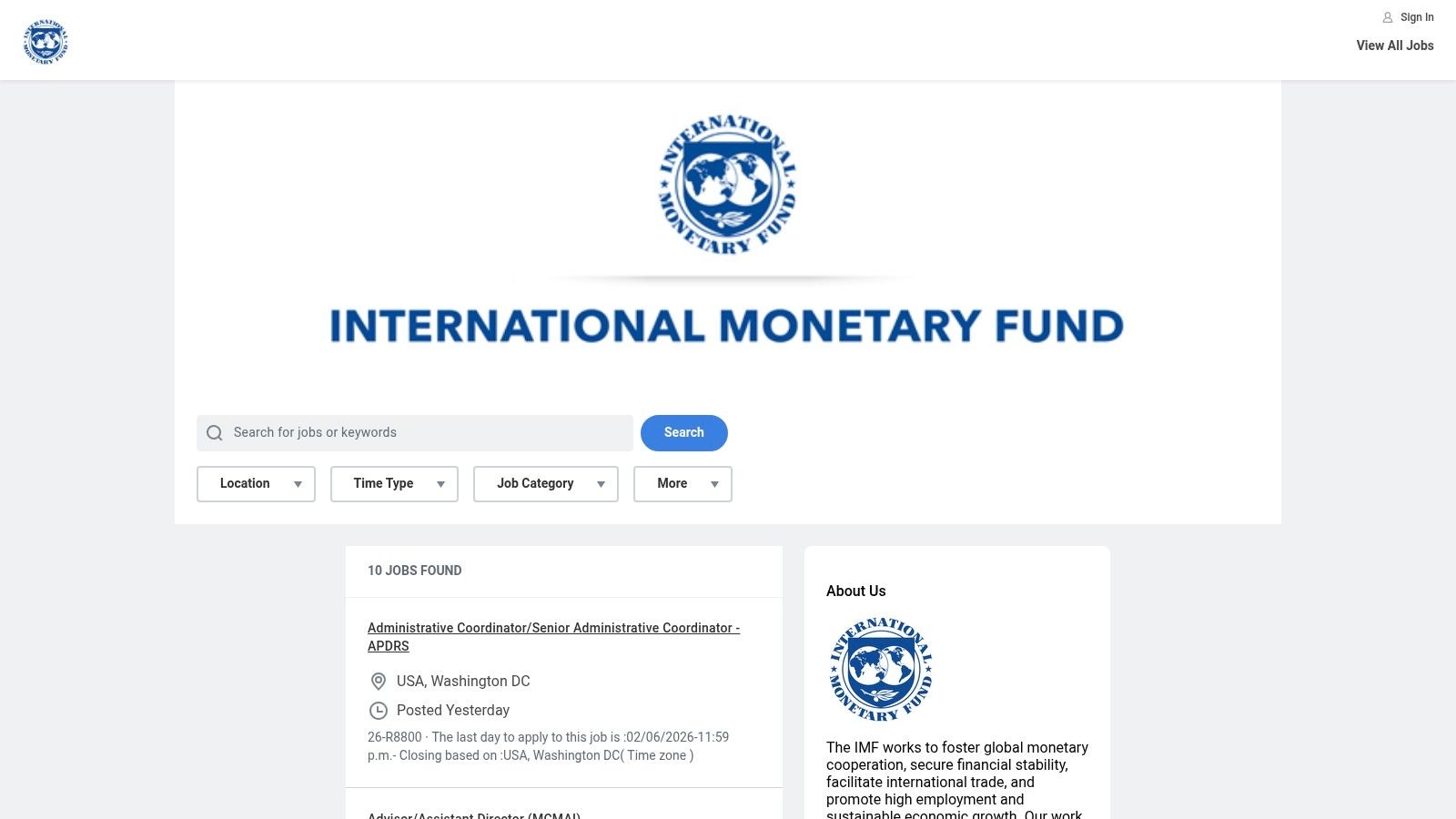
To apply for any position, you must create a profile. This is a non-negotiable step. The IMF does not accept applications through email or other platforms. Creating an account takes time, but it gives you access to your “Candidate Home” dashboard, where you can track the status of your applications and manage your profile for future openings.
Key Features and User Experience
The primary benefit of the official portal is immediacy and accuracy. You get direct access to all current IMF job openings the moment they are posted. The platform clearly outlines all required documents, such as your CV and cover letter, and details the specific steps in the selection process for each role.
The user experience can be a drawback. The Workday interface is common in large organizations but can feel clunky and less intuitive than modern job boards. There are no one-click application options; each submission requires navigating through several pages. Despite this, its direct link to the recruitment team makes it indispensable.
Practical Tips for Success
To use the portal effectively, follow these steps:
Create a robust profile: Fill out every section completely, even if the information is already in your CV. Recruiters use the portal’s search functions to find candidates with specific skills.
Set up job alerts: Create specific, targeted alerts for job families (e.g., Economist, Research Assistant), grades, or keywords. This ensures you never miss a relevant opening.
Prepare documents in advance: Have your tailored CV and cover letter ready in the specified format (usually PDF) before you begin the application to streamline the process.
Expert Insight: Your application is reviewed directly within this system. Tailoring your CV to the specific keywords and qualifications listed in the job description here is critical, as it’s the first and only version recruiters will see.
Website: https://imf.wd5.myworkdayjobs.com/IMF
2. LinkedIn
The IMF’s official portal is where you apply. LinkedIn is where you build the network and gather the intelligence to make your application stand out. The platform is a critical secondary resource for understanding the Fund’s culture, connecting with current and former staff, and discovering IMF job openings that might otherwise fly under your radar. Following the official IMF page is a good first step, but the real value lies deeper.
Many IMF hiring managers and recruiters are active on LinkedIn. They often share insights about their departments, announce major recruitment drives for programs like the Economist Program (EP), and post vacancies directly to their networks. This informal channel provides context that the sterile job descriptions on the official portal lack.
Key Features and User Experience
LinkedIn’s primary benefit is its networking and intelligence-gathering capability. You can research the professional backgrounds of staff in departments you’re targeting. This gives you a clear picture of the skills and experiences the IMF values. The platform’s job board also aggregates IMF roles, often with an “Easy Apply” feature, though this will almost always redirect you to the Workday portal for the official submission.
The user experience is modern and intuitive, far superior to the clunky interface of most institutional portals. Its main drawback is that it’s not an authoritative source. You might encounter outdated listings or miss niche contractual roles that are only posted on the IMF’s site.
Practical Tips for Success
To leverage LinkedIn effectively for your IMF job search, follow these strategies:
Follow Key Individuals: Go beyond the main IMF company page. Identify and follow IMF recruiters, department heads, and division chiefs in your field of interest.
Optimize Your Profile: Ensure your LinkedIn profile is a detailed, professional reflection of your CV. Use keywords relevant to IMF roles, such as “macroeconomic policy,” “surveillance,” or “capacity development.”
Engage Thoughtfully: Interact with content posted by the IMF and its staff. A thoughtful comment on a report or a relevant question can increase your visibility within these professional circles.
Expert Insight: Recruiters actively use LinkedIn to source and vet candidates. A strong, well-connected profile that mirrors the language and priorities of the Fund can get you noticed even before you apply. Treat your profile as a living document that supports your formal application.
Website: https://www.linkedin.com/company/imf/
3. IMF Recruitment hub (Careers section)
Think of this as the official instruction manual for landing a job at the Fund. The Workday portal is where you apply. The IMF Recruitment hub is where you learn how to apply successfully. This site provides critical context on the IMF’s hiring pipelines, specialized programs, and the specific qualifications required for different roles. It is the best place to understand the logic behind the IMF job openings you see posted.
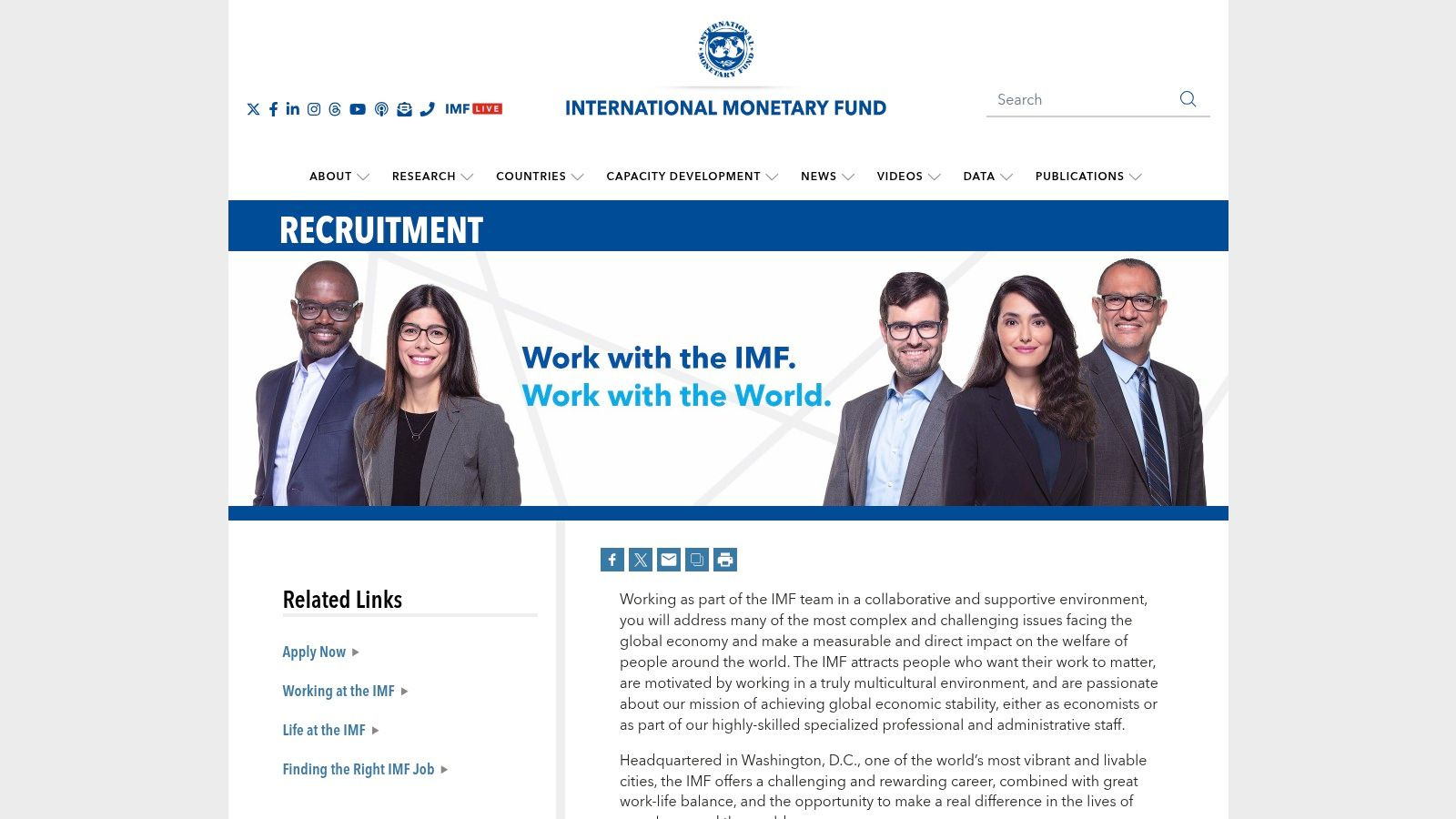
This hub is your go-to resource for demystifying the IMF’s complex recruitment structure. It details flagship initiatives like the Economist Program (EP), the Research Assistant Program (RAP), and various internships. Visiting this site before you apply helps you align your application with the specific pipeline you’re targeting, a common misstep for many candidates.
Key Features and User Experience
The main advantage here is authoritative guidance. All information comes directly from IMF HR, clarifying the nuances between different contract types, grade levels, and application timelines. The site’s “Finding the Right IMF Job” guide is invaluable for understanding how to position yourself for staff roles versus contractual positions.
The platform is not a job board; every “Apply” button redirects you to the Workday portal. This is a deliberate design choice, separating strategic career planning from the tactical application process. The user experience is straightforward, with clear navigation to pages on benefits, working life, and career development, giving you a complete picture of employment at the Fund.
Practical Tips for Success
To get the most out of the recruitment hub, use it for pre-application research:
Study the Programs: Before applying to a general vacancy, thoroughly read the pages for the EP, RAP, or internships to see if you are a better fit for these structured entry points.
Understand Selection Criteria: Use the “How We Hire” section to learn about the screening, interview, and assessment stages. This knowledge helps you anticipate what recruiters are looking for.
Align Your Profile: Read the “Job Families” descriptions to learn the specific language and core competencies the IMF values for roles in your field. Incorporate these keywords into your CV and cover letter.
Expert Insight: Many applicants fail because they use a generic approach. This hub teaches you the IMF’s internal language and priorities. If you are targeting the Economist Program, the guidance here clarifies the specific academic and research background required, which is far more detailed than what’s in a typical job post.
Website: https://www.imf.org/en/about/recruitment
4. LinkedIn Jobs (IMF company page)
LinkedIn is the go-to platform for professional networking, and its job search functionality makes it a powerful tool for discovering IMF job openings. The International Monetary Fund maintains an active company page with a dedicated “Jobs” tab that aggregates current vacancies. This makes LinkedIn an excellent starting point for exploration, networking, and staying informed about new roles.
Most applications are finalized on the IMF’s Workday portal, but LinkedIn is invaluable for discovery. You can easily find, save, and share job postings. The platform’s algorithm may suggest relevant IMF roles you might have otherwise missed. It integrates your job search directly into your professional online presence.
Key Features and User Experience
The main advantage of using LinkedIn is its superior discovery and networking capability. Following the IMF’s company page ensures that new job postings appear directly in your news feed. The platform’s familiar, mobile-friendly interface is far more intuitive than the standard corporate application tracking system (ATS), making it easy to browse openings on the go.
The primary drawback is that LinkedIn often serves as a middleman. Most “Apply” buttons will redirect you to the IMF’s Workday portal to complete the formal application. This two-step process can feel redundant. The job feed can also be cluttered with sponsored content or less relevant suggestions, requiring you to filter through some noise.
Practical Tips for Success
To leverage LinkedIn effectively in your job search, follow these strategies:
Follow the IMF and key personnel: Beyond the official company page, follow IMF departments, leaders, and recruiters. Their posts can offer insights and sometimes signal upcoming hiring needs.
Optimize your profile: Treat your LinkedIn profile as a living resume. Use keywords relevant to IMF roles (e.g., “macroeconomic policy,” “financial stability,” “surveillance”) so recruiters can find you.
Use job alerts: Set up specific alerts for “International Monetary Fund” as the company. This will notify you in real-time as soon as a new position is posted on the platform.
Expert Insight: Use LinkedIn to connect with current or former IMF employees for informational interviews. Gaining firsthand knowledge about the culture and specific roles provides a significant advantage and helps you tailor your application materials with insider context. This networking is impossible on the official jobs portal alone.
Website: https://www.linkedin.com/company/international-monetary-fund/jobs
5. Impactpool (IMF organization page)
For candidates serious about a career in international development, Impactpool is a critical resource. It’s a specialized job board focused exclusively on multilateral organizations, NGOs, and global public sector roles. Its dedicated IMF organization page acts as a curated hub, aggregating IMF job openings alongside opportunities from similar institutions like the World Bank and the UN. This context is invaluable for building a career in this niche sector.
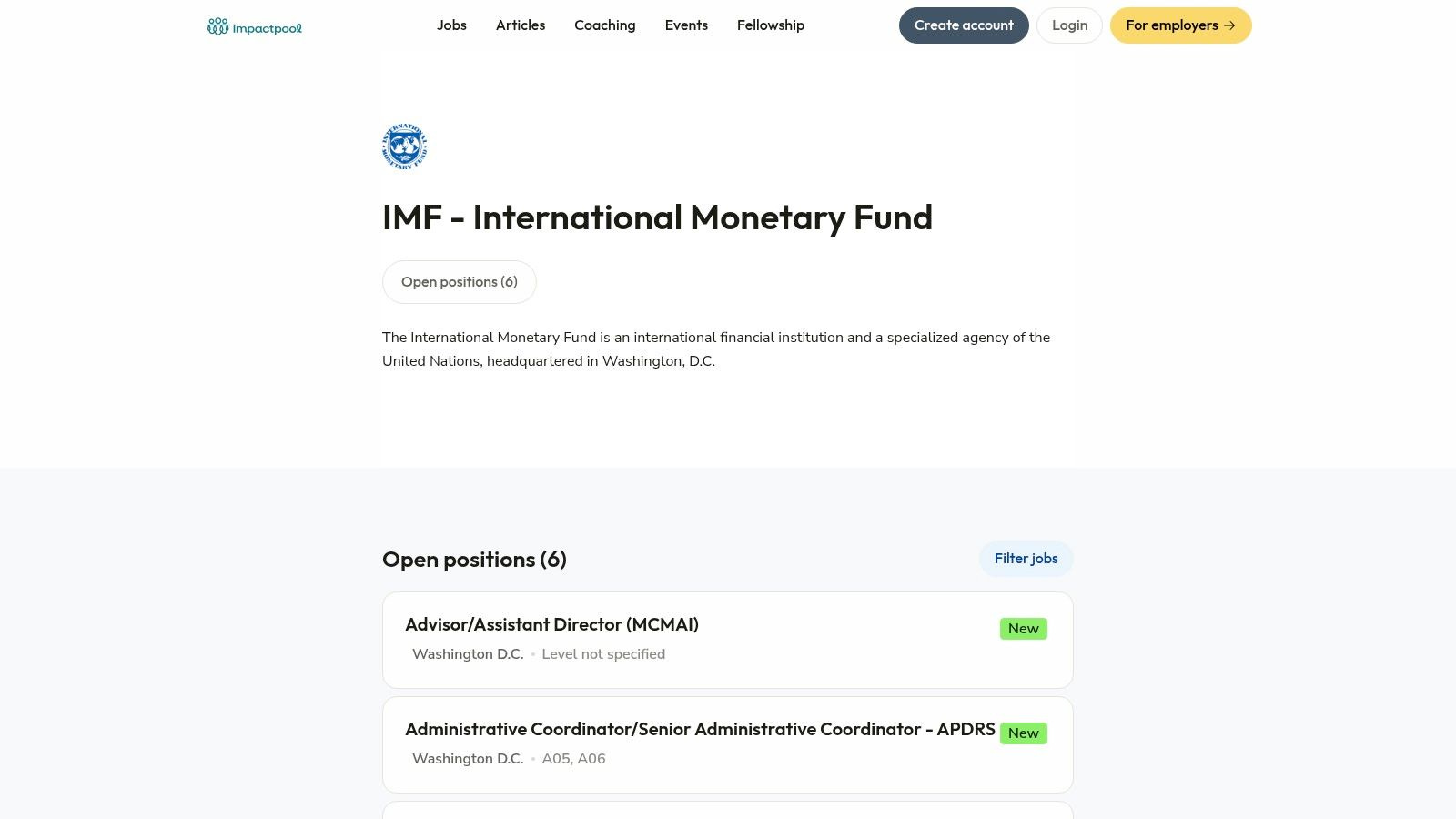
Impactpool is purpose-built for the international development community. It offers more than just listings; you can find career advice, virtual events, and insights tailored to navigating the complex recruitment processes of organizations like the IMF. You will still be redirected to the official IMF Workday portal to apply, but Impactpool’s platform is a superior tool for discovery and career planning.
Key Features and User Experience
The main advantage of Impactpool is its specialization and centralization. It brings together all relevant multilateral jobs in one place, allowing you to compare IMF roles with similar positions across the sector. The user interface is clean and far more intuitive than many official career portals, with powerful filtering options for grade, location, and organization.
The downside is that some of the platform’s most valuable features, like advanced career coaching and application feedback, are behind a premium paywall. The free version provides full access to job listings and email alerts, which is sufficient for most job seekers focused on finding IMF job openings.
Practical Tips for Success
To get the most out of Impactpool, follow these strategies:
Complete your professional profile: Impactpool uses your profile to match you with relevant opportunities and send personalized alerts. A detailed profile increases the quality of these recommendations.
Follow the IMF and similar organizations: Actively “follow” the IMF page and other MDBs to create a customized feed of the most relevant vacancies.
Engage with supplemental content: Use the platform’s articles and webinars to understand the competencies and culture valued by the IMF, giving you an edge in your application.
Expert Insight: Use Impactpool as your primary discovery tool, but always apply on the official IMF portal. The real value here is market intelligence. It helps you understand the broader landscape of MDB jobs and how IMF compensation compares, which is key for long-term career planning.
Website: https://www.impactpool.org/organizations/6/imf
6. Devex
Devex is a professional community for the global development sector. For those seeking IMF job openings, it offers a crucial advantage: context. The platform lists IMF vacancies alongside deep-dive reporting, expert analysis, and career advice. This helps you understand the Fund’s priorities and tailor your application to the sector’s current challenges. It’s an ideal resource for candidates who want to pair their job search with meaningful industry intelligence.
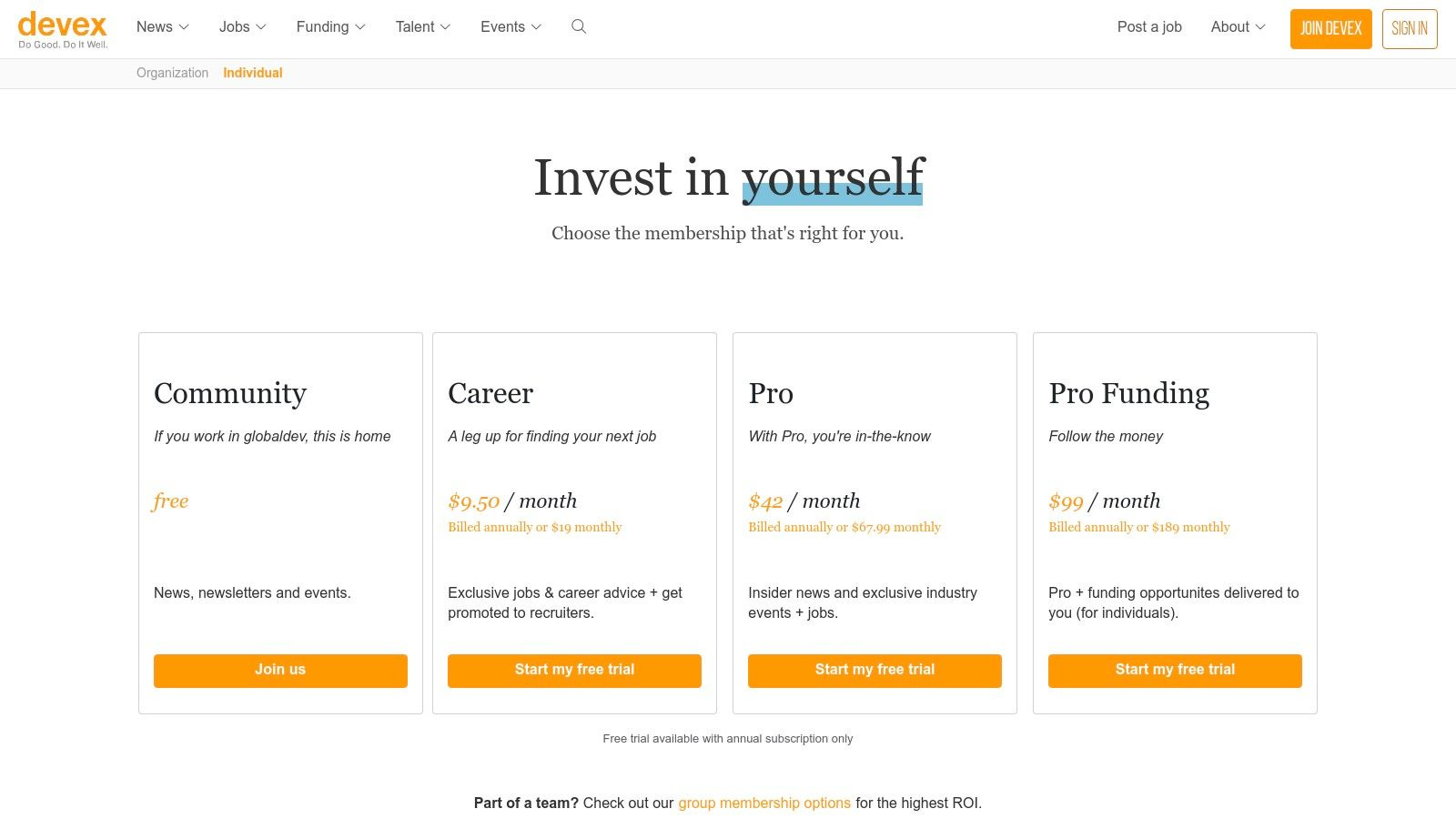
Devex lists staff positions, expert roles, and internships. It’s important to know that most applications are ultimately redirected to the official IMF portal for submission. The platform’s real value lies in its ecosystem of information, which prepares you for a more compelling application and a stronger interview performance. Some advanced features, however, are gated behind a paid “Career Account” membership.
Key Features and User Experience
The primary benefit of Devex is its rich sector context. You can search for IMF jobs while simultaneously reading articles on economic policy or development finance, giving you the vocabulary and insights needed to stand out. The platform also covers a wide range of multilateral development banks, allowing you to easily compare IMF opportunities with those at similar institutions.
The main drawback is the paywall. Free users can browse some job listings. The most powerful features, such as advanced search filters, recruiter visibility, and premium career content, require a paid subscription. This creates a barrier for some users, but for those serious about a career in international development, the investment can be worthwhile.
Practical Tips for Success
To use Devex effectively, follow these steps:
Leverage free content: Use the news and analysis sections to inform your cover letter and prepare for interviews, even without a paid membership.
Set up targeted alerts: Create a free account to set up alerts for keywords like “IMF,” “economist,” or “Washington D.C.” to receive email notifications when relevant roles are posted.
Evaluate the Career Account: If you are actively applying to multiple international organizations, consider the paid membership to access its full suite of tools and see exclusive listings.
Expert Insight: Use Devex’s analysis of IMF projects and policy direction to frame your cover letter. Mentioning a recent initiative or report you read on their platform shows you are engaged with the Fund’s current work beyond the job description, setting you apart from other candidates.
Website: https://www.devex.com/membership/individuals
7. UNjobs (IMF vacancies aggregator)
For a broad, at-a-glance view of opportunities across the international development sector, UNjobs is an indispensable resource. This aggregator compiles vacancies from numerous global organizations, including a dedicated page for the IMF. It’s an excellent tool for cross-checking opportunities and ensuring you haven’t missed anything listed on the official portal, especially if you are also monitoring roles at the World Bank or United Nations.
The platform’s value is its simplicity and scope. It presents a clean, scannable list of IMF job openings with key details like title, duty station, and posting date. Each listing provides a direct link back to the official IMF Workday application page, reinforcing its role as a discovery tool instead of an application platform. You will always finalize your application on the IMF’s own system.
Key Features and User Experience
The primary benefit of UNjobs is its convenience and market awareness. You can quickly scan all current IMF postings without creating an account or navigating a complex interface. The layout is clean, and the information is presented in a straightforward list format, making it easy to see new additions.
The main drawback is that it’s an aggregator, meaning there can be a slight delay between a job posting appearing on the IMF Workday portal and its listing on UNjobs. The information is not real-time. Use it as a supplementary search tool, not your primary source.
Practical Tips for Success
To get the most out of this aggregator, use these strategies:
Use it for high-level monitoring: Check the site once or twice a week to get a quick snapshot of new IMF job openings and compare them against other international organizations.
Verify every detail: Always click through to the official IMF Workday portal to confirm the application deadline, required qualifications, and other crucial details before preparing your application.
Filter by duty station: If you are targeting roles in a specific location, the filtering options can help you narrow down the list much faster than on the official portal.
Expert Insight: Use UNjobs as a discovery and verification tool. It helps you see the IMF’s hiring landscape in the context of the broader UN and IGO system. Finding a role here should be your cue to immediately pivot to the official IMF portal to begin your application process.
Website: https://unjobs.org/organizations/imf/0
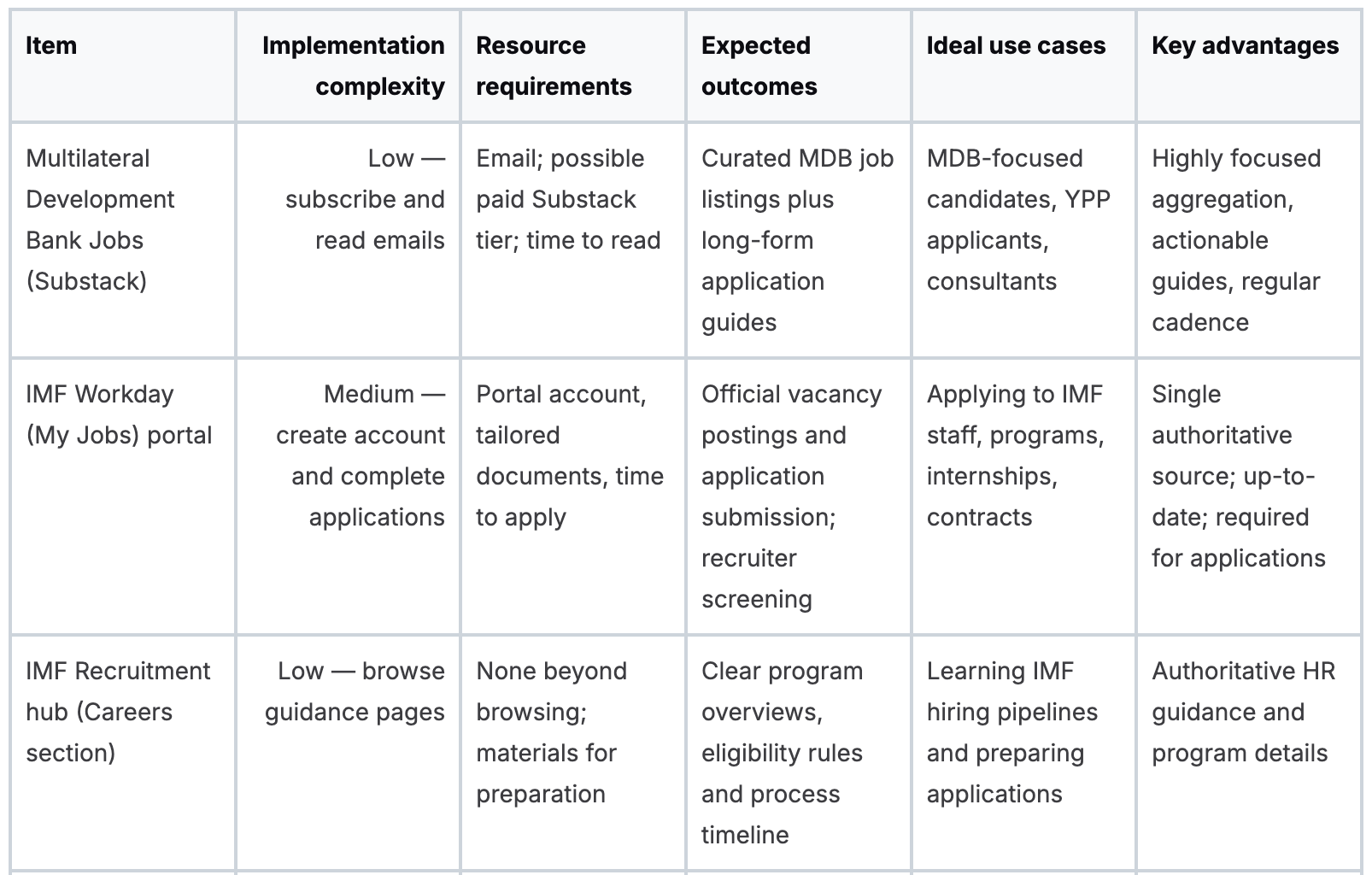
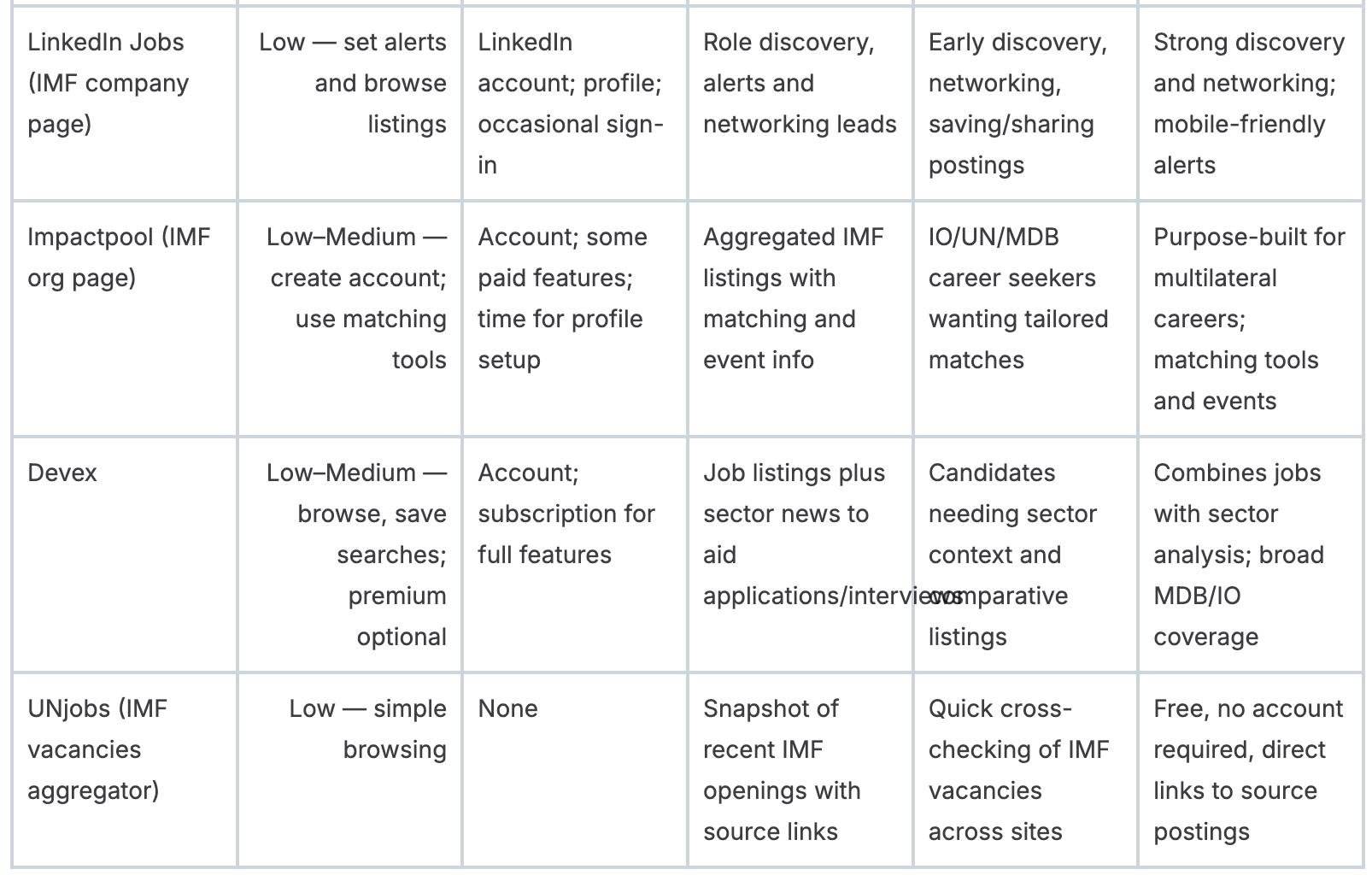
Comparison of 7 IMF Job Sources
Your Next Step for Landing an IMF Role
Securing a position at the International Monetary Fund is a marathon, not a sprint. This guide gives you a specialized toolkit to transform your search from a passive scroll into a strategic campaign. We’ve gone beyond listing vacancies to focus on building a system that gives you a competitive edge in your hunt for imf job openings.
The key takeaway is that no single platform is a complete solution. The official IMF Workday portal is your non-negotiable gateway for submitting applications. Relying on it alone means you miss crucial context, career intelligence, and aggregated listings that platforms like Impactpool and Devex provide. These specialized job boards offer invaluable insights into the sector, helping you tailor your application to the nuances of a multilateral institution.
Building Your Search Strategy
Your immediate task is to operationalize this toolkit. A disciplined, systematic approach separates successful candidates from those who miss opportunities.
Establish Your Foundation: Your IMF Workday profile is your core asset. Ensure it is complete, accurate, and meticulously polished before you apply for any role. This is the official system of record. Your application’s quality starts here.
Set Up Your Intelligence Network: The real advantage comes from supplementing the official source. Create accounts and configure precise alerts on LinkedIn, Impactpool, and Devex. Use keywords like “Economist Program,” “Financial Sector Expert,” or specific departmental names to filter out the noise and receive only the most relevant imf job openings.
Create a Weekly Routine: Dedicate a specific time block each week to review your alerts and browse the platforms. Look at more than just new jobs. Read the descriptions of roles you aren’t applying for to understand the skills and language the IMF values. This habit builds your institutional knowledge and sharpens your ability to craft a compelling application.
Choosing the Right Tool for the Moment
Each tool serves a distinct purpose in your job search.
For official applications, you must use the IMF Workday portal. There are no exceptions.
For networking and brand alignment, LinkedIn is unparalleled. Follow the IMF’s page, connect with current and former staff, and engage with their content to understand the organization’s current priorities.
For sector-specific intelligence and curated roles, platforms like Impactpool and Devex are essential. They provide context and career advice alongside listings that you won’t find on generalist job sites.
For comprehensive aggregation, UNjobs provides a useful, high-level overview, ensuring no stone is left unturned.
Landing a role at the IMF requires more than just qualifications. It demands persistence, strategic positioning, and the intelligent use of the resources available. By integrating these tools into a consistent and proactive search strategy, you move from being a hopeful applicant to a serious contender. The opportunities are out there; this system is how you find and seize them.
To ensure you never miss a high-caliber opening, subscribe to the Multilateral Development Bank Jobs newsletter. We curate the latest vacancies from the IMF and other leading MDBs, delivering them directly to your inbox. Sign up at Multilateral Development Bank Jobs to streamline your search.