



Trying to figure out what multilateral development banks (MDBs) really pay?
It can be tough to work through the noise.
So, to make things easy for you, I pulled the latest salary scales directly from the source documents across AfDB, ADB, IDB, EIB, EBRD, and IsDB. All numbers are converted into USD for clean comparisons.
The short version:
Junior hires typically earn $50,000 to $100,000
Mid-career specialists land between $100,000 and $250,000
Senior directors and VPs take home $300,000 to $450,000
Here’s the full breakdown, updated for 2025.
Salary Bands: Entry Level To Top Jobs
MDBs structure pay by internal grades. Each institution uses slightly different systems, but the levels map fairly well across banks.
Entry-Level: Analyst, Officer, Early Specialist
At the lower grades, salaries start around $50,000 to $90,000:
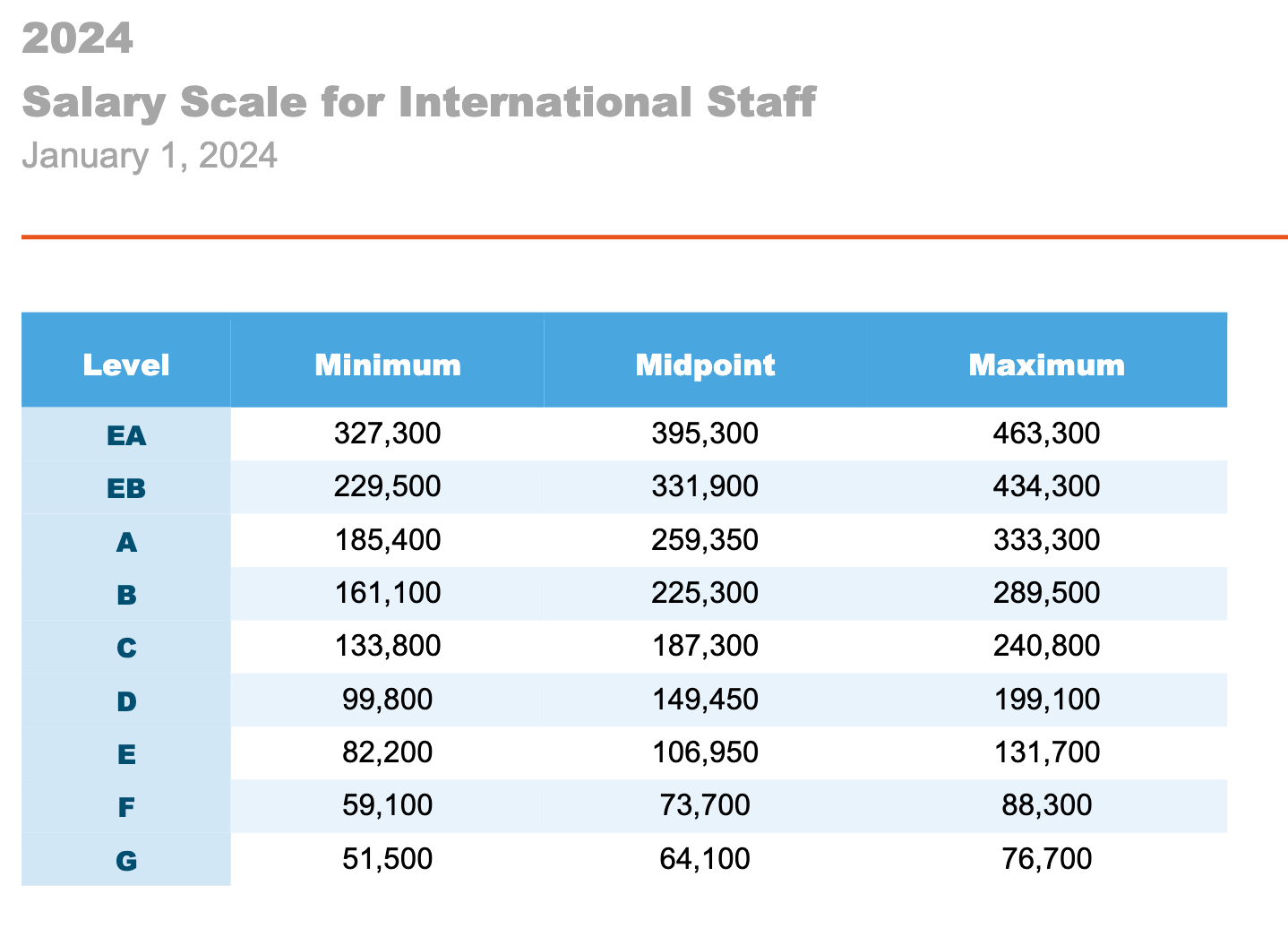
IDB Assistant (Grade 11): $52,000 to $82,800
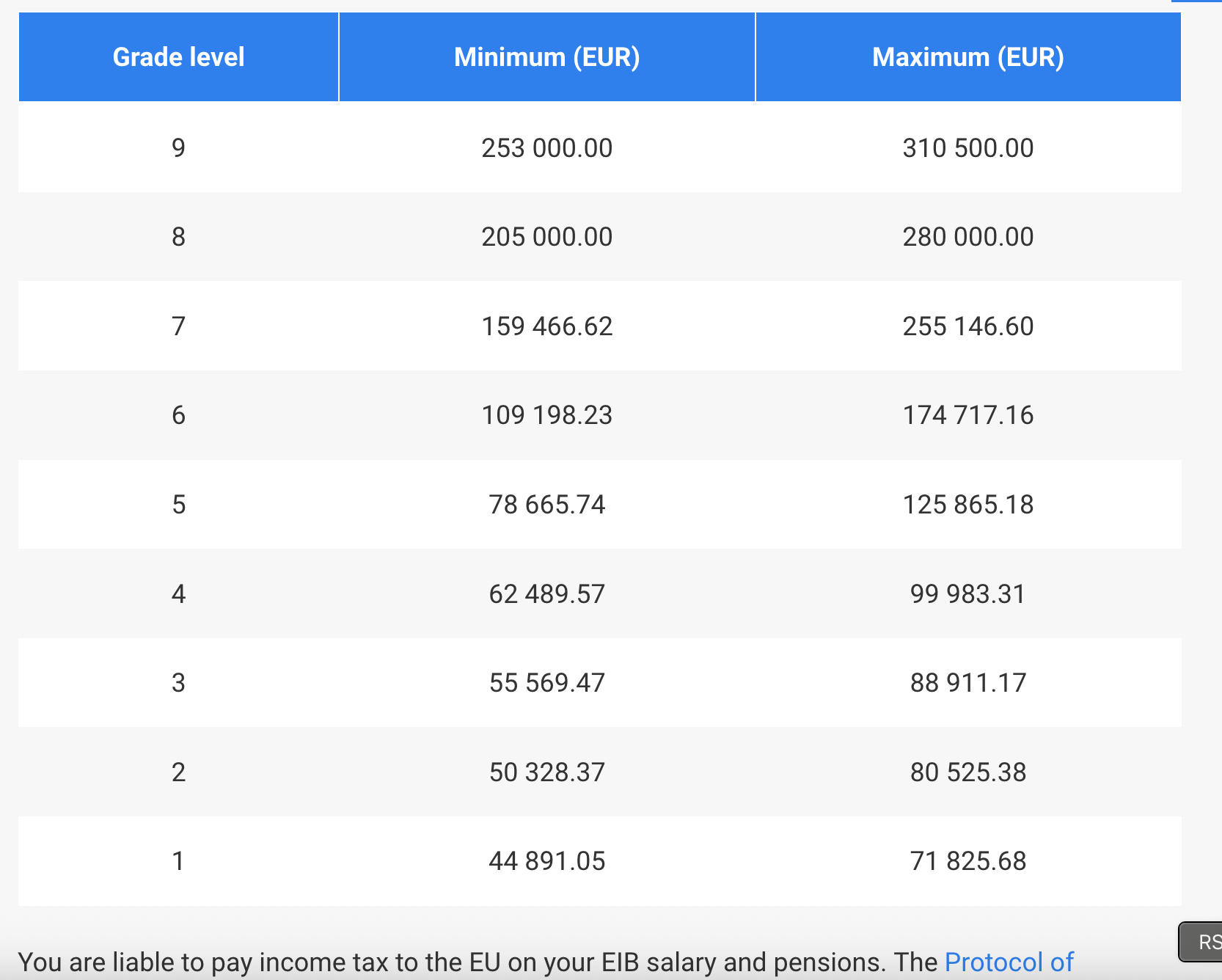
EIB Grade 1: €44,900 to €71,800 (roughly $50,000 to $80,000)
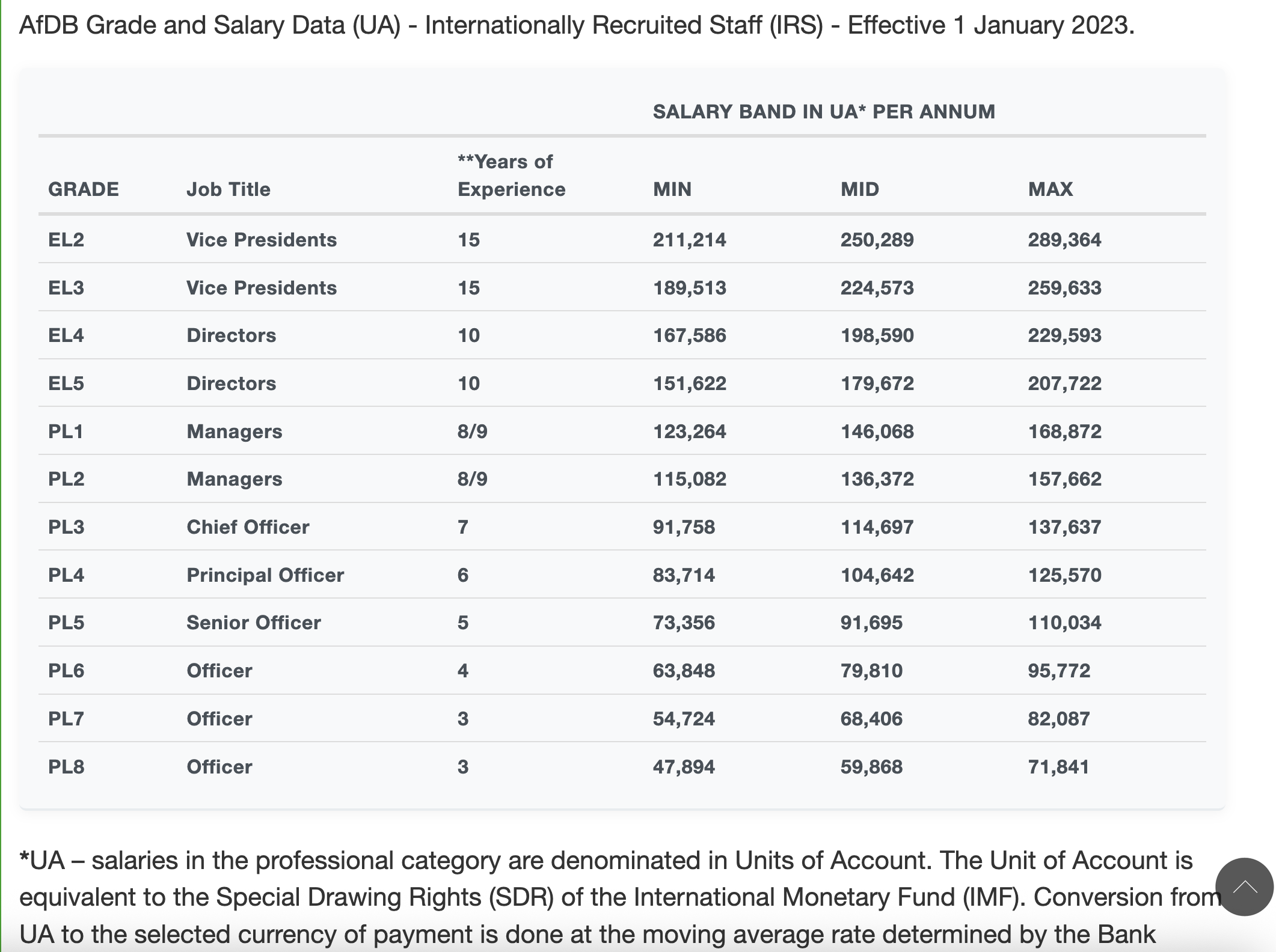
AfDB Officer (PL6–PL8): 47,900 to 79,800 UA ($65,000 to $108,000 at 1 UA ≈ $1.37)
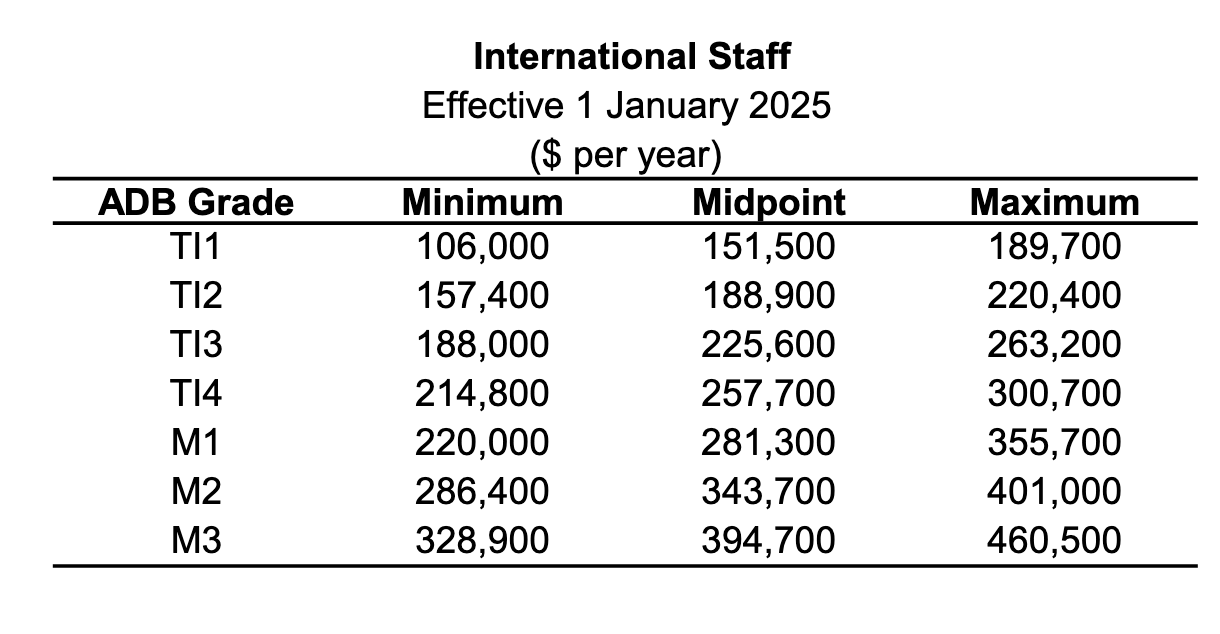
ADB TI1 (equivalent to former IS3–IS4 Specialist level): $106,000 to $189,700
Mid-Level: Specialists, Unit Heads, Division Chiefs
Pay rises sharply with experience. Most mid-career staff fall in the $100,000 to $250,000 range:
ADB TI2–TI4:
TI2: $157,400 to $220,400
TI3: $188,000 to $263,200
TI4: $214,800 to $300,700
AfDB Senior Officer (PL5): up to 110,000 UA (~$150,000)
IDB Specialist (Grades 4–5): $132,000 to $211,000
Senior Leadership: Directors, VPs, DGs
Senior leadership starts at $300,000 and can exceed $450,000 depending on the institution:
ADB M1 (Director): $220,000 to $355,700
ADB M2 (Deputy Director General): $286,400 to $401,000
ADB M3 (Director General): $328,900 to $460,500
AfDB Vice President: 211,000 to 289,000 UA ($290,000 to $395,000)
IDB Executive Vice President: $343,800 to $448,000
EIB Grade 9 (Director): €253,000 to €310,000 ($280,000 to $340,000)
The Perks:
Base salary is only one part of total compensation. MDBs stack on benefits that significantly raise real take-home value:
Full relocation packages
Housing allowances
Education grants for dependents
Medical, dental, and life insurance
Retirement contributions
Hardship, mobility, and field-posting bonuses
For families, education and dependent allowances alone can add 3–10% of base salary. Overall, these add-ons can push total compensation 10–30% above base salary, depending on location and family size.
Tax Treatment: The Hidden Advantage
Tax rules are a huge part of MDB compensation. Here’s where it gets valuable:
AfDB: tax-free salaries.
ADB: tax-free for expats.
EIB: taxed only by EU internal rules, not national income taxes.
IDB, EBRD: generally taxed by home country for most nationals, though tax equalization schemes exist for expats.
A tax-free or tax-equalized salary has obvious advantages over fully taxable private-sector income. Always check tax treatment before signing any contract, because it directly affects your actual income by 30% or more.
Currency and Location: Why $100K Isn’t Always $100K
MDB salaries aren’t always paid in USD, and cost-of-living adjustments apply:
AfDB (Tunis HQ): paid in UA (1 UA ≈ $1.37)
EIB (Luxembourg HQ): paid in EUR (€1 ≈ $1.10)
ADB (Manila HQ) and IDB (Washington HQ): paid in USD
IsDB (Jeddah HQ): paid in USD, but full pay scale not disclosed
Location premiums apply for field postings and high-cost cities. A $150,000 job in Washington DC has a very different purchasing power than $150,000 in Manila or Tunis.
MDB vs Private Sector: How Do They Stack Up?
MDBs pay competitively at mid-levels but don’t chase top-tier private sector salaries.
Mid-level MDB specialists (ADB TI3-TI4, IDB G4–G5) typically land in the $150,000 to $250,000 range.
Equivalent private-sector roles may match or slightly exceed these base salaries but often include 15–30% in annual bonuses.
MDB Director roles (ADB M1, ~$220K–$355K) pay well, but senior private-sector executives in finance or consulting often clear that in base salary alone, before bonuses.
The real MDB advantage is stability: strong benefits, tax perks, generous allowances, family support, global mobility, and far greater job security than private markets.
Regional MDB Salary Scales
Asian Development Bank
African Development Bank
Inter-American Development Bank
European Investment Bank
The Bottom Line
Sure, you won’t get Wall Street comp packages at MDBs. But you’ll get a globally competitive, stable, and well-cushioned international career with serious non-cash advantages.
Make sure you subscribe to MDB Jobs to get the latest vacancies delivered straight to your inbox each week.