MDB jobs disappear fast. Are you tracking the latest openings?
Subscribe to the Premium Plan and never miss an opportunity:
Get Staff roles on Mondays
Get Consultant roles on Fridays
Grab a free trial here to see what you’ve been missing (no payment required).
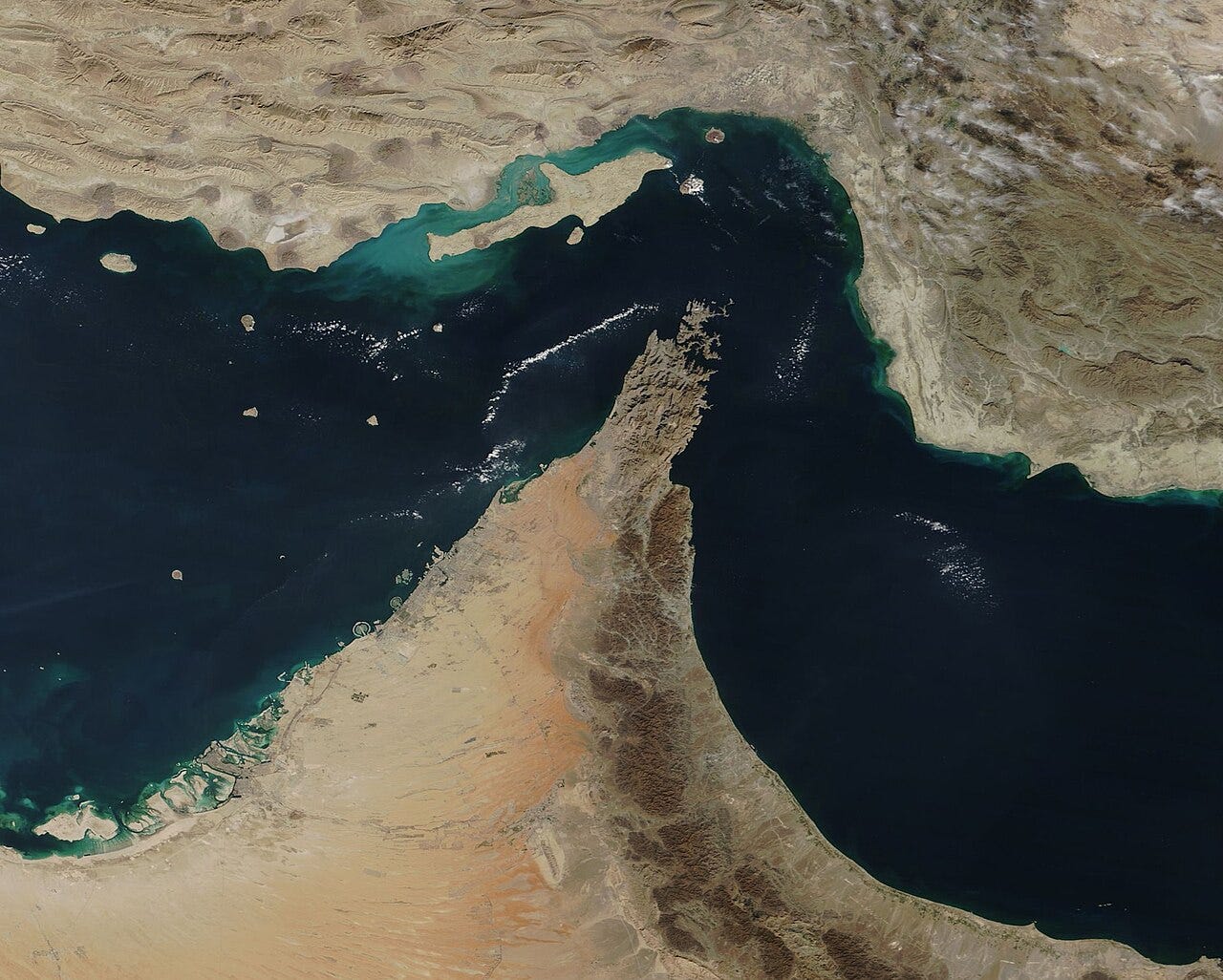
In the spring of 2026 a single stretch of water, twenty-one miles wide at its narrowest, did what no policy debate had managed in a decade. It forced the development finance world to confront the limits of its own optimism. The Strait of Hormuz closed, the price of energy and food began to climb, and the institutions built to lift the poorest countries out of poverty found themselves instead trying to stop those countries from sliding backwards. This is the story of how a war became, in the words of the World Bank’s own chief economist, development in reverse, and of what that means for the people whose careers are bound up in the machinery of global development.
The number that should frighten you is twelve point eight million.
That is how many barrels of oil a day vanished from global supply after the Strait of Hormuz went dark. To grasp the scale, hold one fact in mind: the strait is a narrow sea corridor between Iran and Oman through which roughly a third of all the crude oil carried by ship passes, along with vast volumes of liquefied natural gas and, less famously but just as consequentially, about a third of the world’s basic fertilisers. Close it, and you do not turn a dial. You pull a lever on the entire planet’s cost of living.
It closed on the twenty-eighth of February 2026, in the aftermath of a US and Israeli air campaign against Iran. By the second week of June the conflict reached its hundredth day, and the International Energy Agency had begun using a phrase it does not reach for lightly. This was, the agency said, the largest supply disruption in the history of the global oil market. More than 1.2 billion barrels of supply had been knocked out since the fighting began. The figures sound abstract until you follow where they travel.
They travel, first, into the price of energy. The World Bank’s Commodity Markets Outlook, published in April, forecast that energy prices would surge 24 per cent across 2026, reaching their highest level since Russia invaded Ukraine in 2022. Brent crude, which had averaged 69 dollars a barrel in 2025, was now projected to average 86 dollars, and during the worst of the escalations it swung between 85 and 120 dollars within the span of days. For an oil trader, volatility like that is a chance to profit. For a finance minister in a country that imports every drop of its fuel, it is a fiscal emergency that arrives without warning.
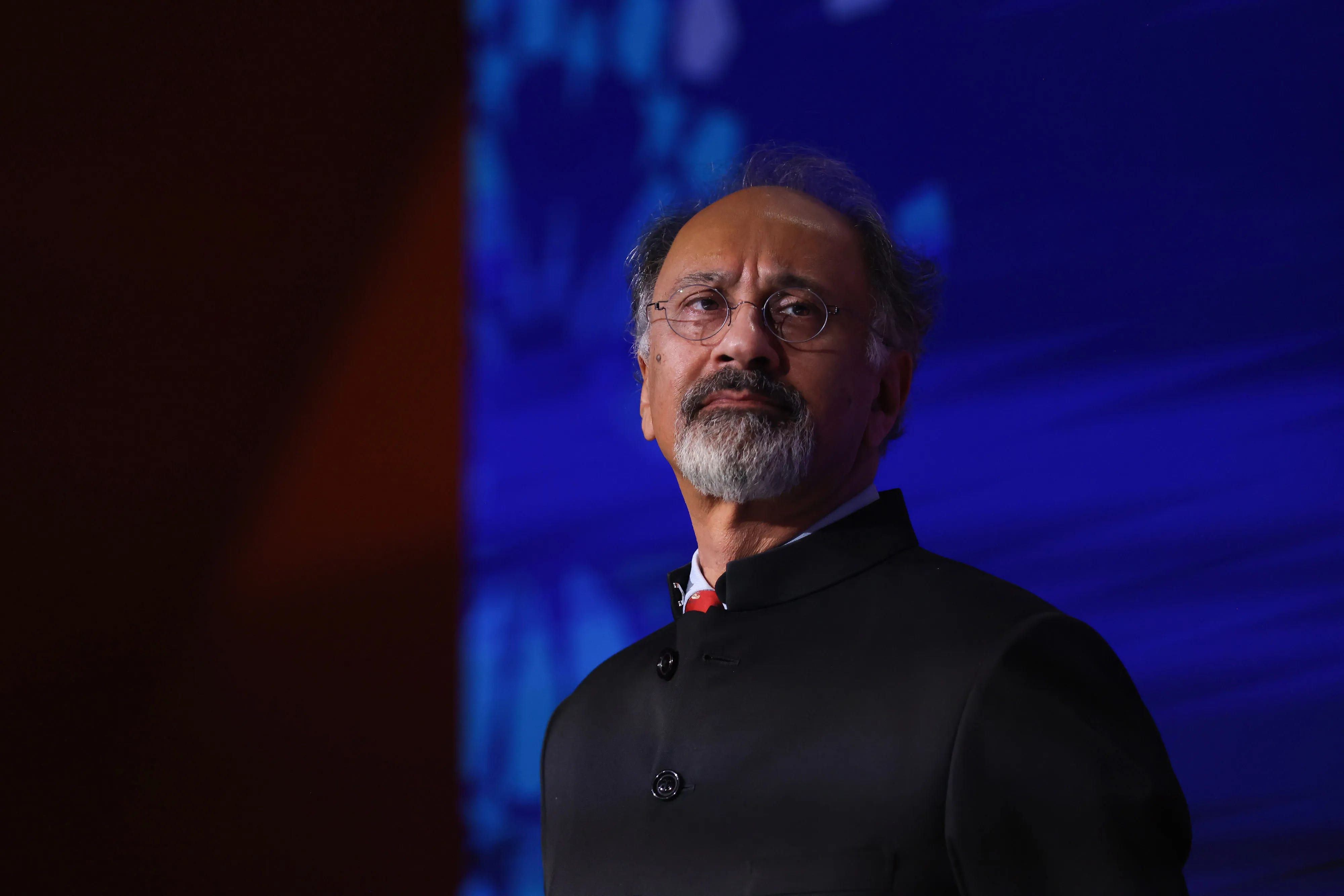
Then the wave moves on. This is the insight that the World Bank’s chief economist, Indermit Gill, pressed harder than anyone, and it is worth letting him speak in full, because he saw the sequence before most others did. “The war is hitting the global economy in cumulative waves,” Gill said. “First through higher energy prices, then higher food prices, and finally, higher inflation, which will push up interest rates and make debt even more expensive.” Read that again as a chain of dominoes. Fuel costs more. Because fertiliser is made from natural gas and shipped through the same blocked strait, fertiliser costs more too, and the World Bank put that increase at 31 per cent for 2026, with urea, a workhorse nitrogen fertiliser, jumping 60 per cent. Farmers who cannot afford to feed their soil grow less food. Food costs more. Households spend more simply to eat and to keep the lights on. Central banks, watching inflation climb, raise interest rates to cool it. And for a government already carrying heavy debt, higher rates mean every future loan, every rollover of existing borrowing, becomes more punishing.
Gill drew the moral out of the arithmetic with a line that travelled around the development world within hours of his saying it.
“The poorest people, who spend the highest share of their income on food and fuels, will be hit the hardest, as will developing economies already struggling under heavy debt burdens.”
Then the sentence that became the war’s epitaph for the sector: “All of this is a reminder of a stark truth: war is development in reverse.”
To understand why that phrase landed with such force, you have to understand the ground it fell on. Even before the strait closed, 3.4 billion people lived in countries that spent more on servicing their debt than on health or education. Think about what that sentence describes. More than two in five human beings live under governments that pay creditors before they pay for a child’s schooling or a clinic’s supplies. These were the economies with no buffer left, the ones the development community calls debt-distressed, and they were the first to feel the new shock. As the United Nations trade body UNCTAD catalogued it, the disruption arrived as falling stock prices, weakening currencies, and a rising cost of external debt, all at once, in countries that had nothing in reserve to absorb any of it.
The forecasts curdled accordingly. Developing-economy inflation, expected to ease, was now projected to average 5.1 per cent in 2026, a full percentage point higher than anyone had predicted before the war. Growth in those same economies was revised down to 3.6 per cent. The International Monetary Fund cut its global growth forecast from 3.4 to 3.1 per cent and warned that even in a relatively mild scenario, global inflation could reach 4.4 per cent, reversing the hard-won disinflation of the previous two years.
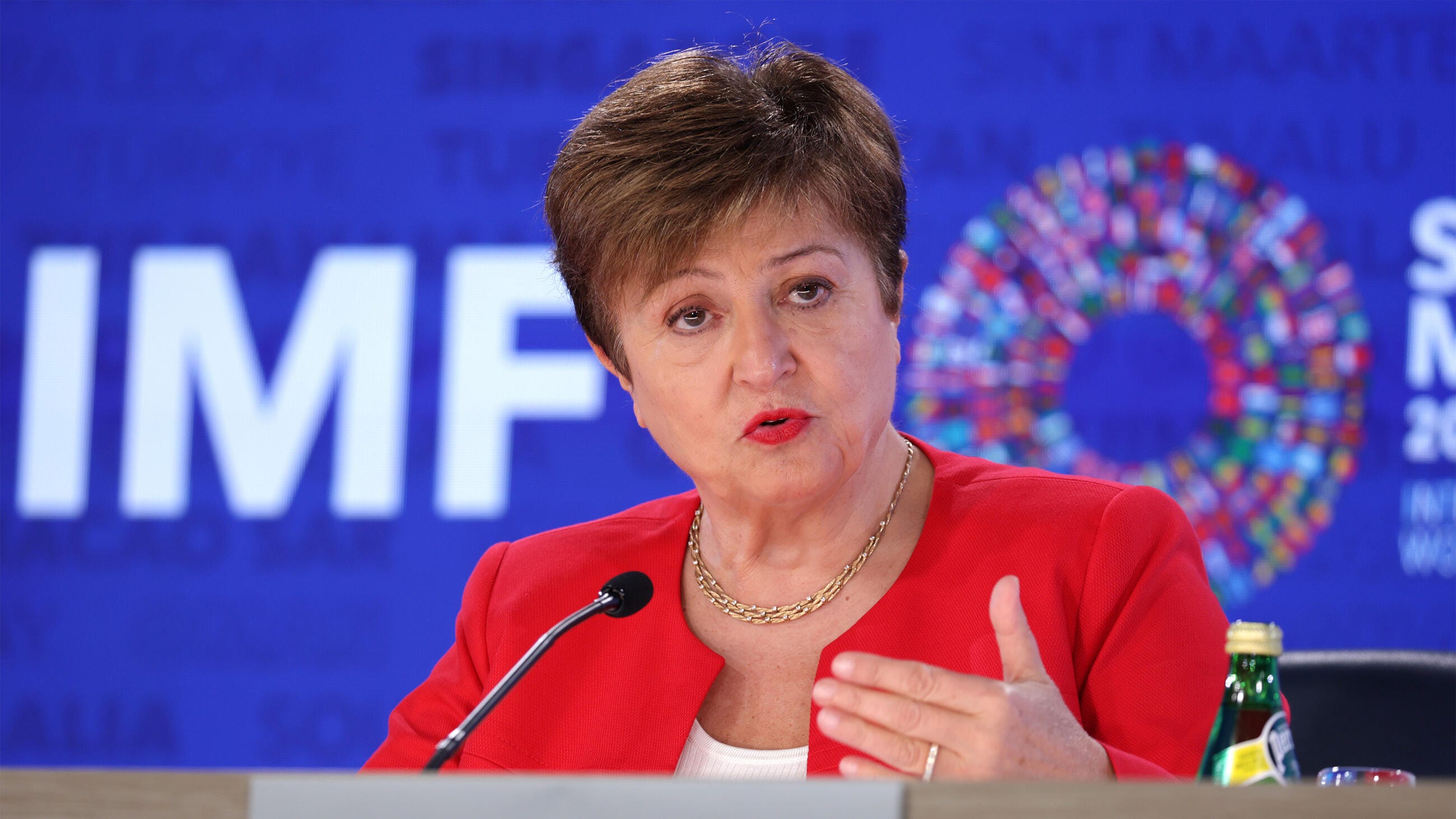
Into this gloom stepped Kristalina Georgieva, the IMF’s managing director, a Bulgarian economist who had spent years warning that the world was entering an age of recurring shocks. Now one had arrived to prove her point. She framed the danger not as a fact but as a fork in the road. The world, she warned, faced a “much worse outcome” if the war dragged into 2027 and oil climbed towards 125 dollars a barrel. She was watching the slow-moving damage to supply chains with particular care, she said, because fertiliser was already 30 to 40 per cent more expensive, and that alone would push food prices up by between 3 and 6 per cent. Georgieva’s gift has always been to make a balance sheet sound like a human story. A 6 per cent rise in food prices is, in the wealthy world, an irritation. In a Sahelian city where a family already spends most of its income on the next meal, it is the difference between coping and going without.
Here the story turns from diagnosis to response, and it is in the response that the people who work in development, and those who hope to, should pay closest attention. When a shock of this kind hits, the great multilateral institutions do not stand still. They pivot. The slow, patient business of building a road over five years or reforming an education ministry over ten gives way, at least for a season, to the urgent business of crisis finance: emergency balance-of-payments support, food-security windows, social-protection programmes designed to put cash into the hands of the poorest before hunger turns into something worse. The money does not disappear. It changes shape, and it changes hands. Teams that specialise in macro-fiscal stabilisation, in debt restructuring, in emergency lending, find themselves suddenly central. Long-horizon project pipelines, the kind that fill a young professional’s first years at a development bank, can stall while the institution fights the fire in front of it.
Ajay Banga, the World Bank’s president, read the moment in his own characteristic register, which is less that of the economist than of the operator. Banga had run Mastercard before he ran the Bank, and he tends to talk about development the way a chief executive talks about a market. Speaking at the Atlantic Council as the war ground on, he reached past the immediate crisis to the strategic lesson he wanted member countries to absorb. “If anything,” he said, “this war will make people feel even more the need to ensure that their energy security and their national security are thought through in a constructive way together.” It was a banker’s way of saying that the era of cheap, frictionless energy could no longer be assumed, and that the institutions financing the developing world would have to plan for a more dangerous map.
For anyone trying to enter or advance in this sector, the chapter carries a hard and useful truth. The development banks are counter-cyclical employers. When the world is calm, they build. When it breaks, they rescue. The skills that command a premium in a year like 2026 are not the ones the brochures advertise in placid times. They are macroeconomics, debt sustainability analysis, food systems, emergency operations, the ability to assemble a billion-dollar support package in weeks rather than years. The strait will reopen eventually, whether in months or in the worse scenario Georgieva fears. But the lesson Gill compressed into six words will outlast the crisis that produced it. War is development in reverse, and the institutions that exist to push development forward have learned, again, that their hardest work begins precisely when the world would rather look away.
Make sure you subscribe to MDB Jobs to get the latest vacancies delivered straight to your inbox each Monday, and consultant positions each Friday.