

You mastered supply and demand, econometrics, and macroeconomic theory. Now it’s time to turn that knowledge into a high-impact career. An economics degree is a key that unlocks some of the most influential jobs, especially if you want to shape global policy and development.
Many graduates get pushed toward traditional paths in consulting or commercial banking. Those are valid options, but they are a fraction of what’s available. The most direct application of your skills is in specialized roles at multilateral development banks (MDBs) and international organizations. In these positions, your analysis informs government policy, guides massive infrastructure investments, and helps build resilient economies for millions. This isn’t an academic exercise; it’s the real-world application of economic principles.
This guide is your direct, experience-based roadmap to the best jobs for economics graduates who want to solve complex global problems. Forget generic advice. We’ll break down specific, high-value roles actively sought by institutions like the World Bank, the International Monetary Fund (IMF), and regional development banks like the Asian Development Bank (ADB) and the African Development Bank (AfDB).
You’ll get an insider’s look at what these jobs demand, the specific skills you need to land them, and the salary ranges you can expect. We’ll also detail the concrete entry points, from the competitive Young Professional Programs (YPPs) to direct-hire and consultancy routes. This is your practical brief for building a career that matters.
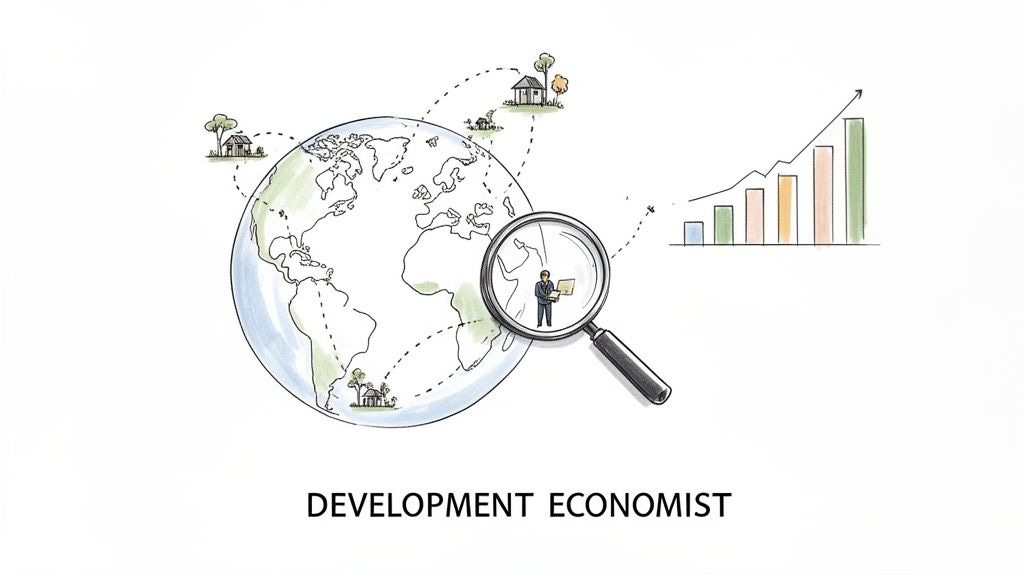
1. Development Economist
For economics graduates driven to address global inequality, becoming a development economist is one of the most direct and impactful career paths. This role involves analyzing economic conditions in developing countries to design and assess policies aimed at reducing poverty, improving health and education, and fostering sustainable growth. It’s a field that directly applies microeconomic and macroeconomic principles to real-world problems.
Why It’s a Top Job
Development economists are central to the work of MDBs like the World Bank, the IMF, and the ADB. These institutions are major employers, offering economists the chance to influence projects worth billions of dollars. The work of Nobel laureates Esther Duflo and Abhijit Banerjee at MIT’s J-PAL, which uses randomized controlled trials (RCTs) to evaluate social programs, shows the immense intellectual and practical influence this field holds.
How to Land the Job
Success in this competitive field requires a clear strategy. A master’s degree or PhD in economics is almost always a prerequisite for MDB roles. To stand out, you need to build a specific, demonstrable skill set.
Specialize Your Knowledge: Focus on a particular sector like health, agriculture, or infrastructure, or a specific geographic region. This makes your profile more attractive for targeted roles.
Master Econometric Tools: Proficiency in Stata, R, or Python is non-negotiable. You must manage large datasets and conduct rigorous empirical analysis.
Get Field Experience: Volunteer, intern, or find a research assistant position that gets you on the ground in a developing country. This experience is invaluable and shows your commitment.
Understand MDB Operations: These institutions have unique project cycles and approval processes. Familiarizing yourself with these frameworks gives you a significant advantage in interviews. Exploring the differences between these key institutions is a smart starting point for understanding where you’d fit best.
2. Macroeconomic Policy Advisor
For economics graduates who want to work at the intersection of theory and high-stakes government decisions, the macroeconomic policy advisor role is a premier career path. These advisors guide governments on fiscal, monetary, and exchange rate policies. They are the architects of economic stability, providing technical assistance and policy recommendations to help countries manage their economies, prevent crises, and foster sustainable growth. This is one of the best jobs for economics graduates looking to influence national and global outcomes.
Why It’s a Top Job
Macroeconomic policy advisors are indispensable to institutions like the IMF and the World Bank. At the IMF, they form the core of country teams that conduct surveillance and manage financial assistance programs, directly shaping a nation’s economic trajectory. The influence of figures like Raghuram Rajan, a former IMF Chief Economist and RBI Governor, demonstrates the intellectual authority and real-world impact this role carries. You are actively helping to steer the economy.
How to Land the Job
Entering this field requires deep theoretical knowledge and a clear career strategy. A master’s degree or PhD in economics is essential, but you must also build practical policy credibility to be considered for top roles at MDBs or national governments.
Gain Public Sector Experience: Start your career in a central bank or ministry of finance. This hands-on experience with national policymaking is a critical prerequisite for international advisory roles.
Master Key Analytical Tools: Become proficient with the IMF’s core modeling and accounting frameworks, such as the Global Integrated Monetary and Fiscal Model (GIMF) and Government Finance Statistics Manual (GFSM).
Develop Niche Expertise: Specialize in a critical area like emerging market vulnerabilities, sovereign debt restructuring, or monetary policy frameworks. This focus makes you a valuable asset for specific country desks.
Build Your Network: Cultivate relationships with officials in finance ministries and central banks. These connections are vital for understanding policy priorities and gaining access to opportunities.
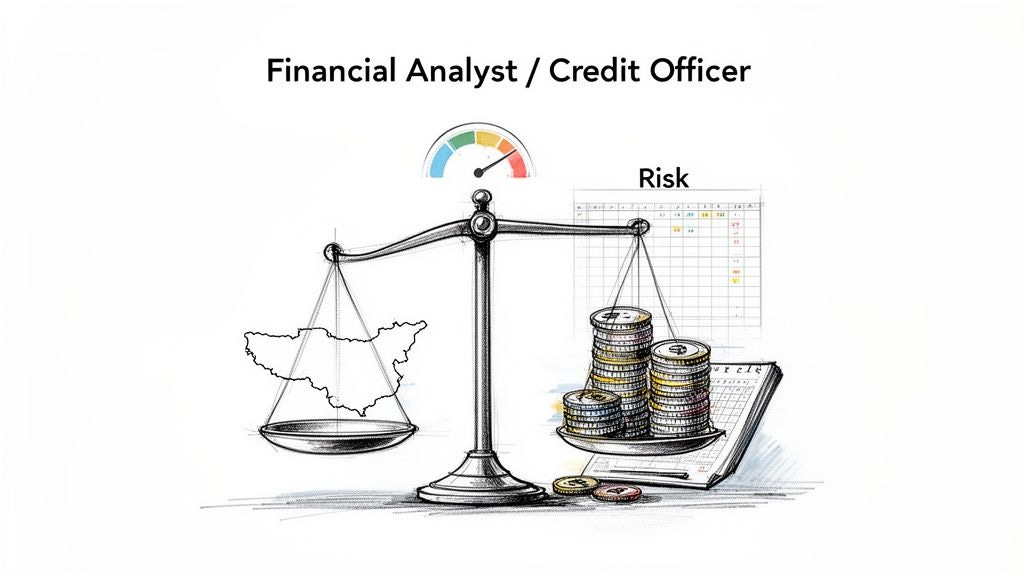
3. Financial Analyst/Credit Officer
For economics graduates fascinated by the intersection of global finance and sovereign risk, a career as a financial analyst or credit officer is a perfect fit. This role involves evaluating the creditworthiness of countries and specific projects to determine lending terms. It’s a critical function that ensures MDBs can deploy capital effectively while safeguarding their own financial stability. It blends rigorous economic analysis with sharp risk assessment.
Why It’s a Top Job
Financial analysts and credit officers are the gatekeepers of an MDB’s portfolio. Their decisions directly impact a country’s access to funding and the sustainability of the institution itself. You can find these experts in the World Bank’s sovereign credit teams, the AIIB’s financial risk units, or the AfDB’s credit departments managing complex portfolios. The role often attracts talent from top rating agencies like S&P Global and Moody’s, as well as former central bank officials who bring valuable public sector experience.
How to Land the Job
Securing a credit officer role requires a specialized financial skill set combined with a deep understanding of macroeconomics. A strong academic background in economics or finance is the foundation, but you need specific competencies to stand out.
Master Financial Modeling: You must be proficient in financial modeling and credit rating methodologies. Experience with debt sustainability analysis (DSA) frameworks used by the IMF and World Bank is a major advantage.
Gain Risk Management Experience: Prior work in a commercial bank’s risk department or a financial institution gives you a practical grounding that MDBs value highly.
Understand Political and Economic Risk: Your analysis must go beyond the numbers. A nuanced understanding of country-specific political dynamics and economic vulnerabilities is essential for accurate risk assessment.
Consider a CFA Charter: While not always required, obtaining the Chartered Financial Analyst (CFA) designation is a clear signal of your expertise and commitment to the finance profession.
4. Sector Specialist/Economist (Infrastructure, Energy, Agriculture)
For economics graduates who want to combine rigorous economic analysis with deep technical expertise, becoming a sector specialist is an excellent career path. This role means focusing on a specific area like infrastructure, energy, agriculture, or water to design, appraise, and oversee large-scale development projects. You will apply economic principles to tangible challenges, ensuring projects are financially viable and aligned with broader goals like climate resilience and sustainable development.
Why It’s a Top Job
Sector specialists are the engines of an MDB’s lending operations. They are the go-to experts who shape investments worth hundreds of millions of dollars. The World Bank’s Global Practices in areas like Energy & Extractives or Agriculture and Food, and the Asian Development Bank’s focus on climate-smart infrastructure, show how central this expertise is. As a sector economist, you directly influence how countries build resilient transport corridors, transition to renewable energy, or modernize their agricultural systems. This makes it one of the best jobs for economics graduates looking for direct impact.
How to Land the Job
Becoming a credible sector specialist requires a focused effort to build a hybrid profile of economic and technical skills. A master’s degree in economics or a related field is the typical entry point.
Align with Strategic Priorities: Focus your specialization on a high-priority sector for MDBs. Currently, this includes climate finance, renewable energy, digital infrastructure, and sustainable transport.
Gain Technical Knowledge: Supplement your economics degree with technical certifications or coursework. This could mean a certificate in renewable energy finance or a course on agricultural value chains.
Build a Sector-Specific Network: Connect with practitioners, engineers, and policymakers in your chosen field. Attending industry conferences is a great way to build these connections and learn the sector’s language.
Study MDB Sector Strategies: Read the official sector strategy documents and project pipelines published by institutions like the World Bank or AfDB. This shows genuine interest and prepares you to discuss specific initiatives in interviews.
5. International Trade Economist
For economics graduates interested in the forces that connect global markets, a career as an international trade economist offers a chance to shape how countries interact and grow. This role involves analyzing trade policies, tariffs, and regional agreements to advise governments and international bodies. You’ll work on everything from helping countries integrate into global value chains to providing support during high-stakes trade negotiations. It’s a field that applies international economics theory directly to practical policy questions about competitiveness and market access.
Why It’s a Top Job
International trade economists are essential players in organizations that set the rules of global commerce. Their work is critical for MDBs like the World Bank’s Trade and Competitiveness teams and the ADB’s Regional Cooperation and Integration specialists. The analysis they provide helps guide billions in development finance and shapes economic policy for entire regions, like ASEAN or COMESA. The work of influential economists like Harvard’s Dani Rodrik or Arvind Subramanian shows how this field directly connects academic rigor to major policy decisions. It’s one of the best jobs for economics graduates who want their work to have a global impact.
How to Land the Job
Securing a role in this specialized field requires a mix of technical skill and policy acumen. A master’s degree or PhD in economics with a focus on international trade is a common entry point for top-tier positions. Building a targeted skill set is crucial.
Master Trade Analysis: Become proficient with gravity models of trade and the econometric software (Stata, R) used to run them. Your ability to analyze trade data is your primary currency.
Understand the Legal Framework: Familiarize yourself with World Trade Organization (WTO) rules and the mechanics of regional trade agreements. You need to know the legal and institutional context in which trade policy is made.
Analyze Global Value Chains (GVCs): Gain expertise in GVC analysis tools and databases. Understanding how products are made across multiple countries is key to modern trade advice.
Network with Officials: Build relationships with officials in trade ministries and international organizations. This professional network is invaluable for career opportunities and staying current on policy shifts.
6. Environmental and Social Safeguards Specialist
For economics graduates who want to bridge the gap between economic development and social responsibility, the role of an Environmental and Social Safeguards Specialist is a compelling career. These professionals ensure major development projects, particularly those funded by MDBs, do not cause undue harm to people or the environment. They apply economic principles to assess risks, design mitigation strategies, and ensure projects create sustainable, equitable outcomes.
Why It’s a Top Job
Safeguards specialists are the institutional conscience of development finance. They operate at the critical intersection of project finance, environmental science, and human rights. With the global push towards climate-resilient and socially-inclusive growth, demand for these skills has intensified. Institutions like the World Bank with its Environmental and Social Framework and the International Finance Corporation (IFC) with its Performance Standards have put safeguards at the core of their lending operations. This role offers a direct way to influence how billions of dollars in development funding are deployed. It’s one of the best jobs for economics graduates focused on tangible impact.
How to Land the Job
This is a specialized field that rewards a multidisciplinary skill set. An economics degree is a strong foundation, but you’ll need to build on it with targeted expertise to be a competitive candidate.
Combine Disciplines: Supplement your economics background with a master’s degree or certifications in environmental science, social policy, or international development. This interdisciplinary knowledge is essential.
Know the Policies: Deeply study the safeguard policies of key MDBs like the World Bank, ADB, and AfDB. Understand their specific requirements for environmental and social impact assessments (ESIA), involuntary resettlement, and indigenous peoples’ plans.
Build Field Skills: Gain practical experience in stakeholder engagement, community consultation, and conflict resolution. These soft skills are just as important as your technical ability to conduct a cost-benefit analysis.
Master Risk Assessment: Develop expertise in vulnerability and resilience assessment. You need to be able to identify potential project risks to communities and ecosystems and design effective mitigation measures. This is where your economics training in risk analysis becomes a powerful asset.
7. Public Financial Management (PFM) Specialist
For economics graduates who want to build the foundational systems that make governments work, a career as a Public Financial Management (PFM) specialist is a powerful choice. This role focuses on strengthening how governments manage public money. PFM specialists design and implement reforms to improve tax collection, control spending, manage debt, and increase fiscal transparency. This is one of the best jobs for economics graduates who are systematic thinkers, as effective public finance enables countries to fund their own development and create a stable environment for investment.
Why It’s a Top Job
PFM specialists are the architects of good governance. Their work is critical for MDBs that provide budget support or technical assistance to governments. Institutions like the IMF’s Fiscal Affairs Department and the World Bank’s Public Finance Practice are global leaders in this field, deploying experts to help countries build robust financial systems from the ground up. By improving how a country manages its budget, a PFM specialist can have a widespread impact on everything from infrastructure projects to social services.
How to Land the Job
Success in PFM requires a combination of technical economic skills and a deep understanding of governmental processes. A master’s degree in economics, public policy, or a related field is the standard entry point.
Understand Government Budgeting: You must know the government budget cycle inside and out, from formulation and approval to execution and audit.
Master PFM Frameworks: Get proficient in key methodologies like the Medium-Term Expenditure Framework (MTEF), which helps align spending with policy priorities over several years. This is a core competency.
Learn the Technology: Familiarize yourself with the financial management information systems (FMIS) and other software governments use for accounting, treasury, and procurement.
Network with Officials: Building relationships with officials in ministries of finance and planning is essential. These connections provide insights and are critical for implementing reforms.
Focus on Outcomes: MDBs increasingly link funding to performance. Learning about results-based approaches will give you an edge in designing and managing effective PFM projects.
8. Youth Employment and Skills Development Economist
For graduates passionate about tackling one of the world’s most urgent challenges, a role as a youth employment and skills development economist offers a high-impact career. This position involves designing and evaluating programs that address youth unemployment and skills gaps, particularly in developing economies. You’ll apply labor economics and program design principles to create opportunities for a generation facing significant employment hurdles.
Why It’s a Top Job
With over 300 million young people worldwide needing better employment solutions, MDBs are channeling significant funds into education, vocational training, and job creation. This has created strong demand for economists who specialize in this niche. The work is at the intersection of economic theory and practical program implementation, influencing everything from national education policies to private sector partnerships. You could contribute to initiatives like the World Bank’s Youth Employment Programs in Africa and South Asia or the African Development Bank’s Youth Entrepreneurship Fund.
How to Land the Job
This specialized role is one of the best jobs for economics graduates who build targeted expertise. A master’s or PhD is standard, but deep knowledge in specific areas will set you apart.
Master Relevant Fields: Develop a strong foundation in labor economics and advanced impact evaluation methodologies. You must be able to prove a program’s effectiveness with rigorous data.
Analyze Skills Mismatches: Focus on the gap between skills supply and industry demand in specific countries or regions. Expertise in digital skills and the gig economy is increasingly valuable.
Build Strategic Networks: Cultivate relationships with officials in ministries of education and labor, as well as with NGOs and private sector training providers.
Track Funding Priorities: Follow the youth employment strategies and project pipelines of MDBs and organizations like the ILO. Knowing their priorities helps you align your skills and proposals with their funding cycles.
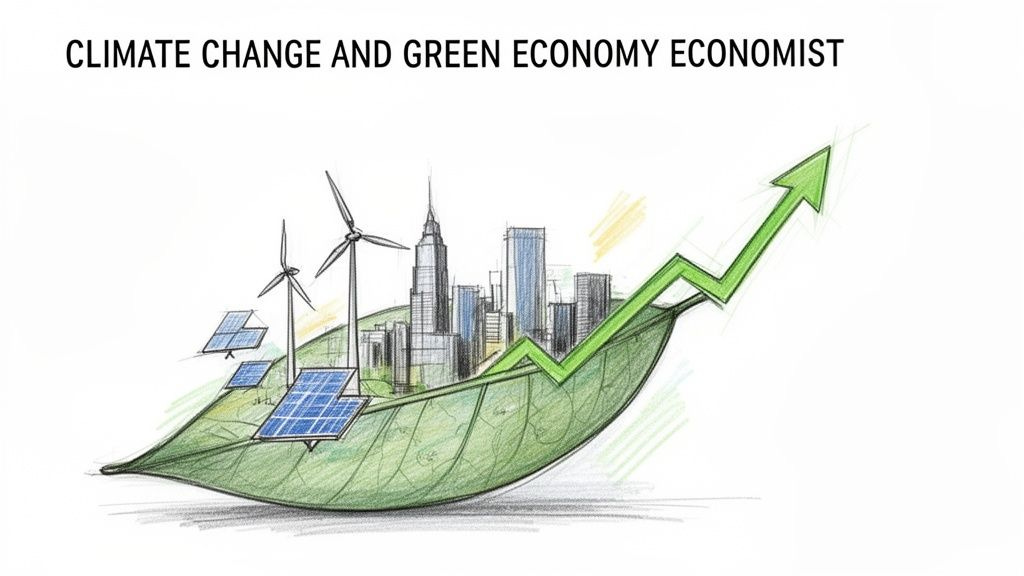
9. Climate Change and Green Economy Economist
For economics graduates who want to tackle one of the most significant challenges of our time, a career as a climate change and green economy economist offers a direct route to impact. This role involves using economic principles to evaluate the costs of climate change and to design policies that support a transition to a sustainable, low-carbon economy. It’s a field where environmental economics, development finance, and public policy intersect.
Why It’s a Top Job
The urgency of the climate crisis has made climate economics a central focus for governments, corporations, and MDBs. The Stern Review on the Economics of Climate Change framed climate change as the greatest market failure the world has seen, cementing the role of economists in finding solutions. Specialists in this area are in high demand at institutions like the World Bank’s Climate Change Group and the Asian Development Bank, where they assess climate risks, design climate finance projects, and help countries meet their climate commitments. This is one of the best jobs for economics graduates because it offers a chance to work on the frontier of economic policy.
How to Land the Job
Securing a role as a climate economist requires a specialized blend of technical and policy expertise. A master’s degree or PhD with a focus on environmental or climate economics is standard.
Build Climate Modeling Skills: Develop proficiency in climate risk modeling, integrated assessment models (IAMs), and scenario analysis. This is a core technical requirement.
Master Carbon Frameworks: Understand carbon accounting methodologies, carbon pricing mechanisms, and the principles of additionality for offset projects.
Learn Energy Economics: Gain a deep understanding of the economics of renewable energy technologies, energy efficiency investments, and grid integration.
Track Climate Finance: Stay current on green bonds, carbon markets, and multilateral climate funds like the Green Climate Fund.
Network with Climate Agencies: Develop relationships with national environmental protection agencies and ministries of climate change, as they are key partners in MDB projects.
10. Governance and Anti-Corruption Economist
For economics graduates who understand that strong institutions are the bedrock of economic progress, a career as a governance and anti-corruption economist is a powerful choice. This role involves analyzing the rules, institutions, and regulatory frameworks that shape economic outcomes. You’ll design anti-corruption programs, support judicial and public sector reform, and strengthen government effectiveness, tackling the root causes of underdevelopment.
Why It’s a Top Job
Poor governance and corruption derail economic policies, no matter how well-designed they are. This realization has placed governance economists at the center of strategy at MDBs and international organizations. The work of economists like Daron Acemoglu has cemented the idea that inclusive institutions are the primary driver of long-term prosperity. This makes it one of the most intellectually stimulating and impactful jobs for economics graduates. Major employers include the World Bank’s Governance Global Practice and the IMF’s technical assistance programs on fiscal transparency.
How to Land the Job
This field is less about pure econometrics and more about understanding political economy and institutional design. A master’s or PhD is standard, but your specialization is what sets you apart.
Specialize in Institutions: Focus your studies on institutional economics, public choice theory, and political economy. You need the theoretical vocabulary to analyze how power structures and incentives affect economic behavior.
Master Governance Metrics: Become an expert in key datasets like the Worldwide Governance Indicators (WGI) and Transparency International’s Corruption Perceptions Index. You must know how these are constructed, their limitations, and how to use them in analysis.
Gain Relevant Experience: Seek internships or roles with civil society organizations, think tanks, or government agencies focused on transparency and accountability. Direct engagement with justice ministries or anti-corruption commissions is a significant advantage.
Understand MDB Frameworks: Familiarize yourself with how institutions like the World Bank and regional development banks conduct their governance assessments and integrate anti-corruption measures into their projects. This specific knowledge is critical for interviews.
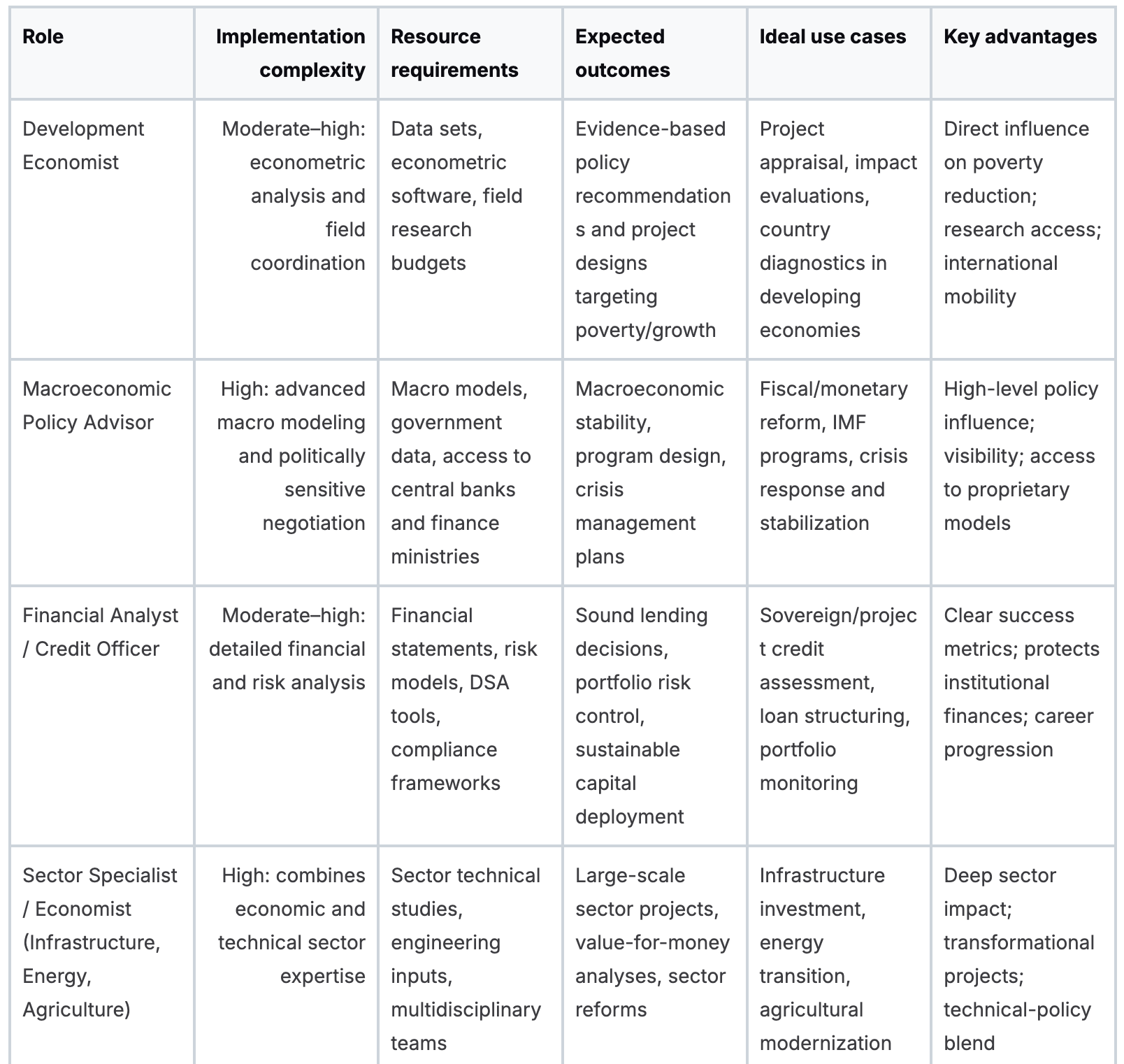
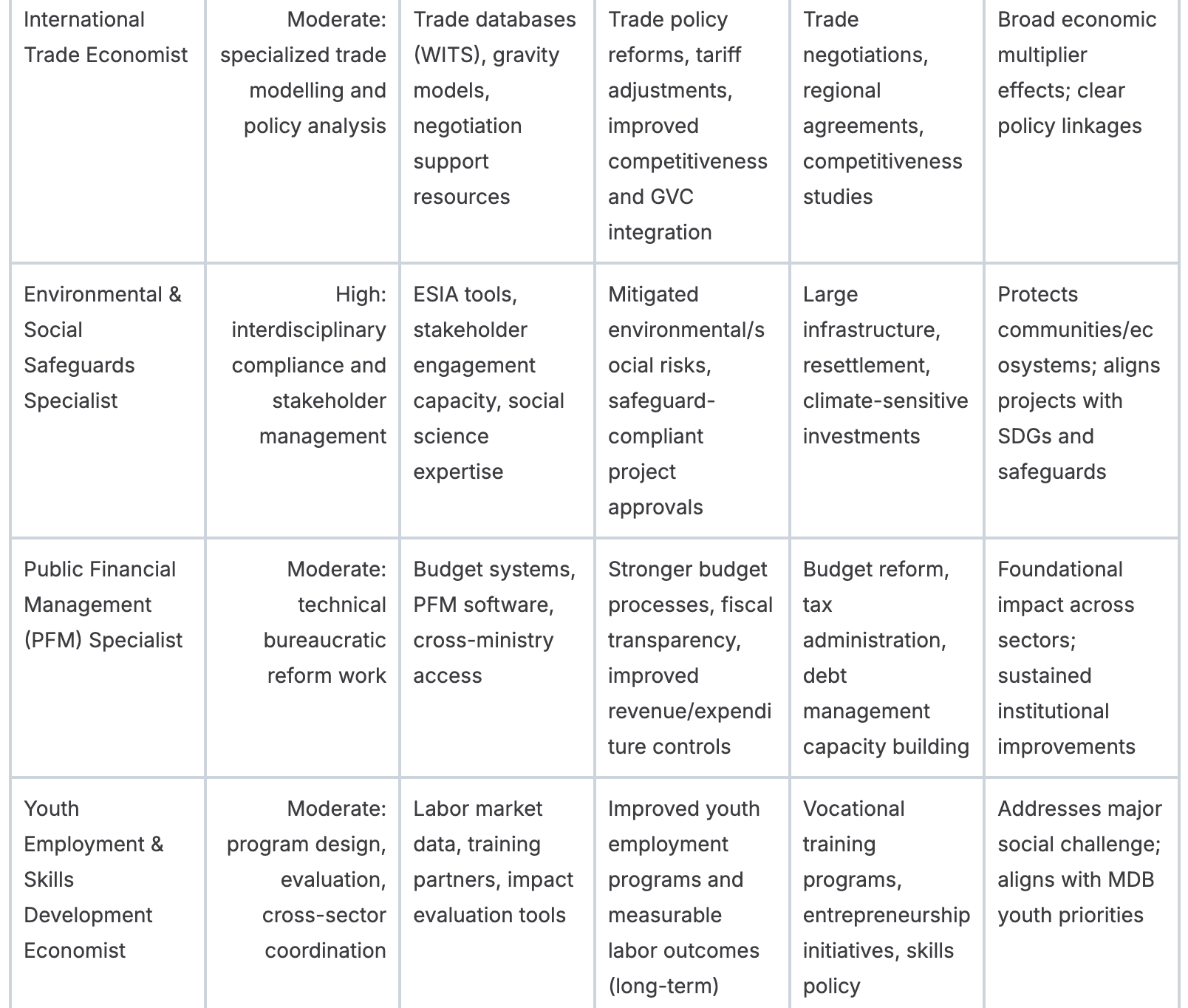
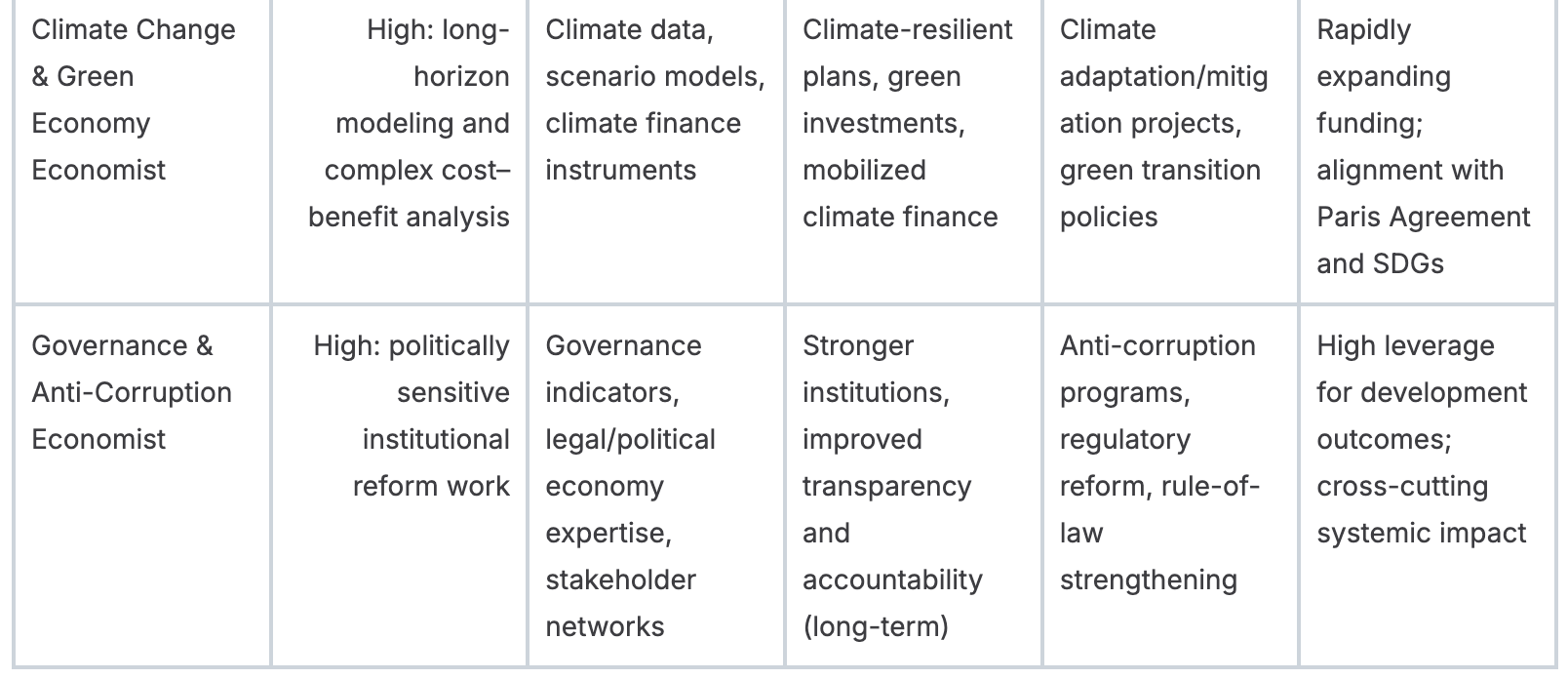
Top 10 Economics Career Comparison
From Theory to Impact: Your Next Move
We’ve mapped out ten of the best jobs for economics graduates, moving beyond abstract titles to show you the tangible, high-impact careers your degree makes possible. From Development Economist to Governance Specialist, you now have the specific skills, entry routes, and strategic positioning needed to land these competitive roles. The throughline is clear: your economics education is a powerful foundation, but it’s just the starting point.
The most successful professionals in this field do not stay generalists. They build a specific, marketable profile by making deliberate choices. Your degree gave you the analytical toolkit. Now, you must apply it with focus.
Your Strategic Roadmap from Academia to Action
The journey from a university classroom to a role shaping policy at an MDB is built on a series of calculated steps. The opportunities are real, but they reward preparation and specificity, not just academic credentials. Here is how to translate your potential into a successful career.
Commit to a Specialty: The roles we have covered, from Climate Change Economist to PFM Specialist, demand deep expertise. Pick a lane. Are you passionate about renewable energy financing, youth employment, or trade policy? Your choice will guide your skill development, networking, and job search. A focused expert is always more valuable than a generalist.
Build Your Practical Toolkit: Your theoretical knowledge of econometrics is essential, but you need to prove you can apply it. Master the software and techniques used in the field. This means proficiency in tools like Stata, R, or Python for data analysis, and developing skills in financial modeling, cost-benefit analysis, or impact evaluation design. These practical skills are what employers screen for.
Understand the Institutional Landscape: Each MDB, like the World Bank, the African Development Bank, or the Asian Development Bank, has its own unique mandate, regional focus, and institutional priorities. Research their flagship reports, country strategies, and active projects in your chosen specialty. Align your personal statement and interview answers with their specific goals. Showing you have done your homework signals genuine interest and a strong fit.
The Real Value of an Economics Degree
Your economics degree trained you to think in terms of systems, incentives, and trade-offs. This is precisely the mindset needed to tackle complex global challenges like poverty reduction, sustainable infrastructure, and climate action. The career paths detailed in this article are where that thinking creates real-world impact. These are not just jobs; they are opportunities to contribute to solutions that affect millions of people.
Your ability to analyze data, model outcomes, and understand policy implications is your core asset. By pairing this with specialized knowledge and practical skills, you position yourself for some of the most rewarding and impactful careers available. The demand for sharp economic minds has never been greater. Now is the time to take the deliberate steps to turn your education into a career that matters.
Finding the right opportunity is the critical next step. At Multilateral Development Bank Jobs, we curate the latest economist positions, consultant openings, and program announcements from the World Bank, regional MDBs, and other international financial institutions. Stop sorting through generic job boards and get targeted, relevant listings sent directly to you by subscribing at Multilateral Development Bank Jobs.
Really useful roundup for econ grads navigating the development sector job market. One thing worth flagging: the landscape in 2026 is shifting meaningfully for these roles. MDB hiring has tightened in some departments as institutional shareholder pressure pushes banks toward measurable impact metrics over headcount growth. Grads with quantitative skills in data science and program evaluation are moving ahead of traditional macro policy generalists right now. If you are targeting the World Bank or regional development banks, pairing your economics foundation with hands-on experience in impact measurement frameworks like DIME or J-PAL methodology will differentiate your profile considerably. The list is solid, but applicants should also note that many of these institutions now run very competitive rotational programs that are easier entry points than direct hire.